Peanut Butter Fudge Recipe Easy – 5 Ingredients
This peanut butter fudge recipe easy enough for beginners delivers rich, creamy, melt-in-your-mouth results every single time. With just five simple pantry ingredients and no candy thermometer required, this is the sweet treat you need to make today.

Ingredients
| AMOUNT | INGREDIENT | NOTES |
|---|---|---|
| 3 cups | powdered sugar | sifted to remove lumps |
| 1 cup | creamy peanut butter | use a commercial brand like Jif or Skippy for best results |
| 1/2 cup | unsalted butter | cut into tablespoon-sized pieces |
| 1 teaspoon | pure vanilla extract | do not substitute imitation vanilla |
| 1/4 teaspoon | fine sea salt | balances the sweetness perfectly |
Instructions

Nutrition (per serving)
About This Recipe
Fudge has been a beloved American confection since the late 1800s, with the first recorded batches allegedly made at women’s colleges along the East Coast around 1886. The treat quickly became a staple at candy shops and county fairs across the United States, celebrated for its dense, smooth texture and intensely sweet flavor. Peanut butter fudge emerged as a natural evolution of the classic chocolate version, riding the wave of peanut butter popularity that swept America in the early twentieth century.
As peanut butter became a household staple following its commercial production boom in the 1920s and 1930s, home cooks began experimenting with incorporating it into traditional fudge recipes. Southern kitchens in particular embraced peanut butter fudge as a holiday and celebration treat, passing recipes down through generations. Today it remains one of the most searched and beloved homemade candy recipes in America, appearing on dessert tables at potlucks, holidays, and family gatherings from coast to coast.
Ready to Serve

A Closer Look

Pro Tips for Best Results
- Use a commercial-style peanut butter such as Jif or Skippy rather than natural peanut butter. Natural peanut butter has oil separation issues that can prevent the fudge from setting up properly and create a greasy texture.
- Do not skip sifting the powdered sugar. Even small lumps left in unsifted sugar will remain in your finished fudge and create an unpleasant grainy texture. A fine mesh sieve works perfectly for this step.
- Work as quickly as possible once you pour the hot peanut butter mixture over the sugar. The mixture begins to firm up fast, and if it cools too much before you get it into the pan, it will be difficult to spread evenly.
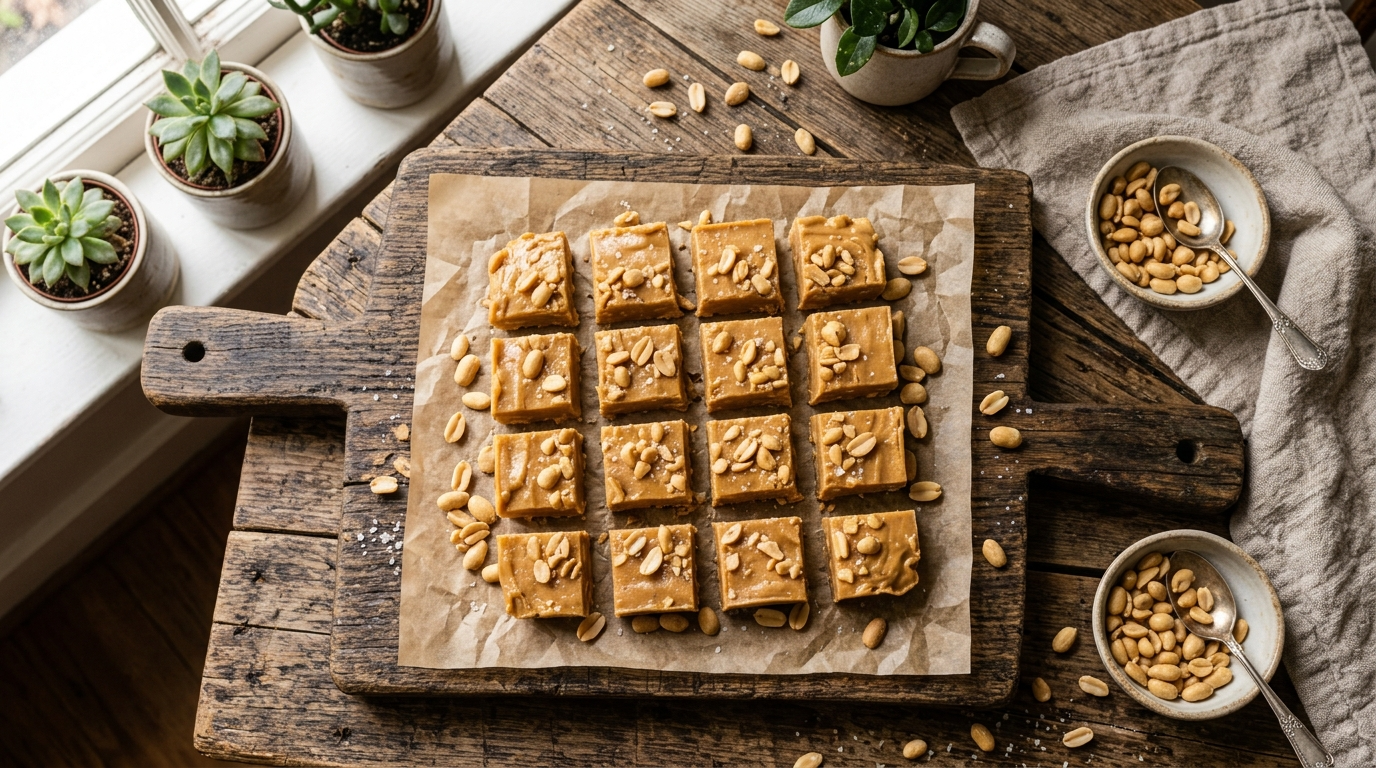
- For perfectly uniform fudge squares, chill the fudge completely overnight before cutting. Use a ruler to score the surface lightly before making your full cuts. A bench scraper can also be helpful for making straight, clean lines.
- Store finished fudge pieces in an airtight container with sheets of wax paper or parchment between layers to prevent sticking. The fudge will keep at room temperature for up to one week, in the refrigerator for up to three weeks, or in the freezer for up to three months.
Essential Equipment
Medium Heavy-Bottomed Saucepan: Ensures even heat distribution to prevent scorching the sugar mixture.
Wooden Spoon or Heat-Resistant Silicone Spatula: Ideal for stirring the hot fudge mixture without scratching cookware.
9-inch Square Baking Pan: The standard size for perfectly thick, sliceable fudge pieces.
Parchment Paper: Lines the pan for easy removal and clean cutting of fudge squares.
Stand Mixer or Hand Mixer: Beats the fudge mixture to a smooth, creamy consistency quickly.
Measuring Cups and Spoons: Accurate measurements are critical for fudge to set properly.
Variations
Chocolate Swirl Peanut Butter Fudge: Melt one cup of semi-sweet chocolate chips separately. After pressing the peanut butter fudge into the pan, drop spoonfuls of melted chocolate on top and use a toothpick or skewer to swirl it through for a gorgeous marbled effect.
Honey Roasted Peanut Crunch: Fold in one cup of roughly chopped honey roasted peanuts into the fudge mixture just before transferring it to the pan. This adds delightful crunch and a deeper, more complex peanut flavor in every bite.
Maple Peanut Butter Fudge: Replace the vanilla extract with one teaspoon of pure maple extract and add two tablespoons of real maple syrup to the melted peanut butter mixture. This gives the fudge a warm, autumnal flavor that is especially wonderful during fall and winter holidays.
Dark Chocolate Peanut Butter Layered Fudge: Make a half batch of dark chocolate fudge by melting two cups of dark chocolate chips with three tablespoons of butter. Layer the chocolate fudge on the bottom of the pan, let it partially set for 20 minutes in the fridge, then top with the full batch of peanut butter fudge for a stunning two-tone treat.
Sea Salt Caramel Peanut Butter Fudge: Drizzle three tablespoons of store-bought caramel sauce over the top of the pressed fudge and sprinkle generously with flaky sea salt before chilling. The sweet-salty-caramel combination takes this classic recipe to a gourmet level.
Frequently Asked Questions
Why did my peanut butter fudge not set up and stay soft?
The most common reason fudge does not set is using natural peanut butter instead of a commercial stabilized brand. Natural peanut butter contains oils that interfere with the setting process. Always use a brand like Jif, Skippy, or Peter Pan. Another culprit can be inaccurate measurement of powdered sugar – too little sugar means the mixture cannot firm up properly.
Can I make this peanut butter fudge recipe easy version ahead of time?
Absolutely! This fudge is actually better made ahead of time because it needs at least two hours to set, and overnight chilling gives you the best texture and cleanest cuts. You can make it up to one week ahead and store it at room temperature in an airtight container, or up to three weeks ahead if refrigerated.
Can I freeze peanut butter fudge?
Yes, peanut butter fudge freezes beautifully. Cut it into squares first, then layer the pieces between sheets of wax paper in a freezer-safe airtight container. Freeze for up to three months. To thaw, transfer the container to the refrigerator overnight or let individual pieces sit at room temperature for about 30 minutes before serving.
My fudge turned out grainy – what went wrong?
Grainy fudge is almost always the result of not sifting the powdered sugar before mixing. Lumps that are not broken up before combining with the hot peanut butter mixture will not dissolve and will remain in the finished fudge. Always sift your powdered sugar through a fine mesh strainer before use.
Can I use crunchy peanut butter instead of creamy?
Yes you can use crunchy peanut butter if you prefer extra texture in your fudge. Keep in mind that the finished product will be chunkier rather than silky smooth. Make sure the crunchy peanut butter you choose is a commercial stabilized brand and not a natural variety, for the same setting reasons mentioned above.
How do I cut fudge cleanly without it crumbling?
The key to clean cuts is making sure the fudge is fully and completely chilled before you attempt to cut it. Overnight refrigeration is ideal. Use a large sharp chef knife and run it under hot water, then dry it completely before each cut. Wiping the blade clean between slices also helps tremendously. Avoid sawing back and forth – press the blade straight down in one firm, decisive motion.