Cedar Plank Salmon Recipe – Smoky and Delicious
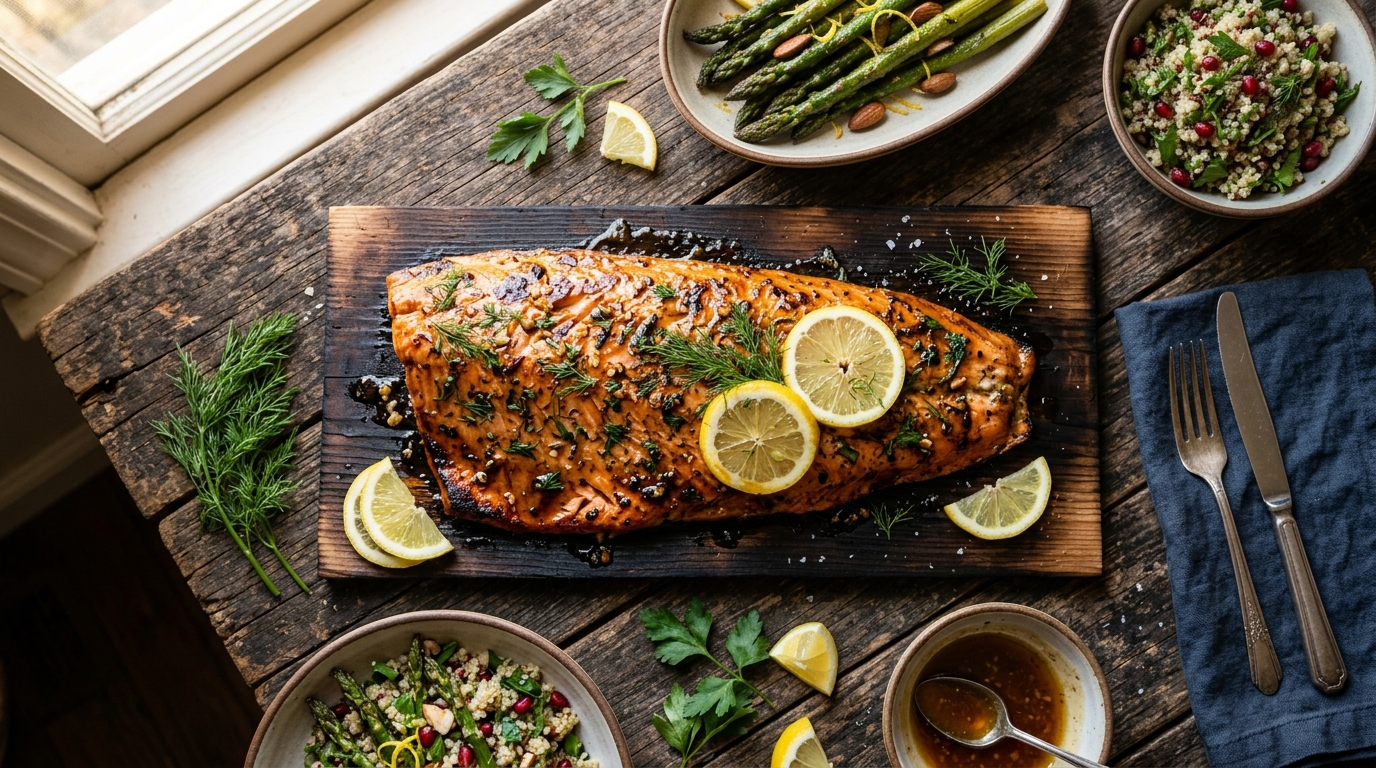
This cedar plank salmon recipe is the ultimate way to transform a simple piece of fish into a showstopping meal that bursts with smoky, woodsy flavor. The cedar plank acts as a natural flavor infuser, slowly releasing aromatic smoke that penetrates every layer of the salmon as it grills to perfection. Whether you are hosting a backyard cookout or looking for a weeknight dinner that feels special, this method never disappoints.
What makes cedar plank salmon so magical is the combination of gentle indirect heat and the natural oils released from the soaked wood. Unlike direct grilling, placing the salmon on a plank keeps the fish moist and prevents it from sticking or falling apart on the grates. The result is a fillet that is flaky on the inside, slightly charred on the edges, and kissed with a deep, earthy smokiness that you simply cannot replicate any other way.
This recipe uses a simple honey-garlic glaze that complements the cedar smoke without overpowering the natural richness of the salmon. Fresh lemon, dill, and a touch of Dijon mustard round out the flavors beautifully. Once you try this technique, you will never want to cook salmon any other way. It is straightforward, impressive, and absolutely delicious every single time.
This cedar plank salmon recipe delivers incredibly smoky, tender fish with a gorgeous caramelized glaze that rivals any restaurant dish. Infused with woodsy cedar aroma and ready in under 30 minutes, it is the perfect reason to fire up the grill tonight.

Ingredients
| AMOUNT | INGREDIENT | NOTES |
|---|---|---|
| 1 large | untreated cedar grilling plank | approximately 7 by 15 inch size, food-safe |
| 4 fillets | salmon | skin-on, approximately 6 ounces each, preferably wild-caught |
| 3 tablespoons | honey | raw or pure honey preferred |
| 3 cloves | garlic | finely minced |
| 2 tablespoons | Dijon mustard | smooth, not whole grain |
| 2 tablespoons | soy sauce | low-sodium recommended |
| 1 tablespoon | olive oil | extra virgin |
| 1 tablespoon | fresh lemon juice | from approximately half a lemon |
| 1 teaspoon | lemon zest | freshly grated |
| 1 teaspoon | smoked paprika | adds depth and color to the glaze |
| 1 teaspoon | kosher salt | adjust to taste |
| 0.5 teaspoon | black pepper | freshly ground |
| 2 tablespoons | fresh dill | chopped, plus extra sprigs for garnish |
| 1 whole | lemon | thinly sliced into rounds for plating and garnish |
| 2 tablespoons | fresh parsley | roughly chopped, for garnish |
Instructions

Nutrition (per serving)
About This Recipe
Cedar plank cooking is a culinary tradition with deep roots in the Indigenous peoples of the Pacific Northwest, particularly tribes such as the Chinook, Nez Perce, and Coast Salish nations. For thousands of years, these communities slow-cooked salmon alongside open fires using split cedar boards, allowing the fish to absorb the wood smoke while staying moist and tender. Salmon was not only a dietary staple but also held profound cultural and spiritual significance in these communities, making the preparation method a meaningful ritual as much as a cooking technique.
As European settlers arrived in North America, they observed and adapted these traditional methods, eventually bringing cedar plank cooking into mainstream American and Canadian cuisine. The technique experienced a major revival in the 1990s when upscale restaurants in the Pacific Northwest began featuring cedar plank salmon on their menus, sparking widespread interest among home cooks. Today, cedar plank grilling has become a beloved summer tradition across North America, celebrated for its simplicity, stunning presentation, and the incomparable depth of flavor it brings to fresh salmon and other fish.
Ready to Serve

A Closer Look

Pro Tips for Best Results
- Always purchase food-safe, untreated cedar planks specifically designed for grilling. Never use planks from a hardware store or lumber yard, as they may be chemically treated and unsafe for cooking.
- Do not skip the soaking step. A properly soaked plank smolders and smokes rather than burning, which is exactly what you need to flavor the fish. If flames do flare up during cooking, simply spray the edges of the plank lightly with water using a spray bottle.
- For an even deeper smoky flavor, add a small handful of soaked cedar wood chips directly to the charcoal or place them in a smoker box on a gas grill alongside the plank for an intensified wood-smoke experience.
- Let the salmon rest for 3 to 5 minutes after removing it from the grill before serving. This short rest allows the juices to redistribute throughout the flesh, resulting in a more moist and flavorful fillet with every bite.
- Cedar planks can often be reused one or two more times if they are not too charred. After cooking, allow the plank to cool completely, then scrape off any residue, rinse with hot water without soap, and dry thoroughly. Store in a dry place until the next use.
Essential Equipment
Untreated Cedar Grilling Plank: The foundation of the recipe, it imparts smoky woodsy flavor and keeps the salmon moist during grilling.
Gas or Charcoal Grill: Provides the high heat needed to char the plank and create aromatic smoke for cooking the salmon.
Large Baking Dish or Rimmed Sheet Pan: Used to soak the cedar plank in water for at least one hour before grilling to prevent burning.
Small Mixing Bowl: For whisking together the honey-garlic glaze ingredients quickly and evenly.
Silicone Basting Brush: Allows you to apply the glaze smoothly and evenly over the salmon without tearing the flesh.
Instant-Read Thermometer: Ensures the salmon reaches the safe and ideal internal temperature of 145 degrees Fahrenheit without overcooking.
Long Grill Tongs: Needed to safely handle and remove the hot cedar plank from the grill without risk of burns.
Chef Knife: For slicing lemon, mincing garlic, and portioning the finished salmon fillets cleanly for serving.
Variations
Asian-Inspired Ginger Soy: Replace the Dijon mustard and smoked paprika with 1 tablespoon of freshly grated ginger, 1 teaspoon of sesame oil, and a drizzle of rice vinegar. Garnish with sliced green onions and toasted sesame seeds for a bold umami-forward twist on the classic cedar plank salmon recipe.
Brown Sugar and Herb Crusted: Swap the honey for an equal amount of packed light brown sugar and add 1 teaspoon of fresh thyme leaves and 1 teaspoon of rosemary to the glaze. The brown sugar creates a gorgeous caramelized crust that pairs wonderfully with the earthy cedar smoke.
Maple Bourbon Glazed: Replace the honey with pure maple syrup and add 2 tablespoons of bourbon whiskey to the glaze mixture. The bourbon adds a warm, slightly sweet depth that caramelizes beautifully on the cedar plank and makes this variation perfect for entertaining guests.
Lemon Herb and Garlic Butter: Skip the honey-mustard glaze entirely and instead top each fillet with thin slices of compound herb butter made from softened butter, minced garlic, lemon zest, dill, and chives. As the butter melts during grilling, it bastes the salmon continuously with rich, herbaceous flavor.
Spicy Cajun Cedar Plank Salmon: Coat the salmon fillets with a bold Cajun dry rub made from smoked paprika, cayenne pepper, onion powder, garlic powder, oregano, and thyme before placing on the plank. Finish with a squeeze of fresh lime juice and serve with a cooling remoulade sauce on the side.
Frequently Asked Questions
How long do I need to soak the cedar plank before grilling?
You should soak the cedar plank for a minimum of 1 hour, though 2 hours is ideal for best results. A fully saturated plank will smolder and smoke rather than catch fire, which is what produces that signature cedar flavor. You can even soak it overnight in the refrigerator if you are planning ahead.
Can I make cedar plank salmon in the oven instead of on the grill?
Yes, absolutely. Place the soaked plank on a baking sheet in an oven preheated to 400 degrees Fahrenheit. Add the glazed salmon fillets and bake for 15 to 18 minutes until cooked through. You will not get the same level of char or outdoor smokiness, but the cedar aroma will still infuse the fish with wonderful flavor.
What type of salmon is best for this recipe?
Wild-caught salmon varieties such as sockeye, coho, or king salmon are all excellent choices for this recipe. They tend to have firmer flesh, richer flavor, and a deeper color than farmed Atlantic salmon. That said, farmed Atlantic salmon works well too and is more widely available and budget-friendly.
How do I know when the cedar plank salmon is done cooking?
The most reliable method is to use an instant-read thermometer and cook the salmon to an internal temperature of 145 degrees Fahrenheit for fully cooked fish. If you prefer a silkier, more medium texture, aim for 130 to 135 degrees Fahrenheit. Visually, the salmon should be opaque throughout and flake easily when pressed gently with a fork.
Can I use other types of wood planks besides cedar?
Yes, other untreated wood planks can be used for grilling fish. Alder is a popular Pacific Northwest choice with a milder, slightly sweet smoke that is very traditional with salmon. Maple adds a subtle sweetness, while hickory delivers a stronger, more intense smoke. Cedar remains the most popular and widely available option for salmon specifically.
Can I prepare the glaze ahead of time?
Yes, the honey-garlic glaze can be made up to 3 days in advance and stored in an airtight container or jar in the refrigerator. When ready to use, let it come to room temperature and give it a quick stir or whisk before applying it to the salmon. This makes weeknight preparation even faster and more convenient.