Quick Beef Stir Fry Recipe Ready in 15 Minutes
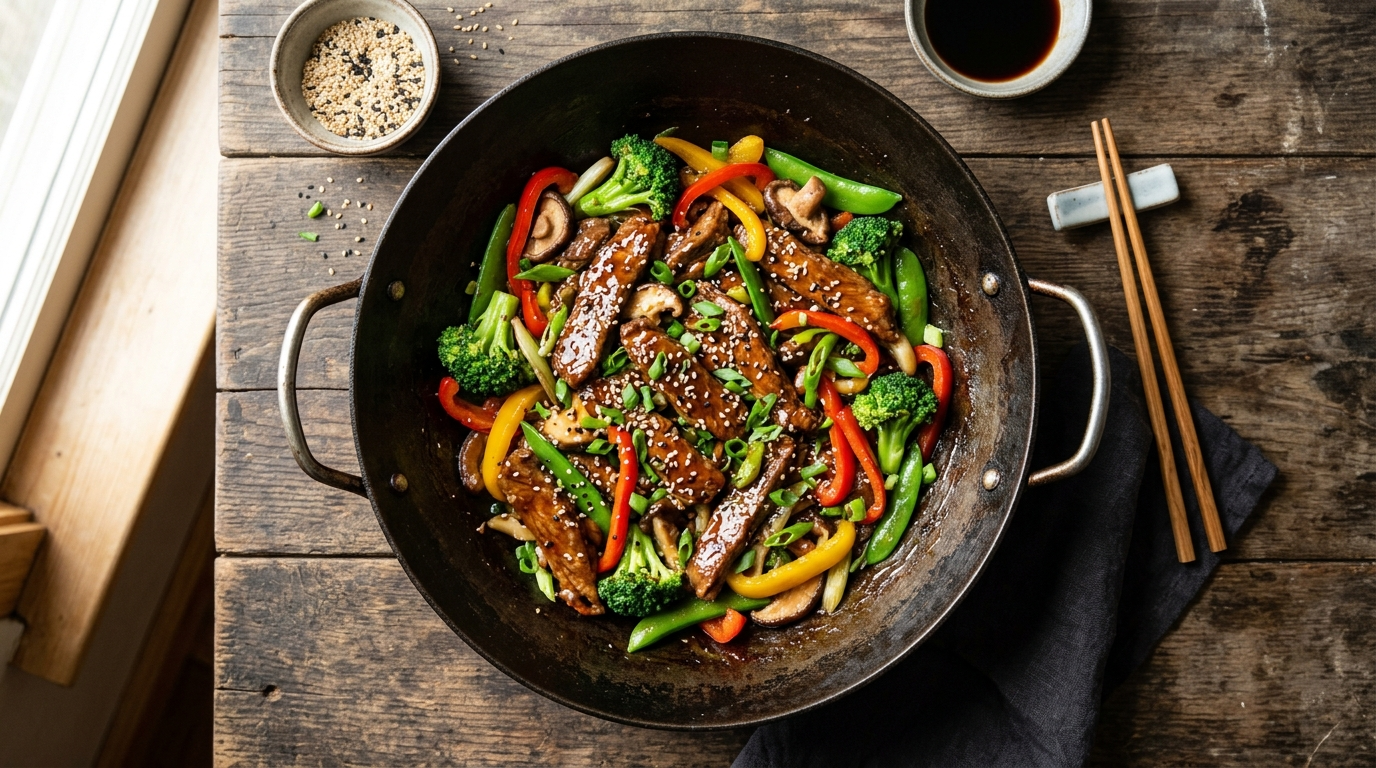
This quick beef stir fry recipe is the ultimate solution for busy weeknights when you need something fast, flavorful, and satisfying on the table in minutes. Featuring thinly sliced beef seared to perfection alongside vibrant bell peppers, broccoli, and snap peas, all coated in a rich umami-packed sauce, this dish checks every box without keeping you chained to the stove.
What makes this recipe truly special is the technique behind it. High heat, a well-seasoned wok or skillet, and properly prepped ingredients are the three pillars of a great stir fry. Once you master these basics, you will find yourself returning to this recipe again and again, swapping in whatever vegetables you have on hand and making it entirely your own with minimal effort.
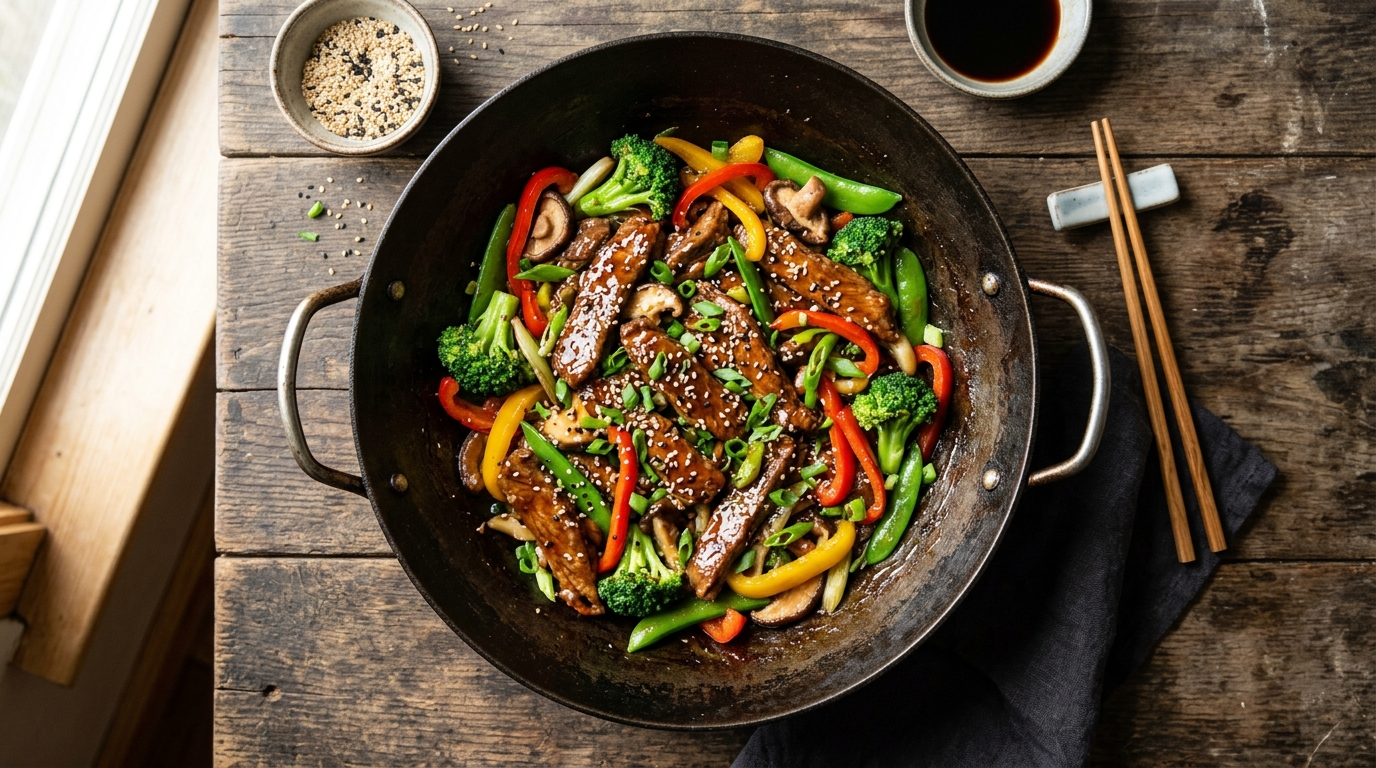
Whether you are cooking for a hungry family after a long day or meal prepping for the week ahead, this 15-minute beef stir fry delivers restaurant-quality results right from your own kitchen. The bold, glossy sauce clings to every piece of beef and vegetable, making each bite an explosion of savory, slightly sweet, and deeply satisfying flavor. Keep reading to discover exactly how to make this weeknight hero dish from start to finish.
This quick beef stir fry recipe delivers tender sliced beef, crisp colorful vegetables, and a bold savory sauce all in just 15 minutes. It is faster than takeout, packed with protein, and endlessly customizable. Make it tonight for a stress-free weeknight dinner the whole family will love.
Ingredients
| AMOUNT | INGREDIENT | NOTES |
|---|---|---|
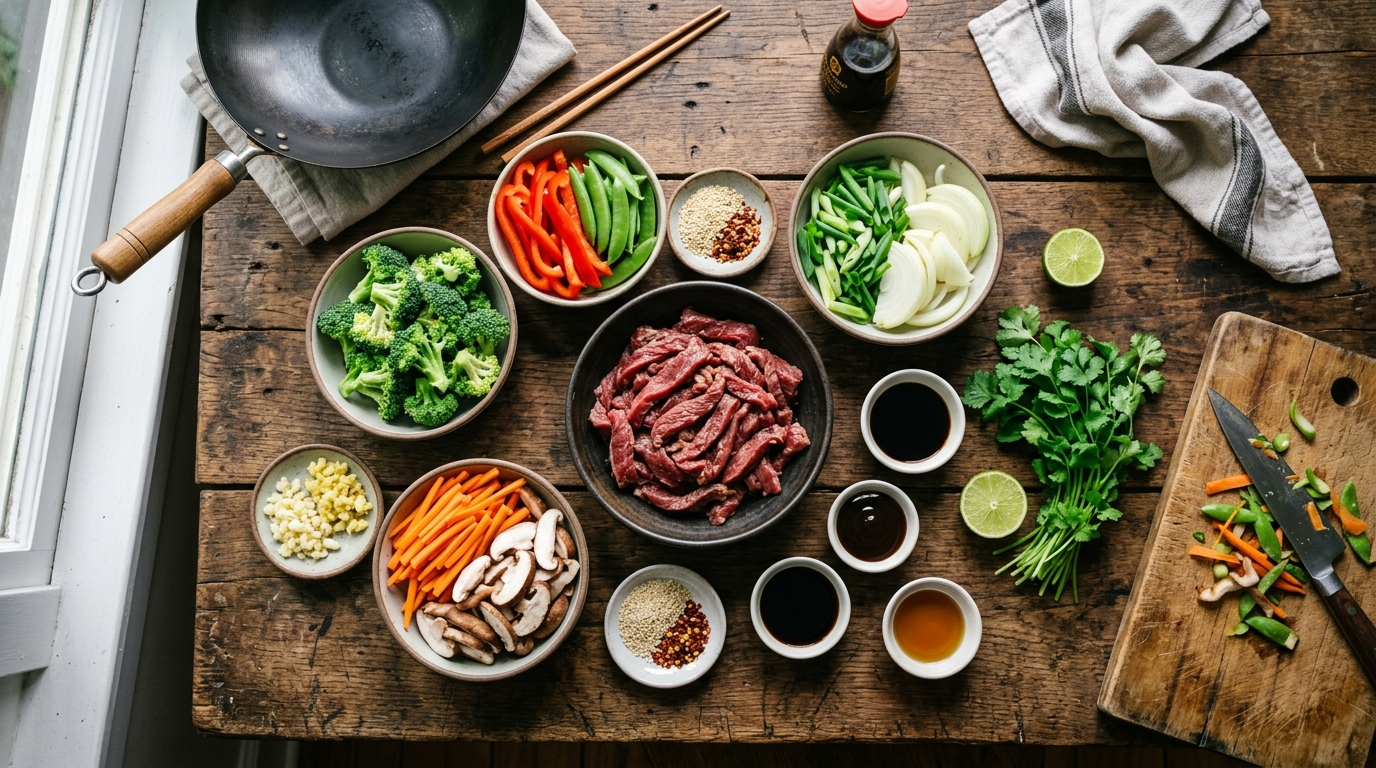
| 1 pound | flank steak or sirloin | sliced very thin against the grain |
| 2 tablespoons | soy sauce | low sodium preferred, for marinade |
| 1 tablespoon | cornstarch | for marinade, helps tenderize and thicken |
| 1 teaspoon | baking soda | optional, for velveting the beef |
| 2 tablespoons | vegetable oil | divided, high smoke point oil is best |
| 1 tablespoon | sesame oil | toasted, added at the end for aroma |
| 4 cloves | garlic | minced fresh |
| 1 teaspoon | fresh ginger | grated or finely minced |
| 1 medium | red bell pepper | sliced into thin strips |
| 1 medium | yellow bell pepper | sliced into thin strips |
| 2 cups | broccoli florets | cut into bite-sized pieces |
| 1 cup | snap peas | trimmed, strings removed |
| 3 tablespoons | oyster sauce | adds deep umami flavor to the sauce |
| 2 tablespoons | soy sauce | low sodium, for the stir fry sauce |
| 1 tablespoon | hoisin sauce | adds sweetness and body to the sauce |
| 1 teaspoon | brown sugar | balances the saltiness of the sauce |
| 1 teaspoon | cornstarch | mixed with 2 tablespoons of water for slurry |
| 2 tablespoons | water | mixed with cornstarch to create slurry |
| 2 stalks | green onions | sliced thin for garnish |
| 1 tablespoon | sesame seeds | toasted, for garnish |
Instructions
Nutrition (per serving)
About This Recipe
Stir frying as a cooking technique has roots stretching back over 1,500 years in China, where it emerged as a practical method born out of necessity. Fuel was scarce, so cooks developed a way to prepare food quickly over intense heat in a rounded iron wok. The result was a cooking style that preserved the natural color, texture, and nutrients of ingredients far better than slower methods. Beef became a popular protein in stir fry dishes as trade routes expanded and agricultural practices evolved, particularly in northern and western regions of China where cattle were more commonly raised and consumed.
As Chinese immigrants traveled the world throughout the 19th and 20th centuries, they brought their culinary traditions with them, adapting stir fry dishes to local ingredients and tastes. In Western countries like the United States, beef stir fry became one of the most beloved interpretations of this classic technique, with soy-based sauces, oyster sauce, and sesame oil becoming pantry staples in millions of homes. Today, the quick beef stir fry is celebrated globally as a symbol of how great cooking does not have to be complicated or time-consuming to be truly delicious.
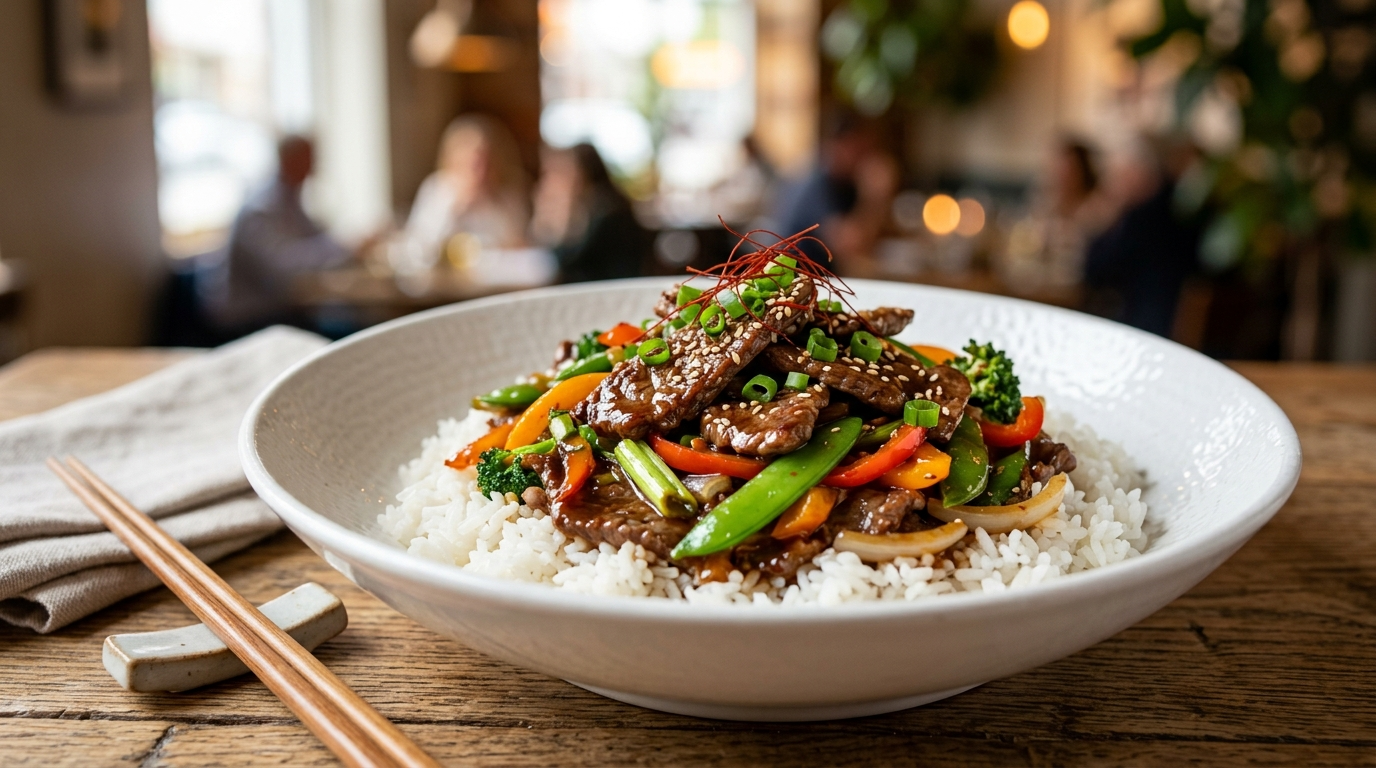
Ready to Serve
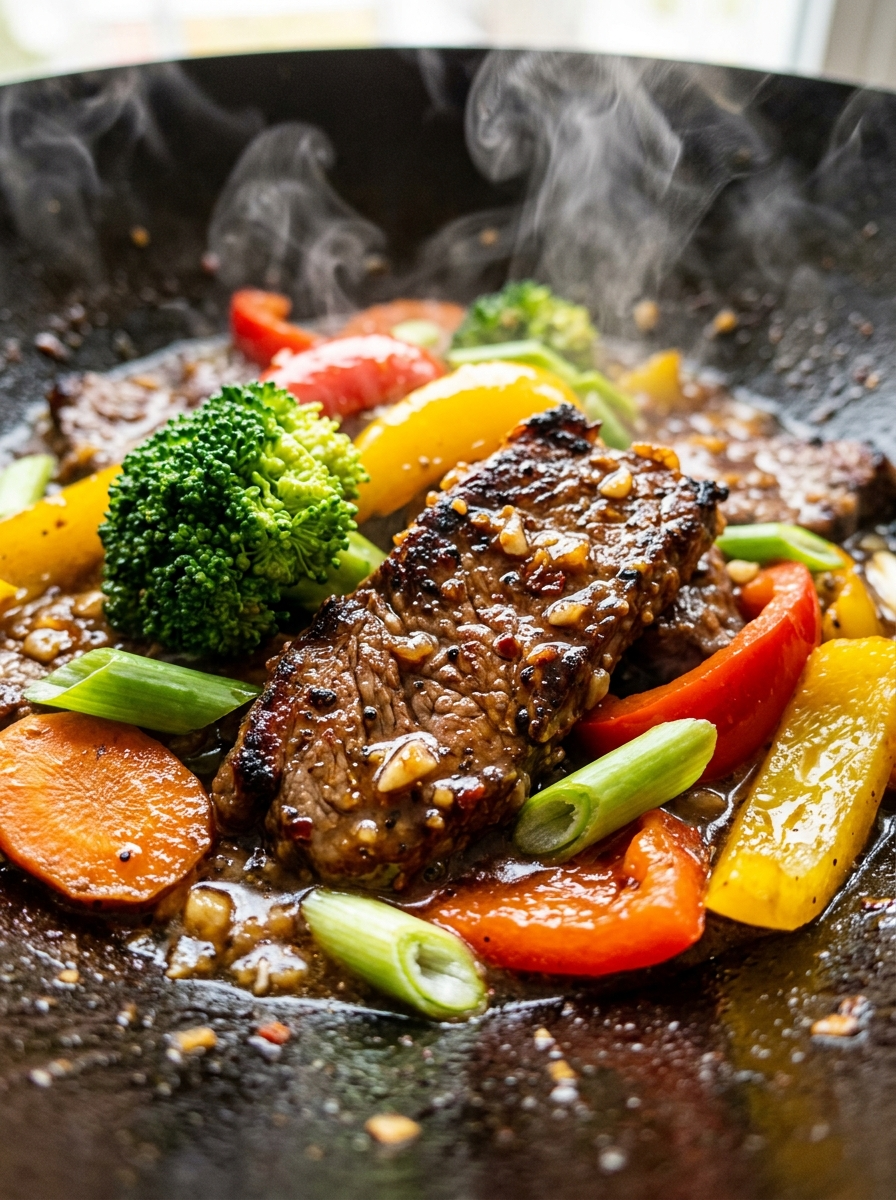
A Closer Look
Pro Tips for Best Results
- Always slice your beef against the grain and as thin as possible. Cutting against the grain shortens the muscle fibers, which is the single biggest factor in getting tender beef in a quick high-heat cook like stir fry.
- Do not skip the velveting step. The combination of cornstarch, soy sauce, and a small amount of baking soda in the marinade is a classic Chinese restaurant technique that protects the beef from the intense heat and keeps it silky and moist rather than tough and dry.
- Make sure your wok or skillet is ripping hot before any ingredients go in. A properly preheated pan means the beef sears instead of steams, and seared beef develops flavor through the Maillard reaction that simply cannot happen at lower temperatures.
- Prep every single ingredient before turning on the stove. Stir frying happens in under 10 minutes and there is no time to chop garlic or measure sauce once the heat is on. Professional chefs call this mise en place, meaning everything in its place, and it is the real secret to effortless stir fry cooking.
- Resist the urge to overcrowd the pan. If you add too much beef at once, the temperature of the pan drops and the meat steams in its own juices instead of searing. Always cook the beef in two separate batches if your pan is not large enough to hold it all in a single layer.
Essential Equipment
Large Wok or Skillet: A wide, heavy-bottomed wok or 12-inch skillet is essential for achieving the high heat and surface area needed to sear beef properly without steaming it.
Chef Knife: A sharp chef knife allows you to slice the beef thinly and uniformly against the grain, which is critical for achieving tender bites in a quick-cook recipe.
Cutting Board: A large sturdy cutting board gives you enough space to prep all your vegetables and beef efficiently before cooking begins.
Mixing Bowls: You will need at least two bowls, one for marinating the beef and one for whisking together the stir fry sauce before cooking.
Wooden Spoon or Wok Spatula: A long-handled wooden spoon or flat wok spatula lets you toss and stir ingredients quickly without scratching your pan or burning your hands.
Measuring Spoons and Cups: Accurate measurements of sauce ingredients ensure the balance of salty, sweet, and savory flavors comes out perfectly every single time.
Variations
Spicy Szechuan Style: Add 1 to 2 teaspoons of chili garlic paste and a generous pinch of Szechuan peppercorns to the sauce for a bold, numbing heat that transforms this into a fiery Szechuan-inspired stir fry.
Low Carb Cauliflower Rice Bowl: Skip the rice entirely and serve the stir fry over riced cauliflower that has been quickly sauteed in a little sesame oil. You cut significant carbohydrates while keeping all the bold flavor.
Teriyaki Beef Stir Fry: Replace the oyster sauce and hoisin with a simple homemade teriyaki sauce made from soy sauce, mirin, sake, and honey for a sweeter, Japanese-inspired variation the kids will absolutely love.
Rainbow Vegetable Version: Load this dish up with as many colorful vegetables as possible, including purple cabbage, shredded carrots, baby corn, and water chestnuts for extra crunch, fiber, and visual appeal.
Ginger Scallion Beef: Double the fresh ginger and green onions while omitting the bell peppers for a cleaner, more aromatic version that highlights the natural sweetness of the beef against fragrant ginger and scallion.
Frequently Asked Questions
Can I use a different cut of beef for this stir fry?
Absolutely. While flank steak and sirloin are ideal because of their leanness and beefy flavor, you can also use skirt steak, flat iron steak, or even ribeye for a richer result. The key is always to slice the beef very thin and against the grain regardless of the cut you choose.
Can I make this stir fry ahead of time?
Yes, you can prepare several components in advance. The sauce can be whisked together and stored in the refrigerator for up to 5 days. The beef can be marinated for up to 24 hours. However, the actual stir frying is best done fresh since the vegetables lose their crunch and the beef loses its sear quality when reheated.
Can I freeze leftover beef stir fry?
You can freeze leftovers in an airtight container for up to 2 months, though the texture of the vegetables will soften significantly after thawing. If you plan to freeze it, consider slightly undercooking the vegetables so they hold up better after reheating. Thaw overnight in the refrigerator and reheat in a hot skillet rather than a microwave for best results.
My sauce is too thin. How do I fix it?
If your sauce is not thickening the way you want, simply mix an additional half teaspoon of cornstarch with one tablespoon of cold water and stir that slurry directly into the wok while everything is still hot. Toss for another 30 seconds over heat and the sauce should come together into a gorgeous glossy coating.
Is this recipe gluten free?
As written, this recipe contains gluten from soy sauce, oyster sauce, and hoisin sauce. To make it gluten free, substitute tamari or certified gluten free soy sauce, use a gluten free oyster sauce, and replace hoisin with a gluten free alternative or a mixture of rice vinegar, peanut butter, and a little honey.
What can I serve with beef stir fry besides white rice?
This dish is incredibly versatile. It pairs beautifully with steamed jasmine rice, brown rice, fried rice, lo mein noodles, udon noodles, rice noodles, or cauliflower rice for a lower carb option. You can also serve it inside lettuce cups for a light and fresh presentation.