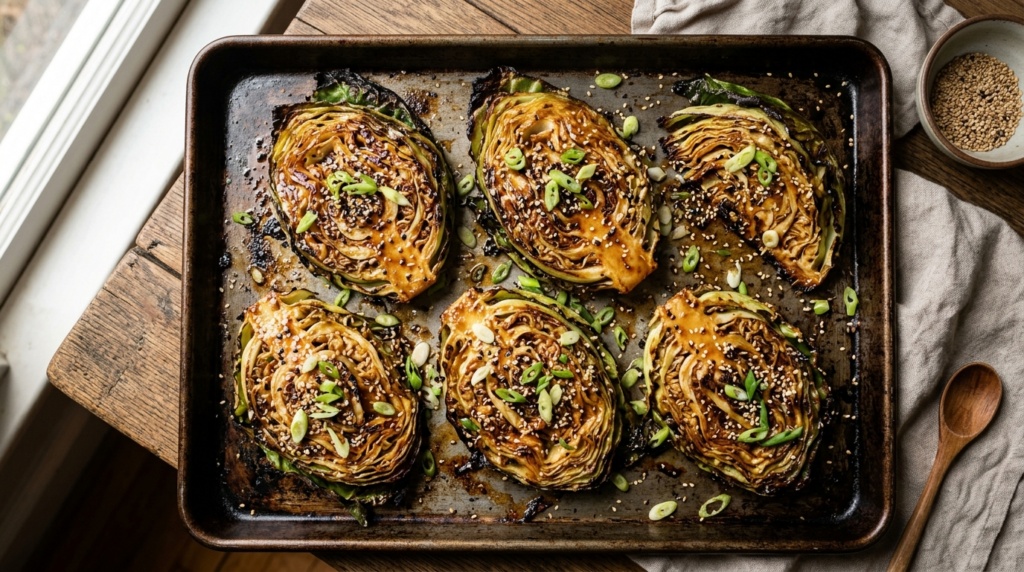
Miso butter roasted cabbage wedges turn one of the most affordable vegetables in the produce aisle into something genuinely crave-worthy. The high oven heat drives off moisture and coaxes the natural sugars in cabbage into deep, golden-brown caramelization, while the edges crisp and the interior turns silky and sweet.
The miso butter is the element that makes this dish memorable. White or yellow miso paste brings fermented umami depth, and when it is blended with softened butter and applied to the hot wedges, it melts into a glossy, savory coating that clings to every charred leaf. A squeeze of lemon or rice vinegar at the end cuts the richness and brightens the whole plate.
This recipe works as a vegetarian main course alongside a grain like farro or steamed rice, or as a bold side dish next to roasted chicken, grilled salmon, or a simple fried egg. It scales easily for two or for a crowd, and the technique is forgiving enough for any home cook.
Miso Butter Roasted Cabbage Wedges | FlavorGrub
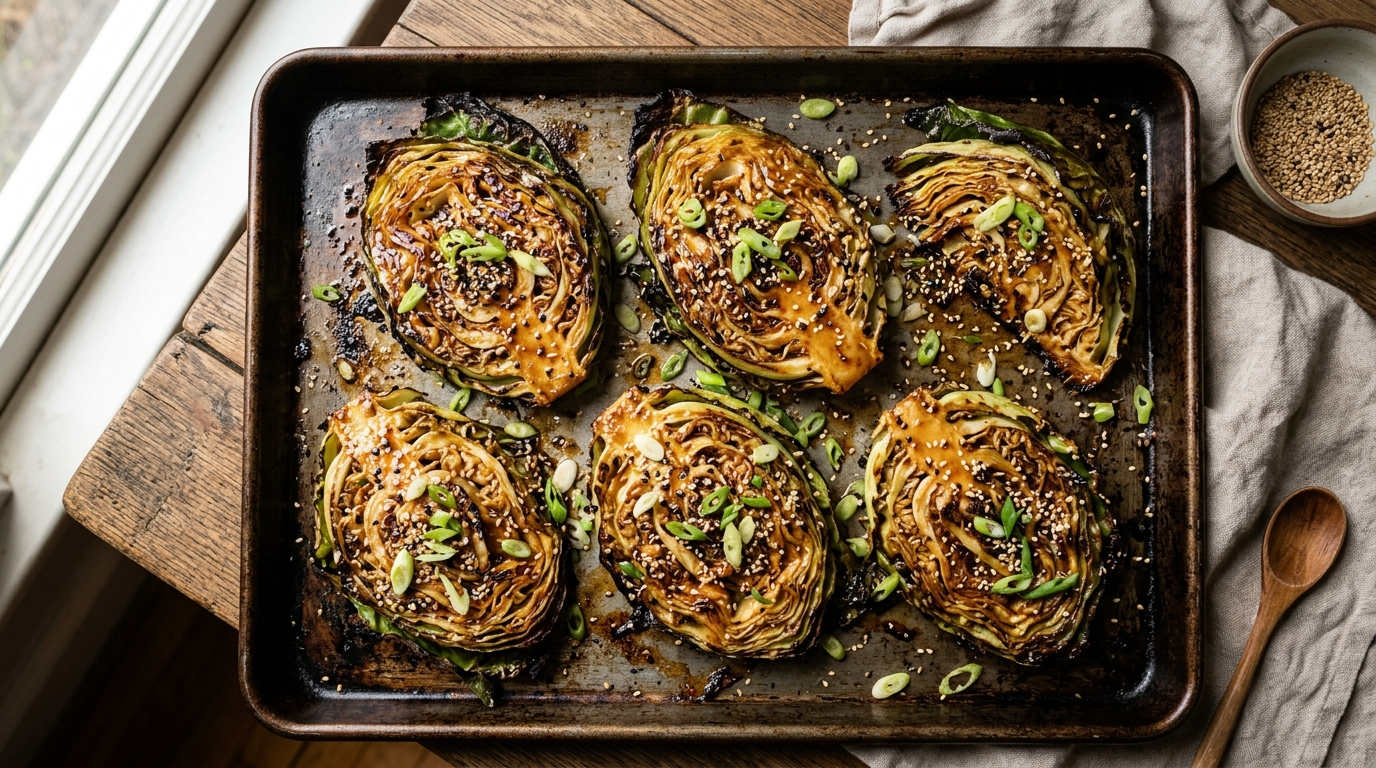
Thick cabbage wedges are roasted at high heat until caramelized and tender, then finished with a rich, savory miso butter that melts into every layer. A simple, satisfying side dish ready in about 50 minutes.
Prep: 20 minutes | Cook: 30 minutes | Servings: 4
Ingredients
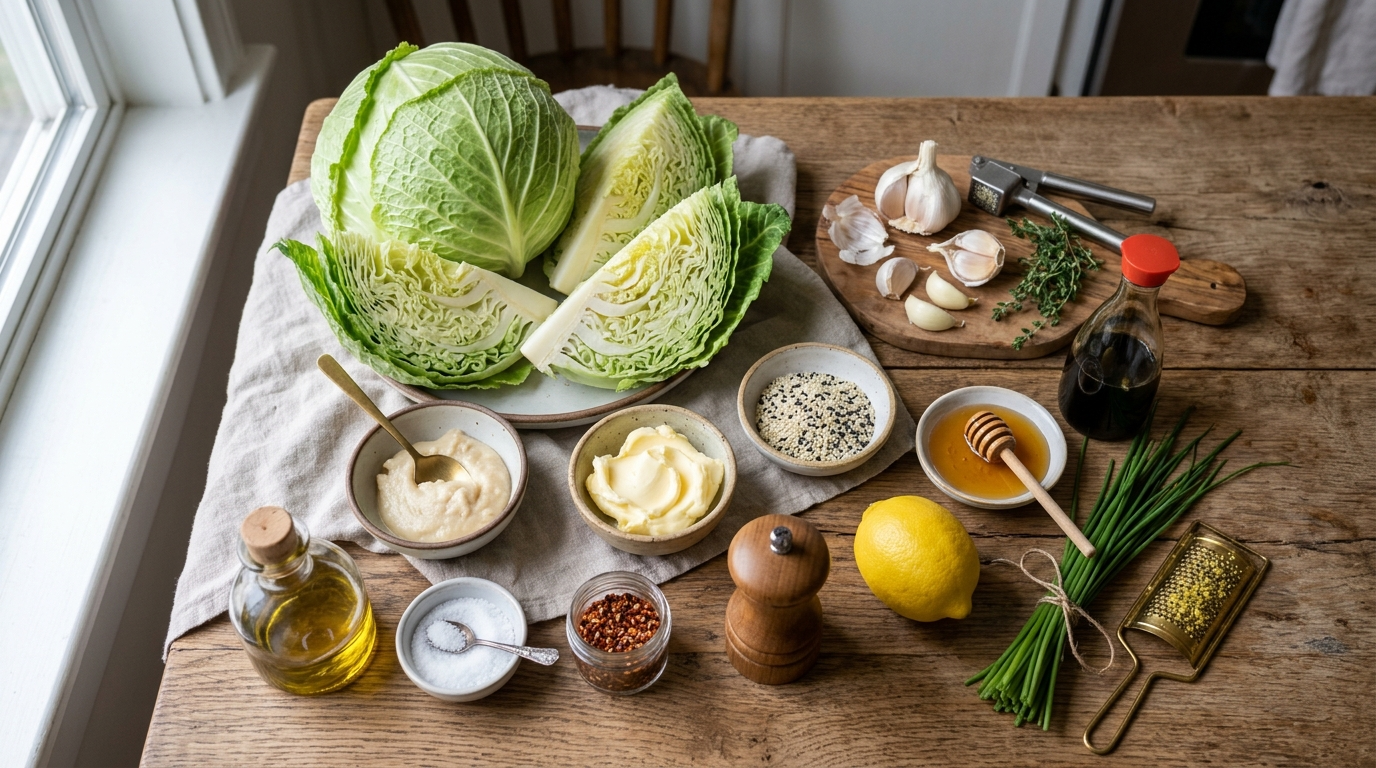
- 1 medium head green cabbage About 2 to 2.5 pounds; look for a firm, heavy head with tightly packed leaves. Red cabbage works but will bleed color.
- 3 tablespoons unsalted butter Softened to room temperature so it blends smoothly with the miso. Vegan butter works as a substitute.
- 2 tablespoons white miso paste (shiro miso) White or yellow miso gives a mild, slightly sweet umami flavor. Red miso can be used for a stronger, saltier result; reduce quantity to 1 tablespoon if so.
- 1 tablespoon olive oil Used to coat the cut faces before roasting; helps browning before the miso butter is applied
- 1 teaspoon toasted sesame oil Stirred into the miso butter; adds a nutty, aromatic layer. Optional but recommended.
- 1 teaspoon rice vinegar or fresh lemon juice Added to the miso butter to brighten the flavor and balance richness. Use more to taste when serving.
- 1 teaspoon honey or maple syrup Optional; adds a touch of sweetness that encourages caramelization and balances the saltiness of the miso
- 1/4 teaspoon black pepper, freshly ground Season to taste; the miso is already salty so taste before adding extra salt
- 2 tablespoons toasted sesame seeds For garnish; adds texture and visual appeal. Black or white sesame seeds both work.
- 2 stalks scallions (green onions) Thinly sliced, for garnish; adds fresh color and mild onion flavor
- 1 tablespoon fresh lemon juice or rice vinegar For finishing just before serving; adds brightness to the roasted wedges
Instructions
- Position an oven rack in the center and preheat to 425 F (220 C), allowing about 20 minutes to heat fully. Prepare the miso butter and cabbage while the oven heats. Use a large bare-metal rimmed baking sheet, or line it with parchment rated for the oven temperature.
- Make the miso butter: In a small bowl, combine 3 tablespoons of softened unsalted butter, 2 tablespoons of white miso paste, 1 teaspoon of toasted sesame oil, 1 teaspoon of rice vinegar or lemon juice, and 1 teaspoon of honey or maple syrup if using. Mix thoroughly with a fork or small spatula until the mixture is smooth and fully combined. Set aside at room temperature.
- Prepare the cabbage: Remove and discard any loose or damaged outer leaves from the head of cabbage. Place the cabbage on a cutting board and slice it in half through the core from top to bottom. Then cut each half into 3 even wedges, again cutting through the core, so you have 6 wedges total. Leave the core intact on each wedge; it acts as the anchor that holds the leaves together during roasting. If any wedges fall apart, press the leaves back together and they will hold reasonably well.
- Brush both flat cut sides of each wedge lightly with the 1 tablespoon of olive oil. Season the cut surfaces with the freshly ground black pepper. At this stage, hold off on adding salt; the miso butter will provide sufficient salinity.
- Arrange the wedges on the prepared baking sheet, cut-side down, in a single layer with space between each wedge. Crowding the pan will cause steaming instead of browning.
- Roast at 425 F for 15 minutes, until the bottom cut face is deeply golden brown and the leaves touching the pan are beginning to char at the edges. Use oven mitts to pull out the baking sheet.
- Using tongs, carefully flip each wedge to the other cut side. Return the pan to the oven and roast for an additional 10 minutes, until the second cut face is well browned and the cabbage is tender when pierced with a fork or paring knife through the thickest part near the core.
- Remove the baking sheet from the oven. Working quickly while the wedges are hot, spoon or brush an even layer of the miso butter over the top surface of each wedge. The residual heat will melt the butter into the leaves. Return the pan to the oven for 3 to 5 additional minutes, watching closely, until the miso butter is bubbling and has taken on a deeper color. Watch carefully during this stage; miso can go from caramelized to burnt quickly due to its sugar content.
- Remove the pan from the oven. Squeeze or drizzle the finishing tablespoon of lemon juice or rice vinegar over all the wedges while still hot.
- Transfer the wedges to a serving platter or individual plates. Garnish with toasted sesame seeds and thinly sliced scallions. Serve immediately while hot and crisp at the edges.
- Store leftovers: Transfer any uneaten wedges into shallow airtight containers within 2 hours of cooking, or within 1 hour if the surrounding temperature is above 90 F. Refrigerate at 40 F or below and use within 3 to 4 days. To reheat, place wedges on a baking sheet in a 375 F oven for 10 to 12 minutes, or until an instant-read thermometer inserted into the thickest part reads 165 F. Alternatively, reheat in a skillet over medium heat, cut-side down, until hot through. Microwave reheating is possible but will soften the texture significantly.
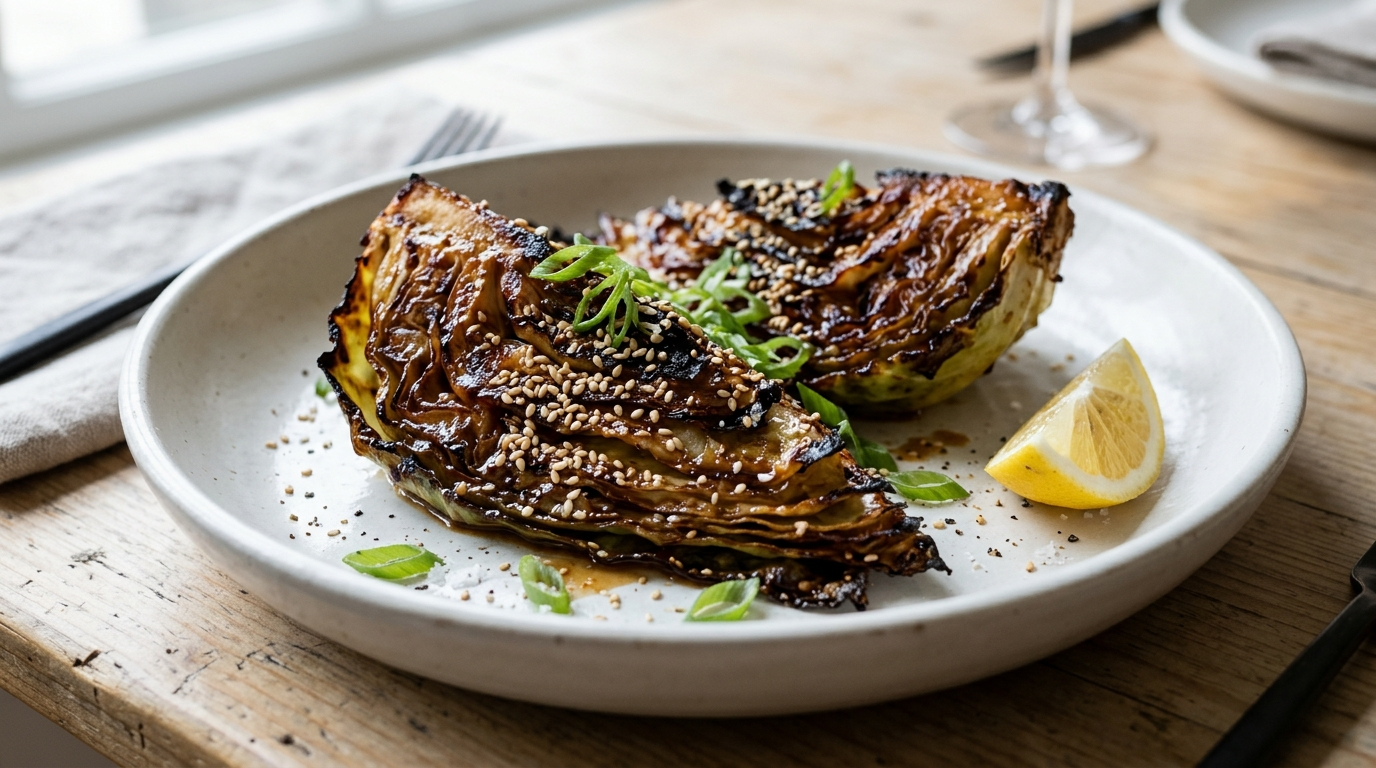
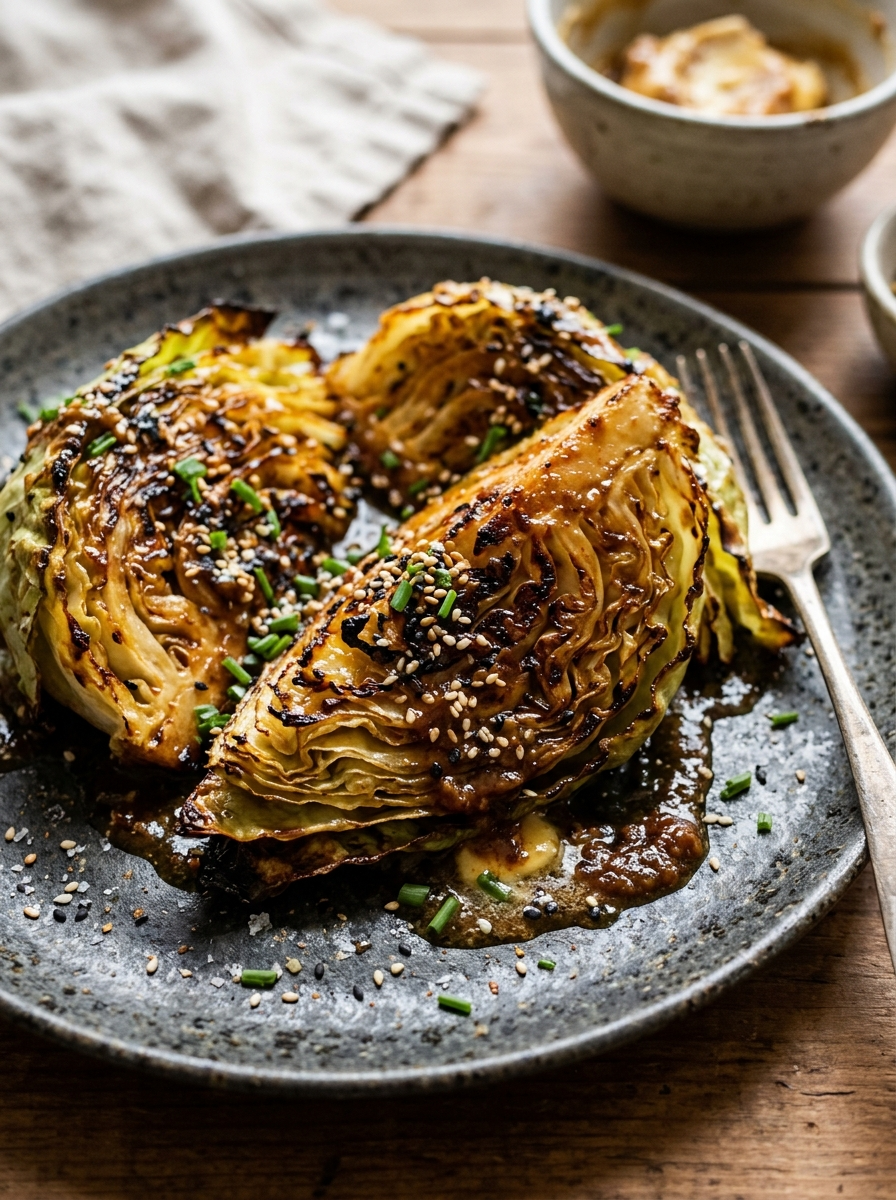
This recipe combines high-heat roasted cabbage with a miso compound butter. White or yellow miso adds savory depth; applying the butter near the end helps limit scorching. The result is a Japanese-inspired vegetable side rather than a claim to a traditional Japanese dish.
Practical Tips
- Keep the core attached: The cabbage core is what holds each wedge together during roasting. Cut squarely through it each time rather than around it.
- Dry the cabbage surface before oiling: If the outer leaves are damp from rinsing, pat them dry with a paper towel. Excess moisture creates steam in the oven and slows browning.
- Use a hot oven: Use 425 F for the timing in this recipe. Lower temperatures will cook the cabbage but produce pale, soft results rather than the crisp, browned edges the dish depends on.
- Let the pan get hot before adding cabbage only if roasting on a bare metal sheet: If you preheat the bare pan for 5 minutes in the oven before adding the wedges, you will get more aggressive bottom browning. This step is optional and should be skipped if using parchment.
- Taste your miso before mixing: Miso varies significantly in saltiness between brands. Taste the paste before making the butter and adjust the quantity if it is particularly salty.
- Soften the butter properly: Butter that is too cold will not incorporate with miso and will leave streaks. If you forgot to take it out in advance, cut it into small pieces and microwave in 5-second intervals just until pliable, not melted.
- Do not salt before roasting: Miso paste is already high in sodium. Taste the finished wedges before adding any additional salt at the table.
- Freeze for longer storage: If you are not going to use leftovers within 3 to 4 days, freeze individual wedges on a parchment-lined tray until solid, then transfer to a freezer-safe bag. Reheat from frozen in a 375 F oven until an instant-read thermometer reads 165 F, which will take approximately 20 to 25 minutes.
Large rimmed baking sheet (half sheet pan): Provides enough surface area to lay wedges flat in a single layer, which is essential for browning rather than steaming
Small mixing bowl: Used to blend the miso butter ingredients together until smooth
Fork or small silicone spatula: Mashes and combines the softened butter and miso paste into a uniform mixture
Sharp chef's knife: Needed to cut the cabbage cleanly through the core so wedges hold together during roasting
Cutting board: Stable surface for halving and cutting the cabbage into wedges
Pastry brush or spoon: Applies the miso butter evenly over the surfaces and cut faces of the wedges
Instant-read thermometer: Confirms that leftover portions have been reheated to a safe internal temperature of 165 F
Oven mitts: Protects hands when handling a very hot baking sheet
Shallow airtight containers: Used for safe, prompt refrigeration of cooked leftovers within 2 hours of cooking
Spicy Miso Butter Wedges: Add 1 to 2 teaspoons of gochujang (Korean fermented chili paste) or 1 teaspoon of sambal oelek to the miso butter mixture. The chili paste adds heat and a deeper red color. Start with 1 teaspoon and add more to taste, keeping in mind that gochujang also adds sweetness.
Vegan Miso Roasted Cabbage: Use plant-based butter instead of dairy butter and maple syrup instead of honey. Check that the miso contains no fish-based dashi.
Miso Butter Cabbage with Parmesan: After adding the miso butter, scatter 2 to 3 tablespoons of finely grated Parmesan or Pecorino Romano over the wedges for the final oven stage. The base butter and this cheese variation contain dairy; use the separate vegan variation if avoiding dairy.
Red Cabbage Miso Wedges: Use a head of red cabbage in place of green. Red cabbage is denser and slightly sweeter, and will take 3 to 5 additional minutes of roasting to become fully tender. The cut surfaces will turn a deep purple-brown. Add 1 teaspoon of apple cider vinegar to the miso butter, which helps preserve the color and adds brightness.
Miso Butter Wedges with Furikake: Replace the sesame seed and scallion garnish with 1 to 2 tablespoons of furikake, a Japanese seasoning blend typically made from sesame seeds, nori flakes, sugar, and salt. Sprinkle generously over the finished wedges just before serving. Note that most furikake contains fish and is not suitable for strict vegetarians.
Ginger-Miso Butter Wedges: Add 1 teaspoon of freshly grated ginger to the miso butter mixture. The ginger adds a warm, aromatic bite that pairs well with the fermented miso. Fresh ginger is strongly recommended over dried ground ginger in this application, as the flavor is brighter and more aromatic.
What type of miso is best for this recipe?
White miso, also called shiro miso, is the most recommended choice for this recipe because it has the mildest, slightly sweet flavor and blends smoothly into butter without overpowering the cabbage. Yellow miso is a reasonable substitute with a slightly stronger, earthier flavor. Red or dark miso is significantly saltier and more pungent; if you use it, reduce the quantity to 1 tablespoon and taste before adding more.
Can I make the miso butter ahead of time?
Prepare the miso butter in a clean covered container and refrigerate at 40 F or below for up to 3 to 4 days. Freeze extra portions promptly. Soften only the amount you need shortly before spreading it over the wedges.
Why is it important to keep the core on the wedges?
The core is the structural base that holds each wedge's leaves together. If you cut it away, the leaves will fall apart on the baking sheet and roast unevenly into individual pieces rather than intact wedges. The core becomes tender during roasting and is fully edible, though it will remain slightly firmer than the surrounding leaves.
My cabbage is steaming in the oven instead of browning. What went wrong?
There are three common causes: the oven was not fully preheated to 425 F, the wedges were overcrowded on the pan, or the cabbage surface was wet. Make sure your oven is fully up to temperature before adding the pan, use the largest baking sheet you have with space between each wedge, and pat the cabbage dry before oiling it.
Is this recipe gluten-free?
Use miso specifically labeled gluten-free; some miso contains barley or other gluten-containing grains. Check the labels on all seasonings and substitutions if avoiding gluten.
How do I know when the cabbage is done roasting?
The wedges are done when the cut faces are deeply golden brown to dark amber in color, the outer leaf edges are crisp and slightly charred, and the thickest part near the core can be pierced easily with a fork or paring knife with only light resistance. Pale yellow cabbage with soft, limp texture indicates undercooking; add 5 more minutes and check again.
Can I use savoy cabbage or napa cabbage instead of green cabbage?
Savoy cabbage works well and has a more delicate, crinkled leaf texture that crisps up nicely. Napa cabbage has a much higher water content and thinner leaves; it will roast faster and become more wilted than crisp, so reduce the initial roasting time by about 5 minutes and watch closely. Standard green cabbage, with its tight, dense structure, is the most reliable choice for holding together as wedges.
How long do leftovers keep, and how do I reheat them safely?
Refrigerate leftovers in shallow airtight containers within 2 hours of cooking, at 40 F or below, and use them within 3 to 4 days. For best texture, reheat on a baking sheet in a 375 F oven for 10 to 12 minutes and confirm the internal temperature reaches 165 F using an instant-read thermometer before eating. Portions you will not use within 4 days should be frozen promptly.