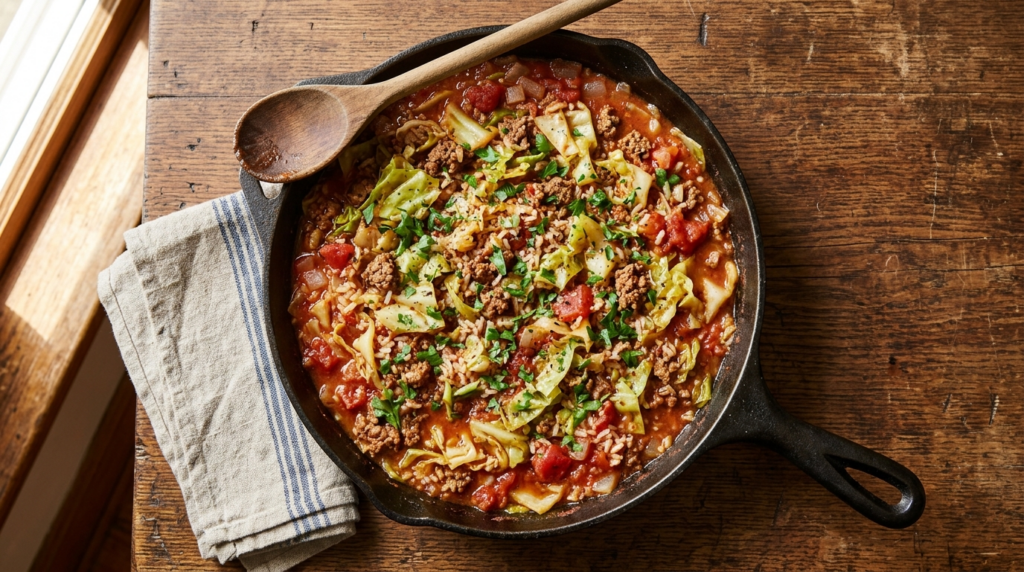
Stuffed cabbage rolls are a beloved comfort food across many cultures, but rolling and baking individual portions takes real time and effort. The unstuffed cabbage roll skillet solves that problem by cooking all the same ingredients together in a single pan, no rolling required. You get the same combination of seasoned ground beef, soft cabbage, hearty rice, and a rich tomato sauce, just without the assembly work.
This recipe is built for weeknight cooking. Everything goes into one large skillet, the rice cooks right in the sauce, and cleanup is minimal. It feeds four people generously and reheats well the next day, making it a practical choice for meal planning. If you have been looking for a recipe that delivers stick-to-your-ribs comfort without a long list of complicated steps, this unstuffed cabbage roll skillet belongs in your regular rotation.
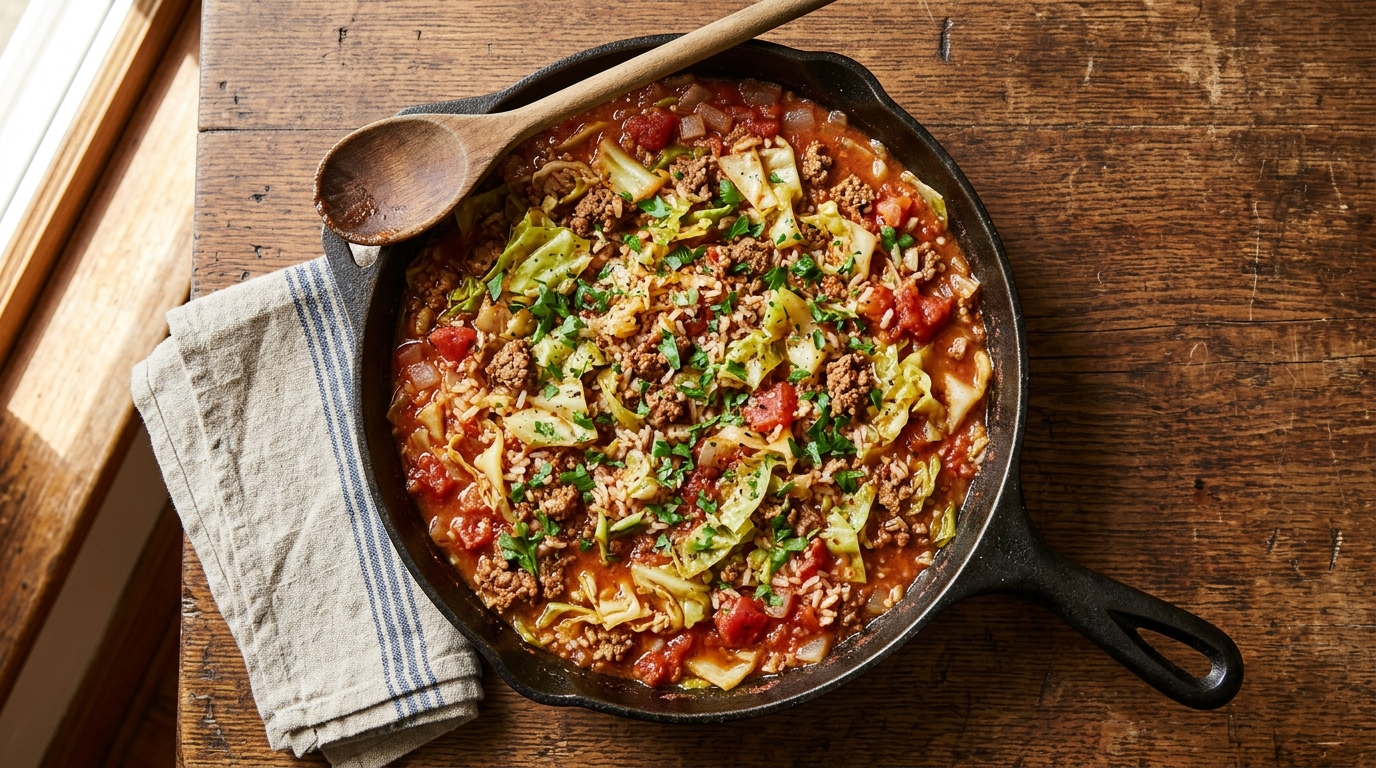
Unstuffed Cabbage Roll Skillet – Easy One-Pan Dinner Recipe
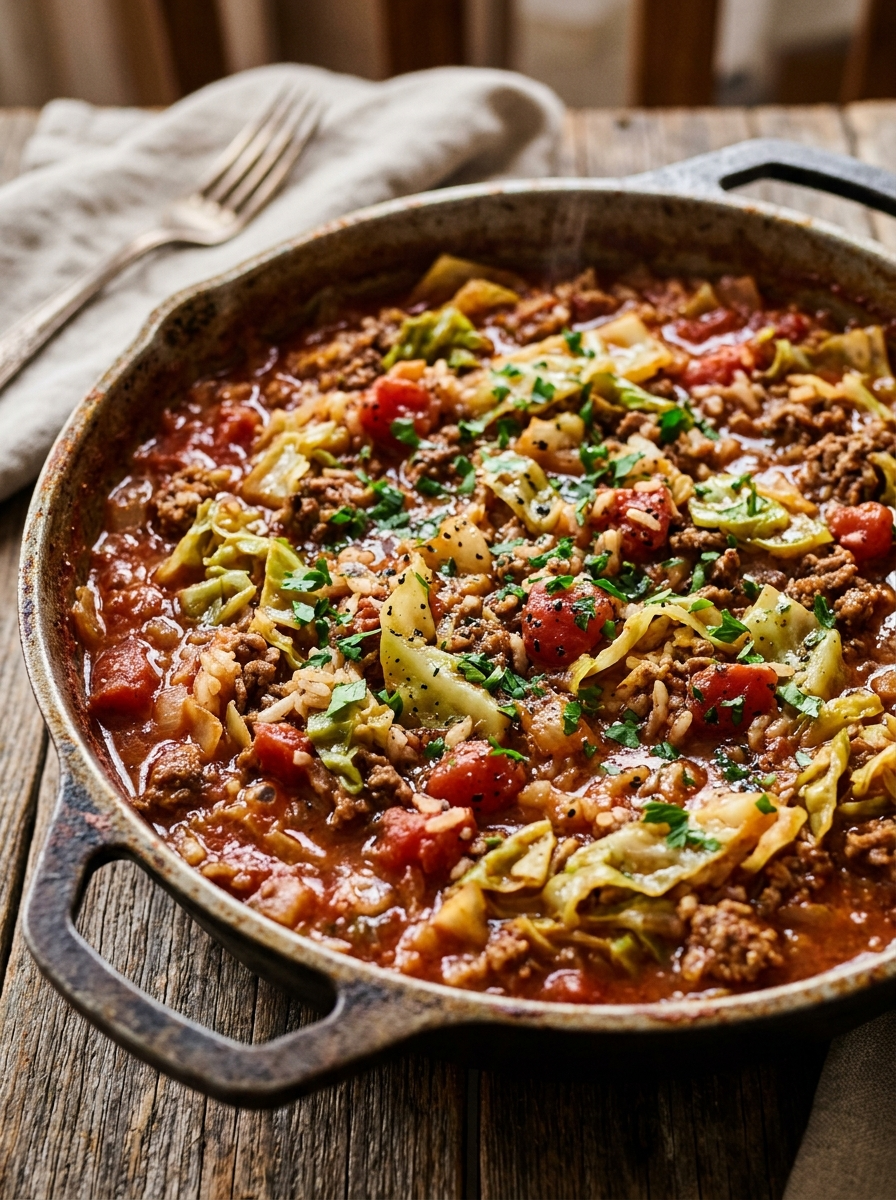
All the savory, comforting flavors of traditional stuffed cabbage rolls come together in one skillet in about 45 minutes. Ground beef, tender cabbage, white rice, and a tangy tomato sauce make this unstuffed cabbage roll skillet a satisfying weeknight dinner the whole family will enjoy.
Prep: 15 minutes | Cook: 40 minutes | Servings: 4
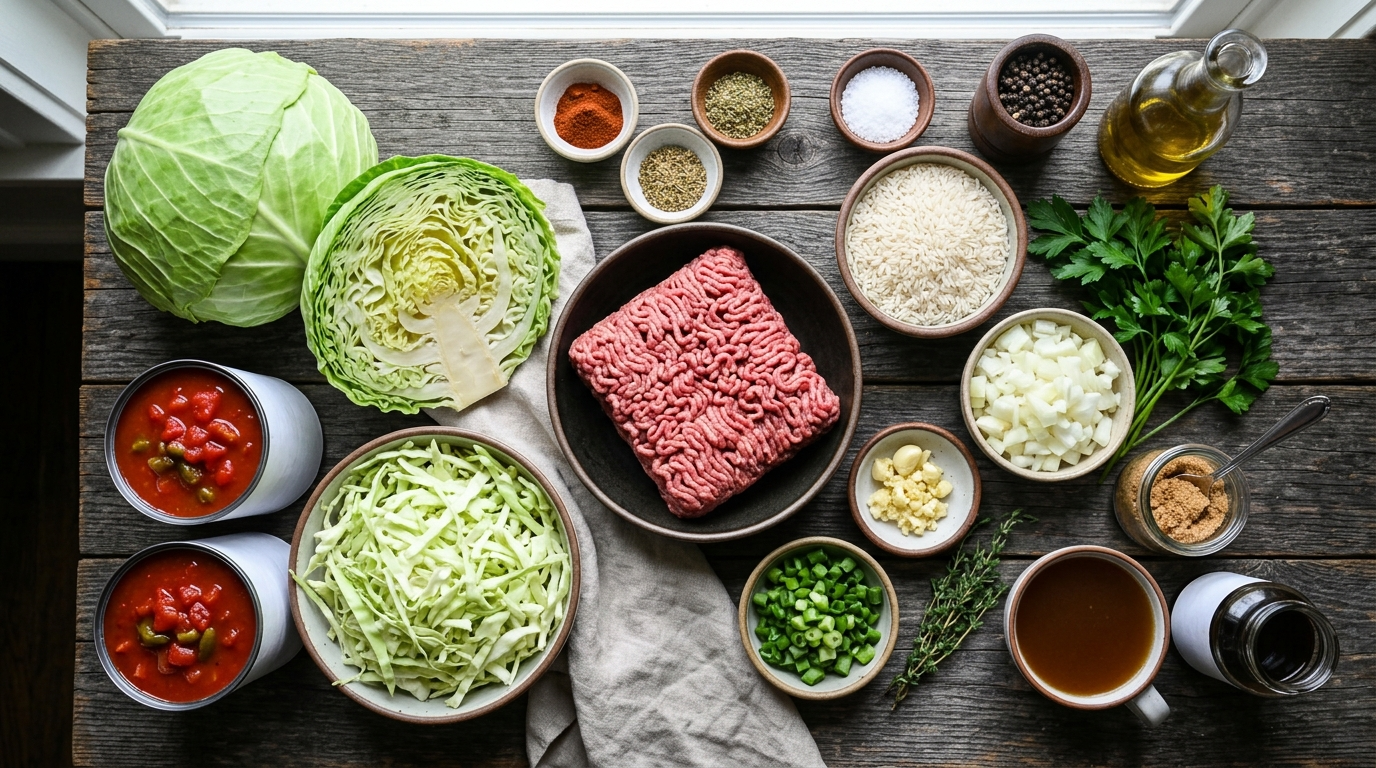
Ingredients
- 1 pound lean ground beef (85/15) You can substitute ground pork, ground turkey, or a 50/50 mix of beef and pork
- 1 medium yellow onion Diced, about 1 cup
- 3 cloves garlic Minced
- 4 cups green cabbage Roughly chopped into 1- to 2-inch pieces, from about half a medium head
- 1 can (14.5 oz) diced tomatoes With juices, not drained
- 1 can (15 oz) tomato sauce Plain, unseasoned
- 1 cup low-sodium beef broth Or chicken broth; provides liquid for cooking the rice
- 3/4 cup long-grain white rice Uncooked; do not use instant rice as it will overcook and turn mushy
- 2 tablespoons tomato paste Deepens the tomato flavor
- 1 tablespoon Worcestershire sauce
- 1 teaspoon sweet paprika
- 1 teaspoon dried thyme
- 1/2 teaspoon dried oregano
- 1 teaspoon kosher salt Plus more to taste at the end
- 1/2 teaspoon black pepper Freshly ground
- 1 tablespoon olive oil or neutral cooking oil For sautéing the onion
- 2 tablespoons fresh flat-leaf parsley Chopped, for garnish; optional but traditional
Instructions
- Prepare your ingredients before turning on the heat. Dice the onion, mince the garlic, and chop the cabbage into roughly 1- to 2-inch pieces. Set everything within reach of the stove. Open the canned tomatoes, tomato sauce, and measure out the broth and rice.
- Heat 1 tablespoon of oil in a 12-inch deep-sided skillet over medium-high heat until the oil shimmers, about 1 to 2 minutes.
- Add the diced onion and cook, stirring occasionally, for 4 to 5 minutes until softened and beginning to turn translucent around the edges.
- Add the minced garlic and cook for 1 minute, stirring constantly, until fragrant. Do not let it brown or it will turn bitter.
- Add the ground beef to the skillet. Break it into small crumbles with a wooden spoon or spatula. Cook over medium-high heat for 6 to 8 minutes, stirring and breaking up the meat frequently, until no pink remains and an instant-read thermometer inserted into the thickest cluster of meat reads 160 F.
- Tilt the skillet slightly and use a spoon to remove as much excess fat as possible, or carefully transfer the beef mixture to a colander to drain, then return it to the skillet. Excess fat will make the final dish greasy and thin the sauce.
- Reduce heat to medium. Stir in the tomato paste and cook for 1 to 2 minutes, stirring constantly, until it darkens slightly and coats the meat. This step removes the raw tomato paste flavor.
- Add the paprika, thyme, oregano, salt, and black pepper. Stir to combine and cook for 30 seconds.
- Add the chopped cabbage to the skillet. Stir well to mix it with the meat. Cook for 3 to 4 minutes, stirring occasionally, until the cabbage begins to wilt and reduces in volume enough to fit the remaining ingredients.
- Pour in the diced tomatoes with their juices, the tomato sauce, and the beef broth. Add the Worcestershire sauce. Stir everything together, scraping up any browned bits from the bottom of the pan.
- Bring the mixture to a boil over medium-high heat, stirring occasionally. Once boiling, stir in the uncooked rice and distribute it evenly throughout the liquid.
- Reduce heat to low, place the lid on the skillet, and cook for 20 to 22 minutes. Do not lift the lid during this time, as releasing steam will disrupt the rice cooking process. The rice is done when it has absorbed the liquid and is tender but not mushy.
- After 20 minutes, lift the lid and check the rice by pressing a spoon through the center. If the rice is still firm or there is a large amount of liquid remaining, replace the lid and cook for an additional 3 to 5 minutes. If the liquid is absorbed but the rice needs more time, add 2 tablespoons of broth or water, replace the lid, and continue cooking.
- Once the rice is fully cooked and the liquid is absorbed, remove the skillet from heat. Taste and adjust salt and pepper as needed. Let the skillet rest uncovered for 3 to 4 minutes before serving; this allows the rice to firm up slightly and the flavors to settle.
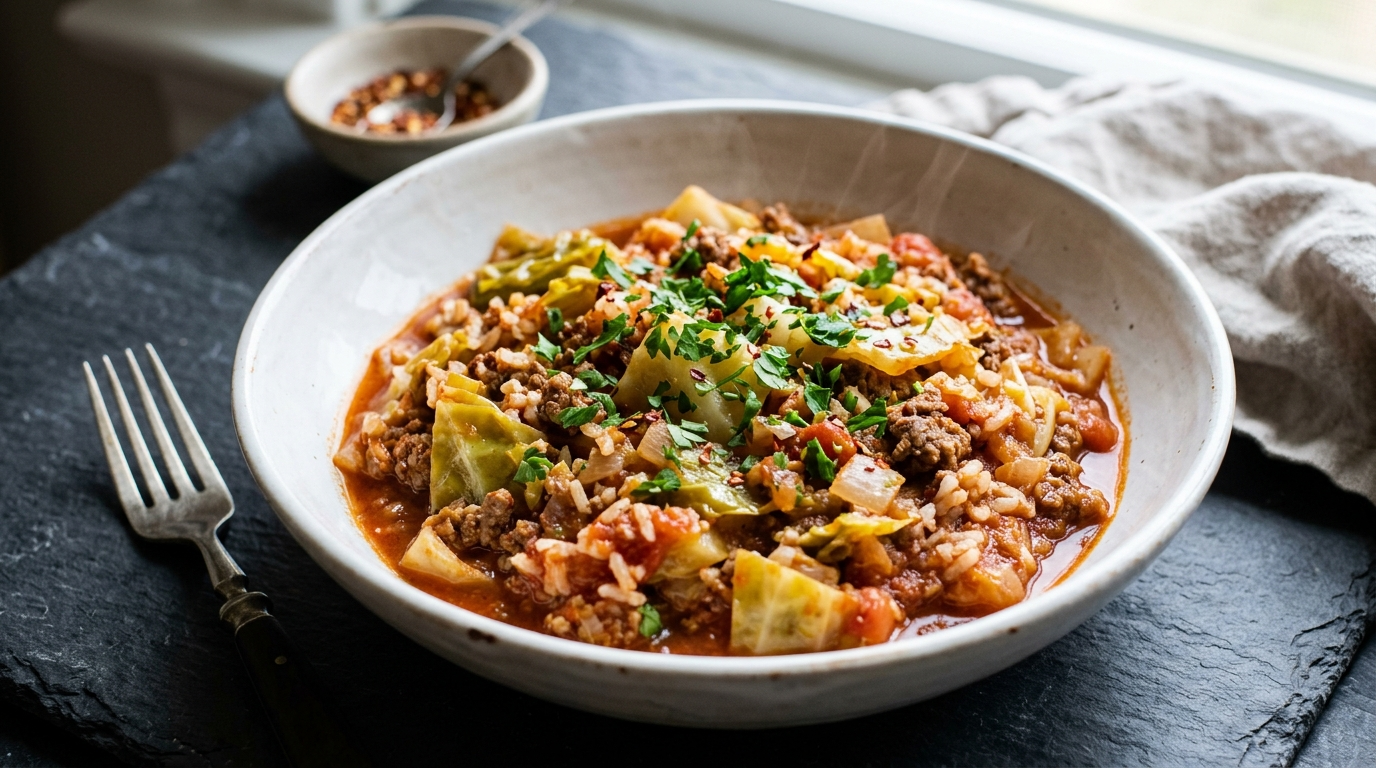
- Garnish with chopped fresh parsley and serve directly from the skillet.
- Refrigerate leftovers promptly. Transfer the skillet contents to shallow airtight containers within 2 hours of cooking and refrigerate at 40 F or below. Use within 3 to 4 days. For longer storage, freeze in portioned containers. Reheat refrigerated leftovers on the stovetop over medium heat or in the microwave, stirring partway through, until an instant-read thermometer reads 165 F throughout. Add a splash of broth or water when reheating to loosen the rice if it has dried out.
Stuffed cabbage rolls have roots in Central and Eastern European cuisine, appearing in Polish, Hungarian, Ukrainian, Romanian, and Russian cooking under names such as gołąbki, töltött káposzta, and holubtsi. The dish traveled to the United States with immigrant communities in the late 19th and early 20th centuries and became a staple of church suppers and family dinners throughout the Midwest and mid-Atlantic states. The deconstructed or unstuffed version emerged as a practical home-cooking shortcut, capturing the traditional flavor profile of ground meat, cabbage, and tomato while eliminating the labor-intensive rolling step. It became especially popular as one-pan and skillet meals gained mainstream appeal in American home cooking from the 1970s onward.
Practical Tips
- Use a skillet that is at least 12 inches wide and has sides at least 2.5 to 3 inches deep. A shallow skillet will not hold all the ingredients once you add the cabbage and liquid.
- Do not use instant or parboiled rice. The regular long-grain white rice is calibrated to cook in the amount of liquid and time specified. Instant rice will overcook and become gummy.
- If your cabbage pieces are very large, they may take slightly longer to wilt in step 9. Give them adequate time before adding the liquid so you have room to stir.
- Drain the fat thoroughly after cooking the beef. Undrained fat will pool on the surface of the finished dish and make the sauce watery.
- Resist the urge to lift the lid while the rice cooks. Every time you remove the lid, steam escapes and the rice may not cook evenly or fully.
- If you prefer a slightly sweeter tomato flavor, which is common in traditional cabbage roll recipes, stir in 1 to 2 teaspoons of granulated sugar along with the broth in step 10.
- A squeeze of fresh lemon juice or a small splash of apple cider vinegar stirred in at the end brightens all the flavors and adds a touch of the tanginess found in classic stuffed cabbage roll sauces.
12-inch deep-sided skillet or sauté pan with lid: A wide, deep pan with a tight-fitting lid holds all the ingredients and traps steam to cook the rice evenly without a separate pot
Wooden spoon or silicone spatula: For breaking up the ground beef and stirring without scratching the pan surface
Chef's knife: For chopping the cabbage, onion, and garlic efficiently and safely
Cutting board: Provides a stable surface for all vegetable prep
Instant-read thermometer: For confirming ground beef reaches the safe internal temperature of 160 F and for verifying reheated leftovers reach 165 F
Measuring cups and spoons: For accurate liquid and seasoning quantities so the rice cooks properly and the dish is seasoned consistently
Colander or paper towels: For draining excess fat from the cooked ground beef
Ground Turkey or Chicken Version: Substitute an equal amount of ground turkey or ground chicken for the beef. Because poultry is leaner, use 2 tablespoons of oil when browning to prevent sticking. The safe internal temperature for ground poultry is 165 F, so verify with a thermometer before draining. The flavor will be lighter and milder; increase the paprika to 1.5 teaspoons and add a pinch of garlic powder to compensate.
Pork and Beef Mix: Use half pound of ground beef and half pound of ground pork for a richer, more traditional flavor profile that mirrors many Eastern European stuffed cabbage recipes. The safe internal temperature for ground pork is 160 F. Drain fat thoroughly as pork can render more fat during browning.
Brown Rice Version: Substitute long-grain brown rice for white rice. Increase the beef broth to 1.5 cups and extend the covered cooking time to 40 to 45 minutes on low heat. Check the rice at the 40-minute mark and add additional broth by the tablespoon if needed. Brown rice has a nuttier flavor and chewier texture.
Vegetarian Unstuffed Cabbage Roll Skillet: Omit the ground meat entirely. Substitute 2 cans of drained brown lentils or 1.5 cups of cooked green lentils and add them along with the tomatoes in step 10. Use vegetable broth instead of beef broth. Stir in 1 tablespoon of soy sauce in place of Worcestershire sauce for a plant-based option, or use a vegan Worcestershire sauce. The lentils do not need to be browned; they simply heat through with the sauce.
Smoked Sausage Variation: Replace half the ground beef with 8 ounces of smoked kielbasa or Polish sausage, sliced into half-inch coins. Brown the sausage slices in the skillet first over medium-high heat for 2 to 3 minutes per side until lightly colored, then remove and set aside. Cook the ground beef in the same pan with the onion, then return the sausage to the skillet before adding the liquid. The smoked sausage adds a deeply savory, smoky flavor reminiscent of the versions served in Polish-American communities.
Can I make this recipe ahead of time?
Yes. Cook the dish fully, let it rest for a few minutes off the heat, then transfer it to shallow airtight containers and refrigerate within 2 hours of cooking. It keeps well at 40 F or below for 3 to 4 days. The rice will absorb additional liquid as it sits, so add a splash of broth or water when reheating and stir well. Reheat to an internal temperature of 165 F before serving.
Can I freeze the unstuffed cabbage roll skillet?
Yes. Portion cooled leftovers into freezer-safe containers or zip-top freezer bags, removing excess air, and freeze for up to 3 months. Thaw overnight in the refrigerator before reheating. Reheat on the stovetop over medium heat or in the microwave, stirring partway through, until the internal temperature reaches 165 F. The rice texture will be softer after freezing, which is normal.
My rice is still hard after 22 minutes. What went wrong?
A few things can cause undercooked rice. The heat may have been too low to maintain a gentle simmer under the lid, or your lid may not seal tightly enough and steam escaped. Add 3 to 4 tablespoons of broth or water, replace the lid, and cook on low for an additional 5 minutes. Check again and repeat if needed. A tight-fitting lid is important for this recipe.
Can I use pre-shredded coleslaw mix instead of fresh cabbage?
You can, but the results will differ. Pre-shredded coleslaw mix contains very finely shredded cabbage that cooks down much faster and to a softer texture than hand-chopped pieces. It will become quite tender and may lose distinct texture in the final dish. If using it, reduce the initial wilting time in step 9 to 1 to 2 minutes and expect a softer consistency overall. You will need about 4 to 5 cups of shredded mix to replace 4 cups of chopped cabbage.
Is this recipe gluten-free?
The core ingredients are naturally gluten-free, but Worcestershire sauce often contains malt vinegar derived from barley, which is not gluten-free. Check your specific brand's label. Use a certified gluten-free Worcestershire sauce or substitute with a small amount of coconut aminos or gluten-free soy sauce. Also confirm your beef broth and tomato products are labeled gluten-free.
How do I prevent the rice from sticking to the bottom of the skillet?
Make sure the heat is on low once you cover the skillet in step 12. Cooking on medium or medium-high heat after adding the rice can scorch the bottom layer before the liquid absorbs. A heavy-bottomed skillet also distributes heat more evenly. If you hear loud sizzling or crackling from the bottom during the covered cooking phase, lower the heat immediately.
Can I add cheese on top?
Yes. Once the rice is cooked and the skillet is off the heat, sprinkle 1 cup of shredded mozzarella or sharp cheddar over the top, replace the lid for 2 to 3 minutes to let the residual heat melt the cheese, then serve. This is not traditional but is a popular variation in American home cooking.