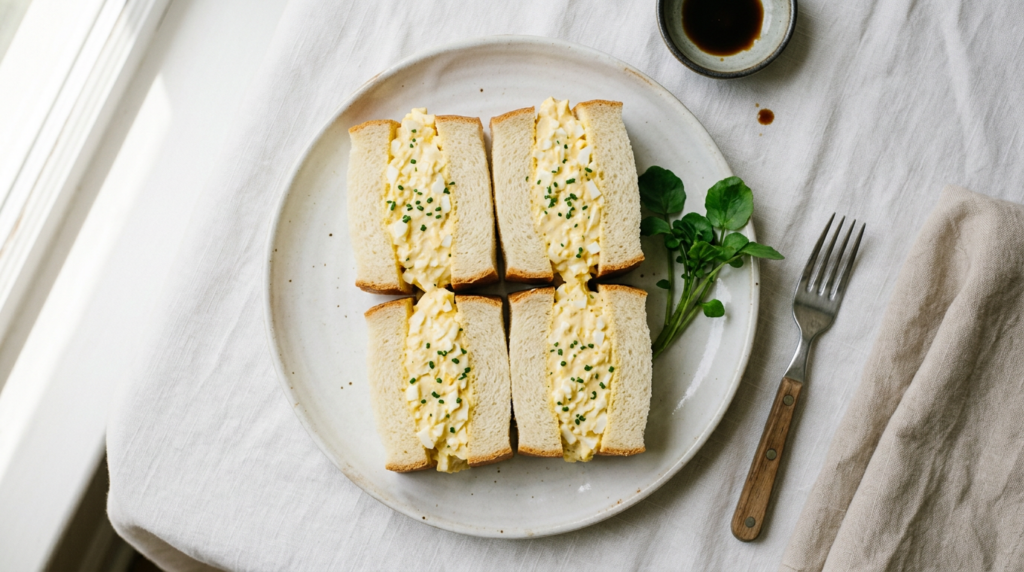
If you have ever wandered through a Japanese convenience store—or simply seen one on a food blog—you have almost certainly noticed the tamago sando sitting in its clear plastic sleeve, pale yellow filling pressed neatly against the cellophane. It looks almost too simple. It is not. The tamago sando earns its cult following through careful attention to texture and seasoning: eggs cooked just right, a dressing that is rich without being heavy, and bread so soft it practically melts.
At FlavorGrub, we believe the best home-cooking recipes respect the original while giving you the clearest possible path to success in your own kitchen. This tamago sando recipe covers ingredient selection, boiling method, dressing ratios, and assembly so you can produce a sandwich that holds together cleanly, tastes balanced, and looks as tidy as the ones wrapped in Japanese convenience stores. No special equipment is required, and the whole project comes together in about thirty minutes.
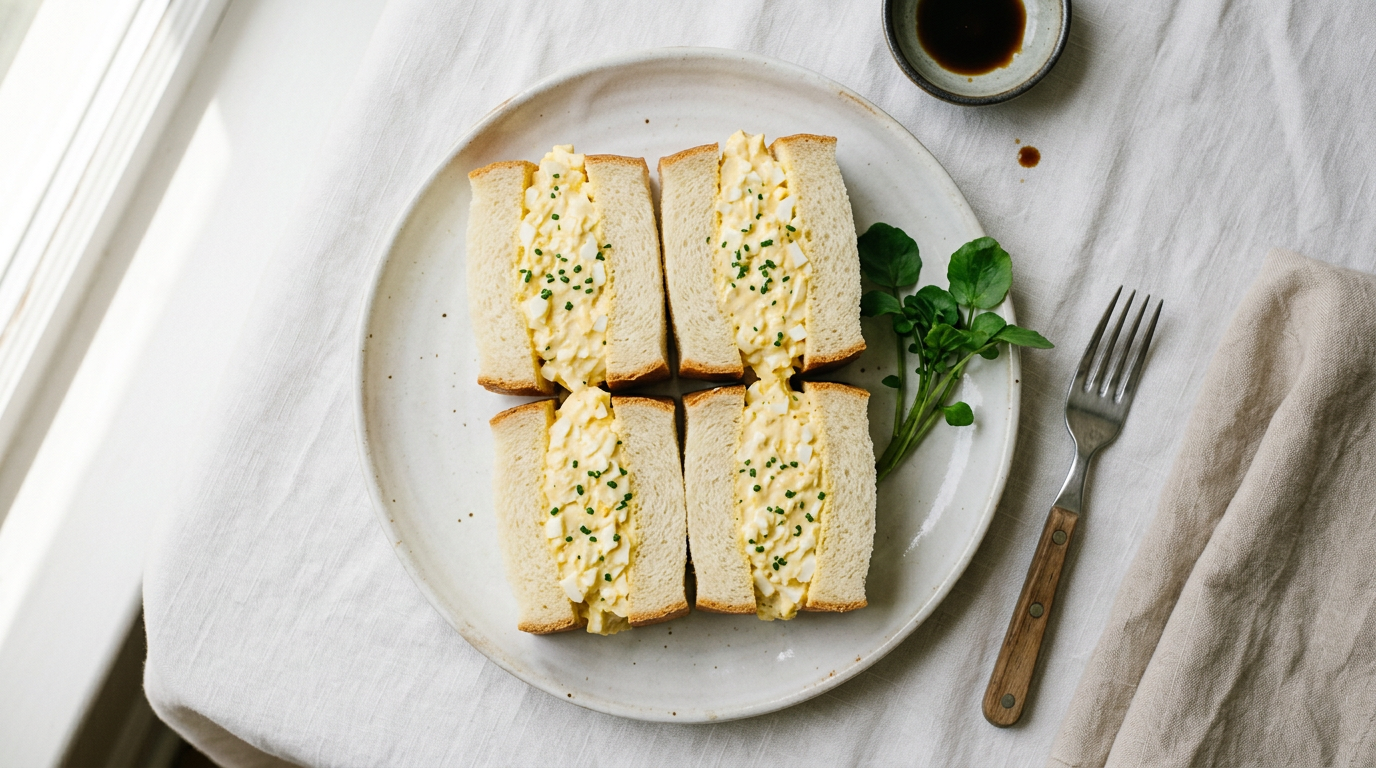
Tamago Sando Recipe – Japanese Egg Salad Sandwich
Tamago sando is a Japanese convenience-store staple featuring ultra-creamy egg salad tucked between slices of soft shokupan milk bread. This FlavorGrub recipe walks you through every step for a sandwich that is simple, satisfying, and genuinely delicious.
Prep: 15 minutes | Cook: 13 minutes | Servings: 4
Ingredients
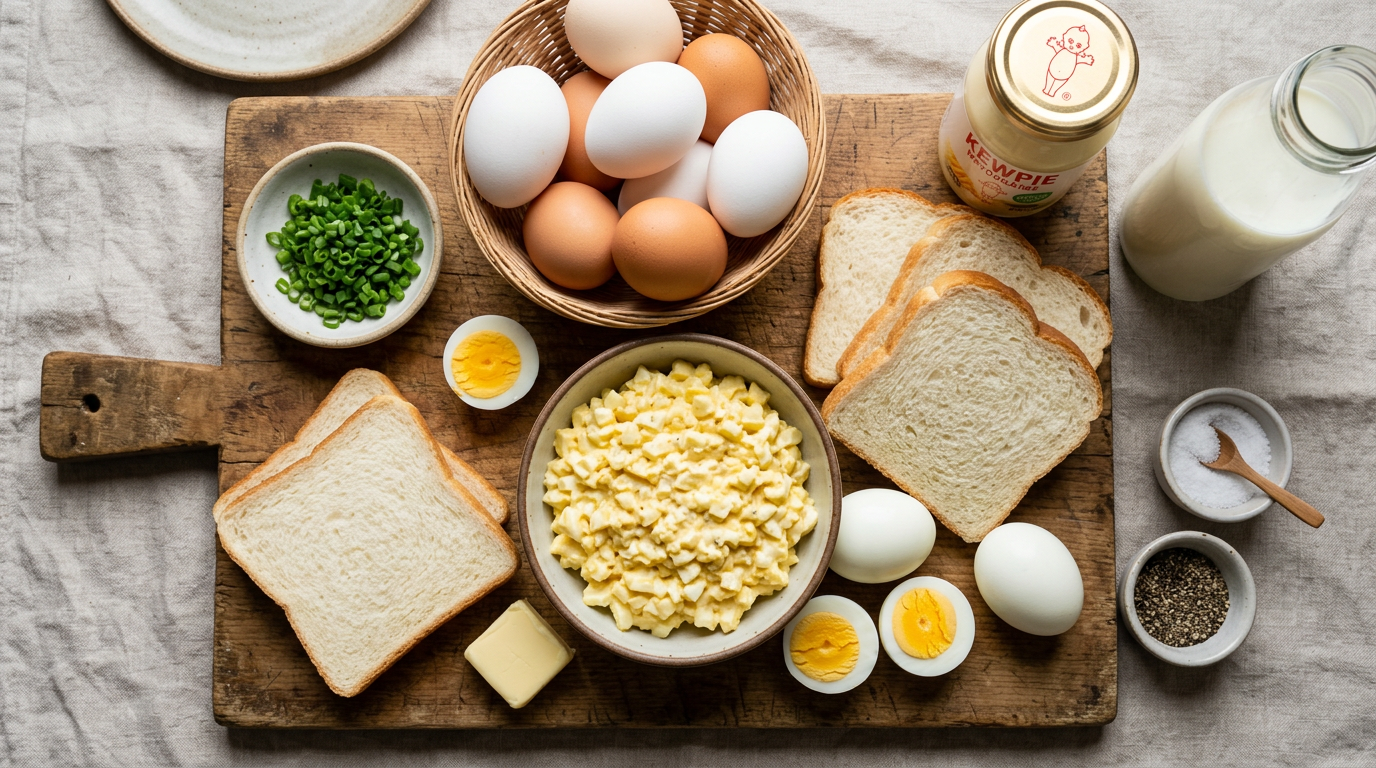
- 6 large eggs Use the freshest eggs available; slightly older eggs (7–10 days) peel more cleanly after boiling
- 3 tablespoons Japanese mayonnaise Kewpie brand is the most widely available; substitute regular mayonnaise in a pinch but flavor will differ
- 1 teaspoon Dijon mustard Optional but adds a mild sharpness that balances the richness; some classic recipes omit it
- 1 teaspoon rice vinegar Adds brightness; use unseasoned rice vinegar
- 0.5 teaspoon granulated sugar A small amount rounds out the flavor; standard in many Japanese egg salad preparations
- 0.25 teaspoon fine sea salt Adjust to taste after mixing
- 0.25 teaspoon white pepper White pepper is traditional; black pepper can be substituted
- 8 slices shokupan Japanese milk bread Look for it at Japanese or Asian grocery stores; brioche or any soft white sandwich bread works as a substitute
- 1 tablespoon unsalted butter, softened Optional thin layer on the bread slices; helps prevent sogginess and adds richness
Instructions
- Fill a medium saucepan with enough water to cover 6 eggs by at least 1 inch. Bring the water to a full rolling boil over high heat. While the water heats, prepare a large bowl filled with cold water and a generous amount of ice cubes and set it beside the stove.
- Once the water is at a full boil, use a slotted spoon to lower the eggs one at a time into the water. Reduce the heat to maintain a gentle but active boil—not a violent rolling boil that cracks the shells. Set a timer immediately.
- For a fully set yolk that is still slightly creamy at the center, boil for exactly 11 minutes. For a fully hard-boiled yolk, boil for 12 to 13 minutes. Tamago sando typically uses a yolk that is just barely set through—11 minutes is the standard starting point for large eggs at sea level. Adjust upward by 1 minute at high altitude.
- When the timer goes off, immediately transfer the eggs with the slotted spoon directly into the ice bath. Let them sit for at least 10 minutes. This stops cooking, makes peeling easier, and brings the eggs to a safe handling temperature.
- After 10 minutes in the ice bath, peel the eggs under a thin stream of cool running water. Gently crack each egg all around, then peel starting from the wider end where the air pocket sits. Rinse each peeled egg and place on a cutting board.
- In a medium bowl, combine the Japanese mayonnaise, Dijon mustard (if using), rice vinegar, sugar, salt, and white pepper. Stir until the dressing is smooth and the sugar and salt have dissolved.
- Add all 6 peeled eggs to the bowl. Use a fork to break them into rough chunks, then continue mashing to your preferred texture. For the classic tamago sando look, aim for a mixture that is mostly creamy with some visible pieces of egg white remaining—not a smooth paste. Fold gently to fully coat the eggs with dressing.
- Taste the egg salad and adjust seasoning. Add a small additional pinch of salt or a few drops more rice vinegar if the mixture seems flat. The mixture should taste rich, slightly tangy, and well seasoned.
- Lay out the 8 slices of shokupan on a clean work surface. If using butter, spread a thin, even layer on one side of each slice. This barrier layer helps prevent the bread from becoming soggy.
- Divide the egg salad evenly among 4 sandwiches. Mound it generously in the center of 4 bread slices (buttered side up if using butter), then spread it to within about half an inch of the edges. The filling should be at least three-quarters of an inch thick in the center.
- Place the remaining 4 bread slices on top, buttered side down if using butter. Press down gently and evenly with the palm of your hand to compact the sandwich slightly without squeezing out the filling.
- Wrap each sandwich tightly in plastic wrap, pulling the wrap snug so the bread and filling are held together firmly. Let the wrapped sandwiches rest for 5 minutes. This resting step helps the sandwich set so it cuts cleanly.
- Unwrap one sandwich at a time and place it on a cutting board. Using a sharp serrated bread knife, cut the sandwich in half diagonally or straight across in one smooth, confident stroke. Do not saw back and forth through the first cut—use a single downward press for the cleanest cross-section.
- Serve immediately. If not serving right away, leave sandwiches wrapped and refrigerate within 30 minutes of assembly. Consume refrigerated tamago sando within 1 day for best texture, as the bread softens significantly over time.
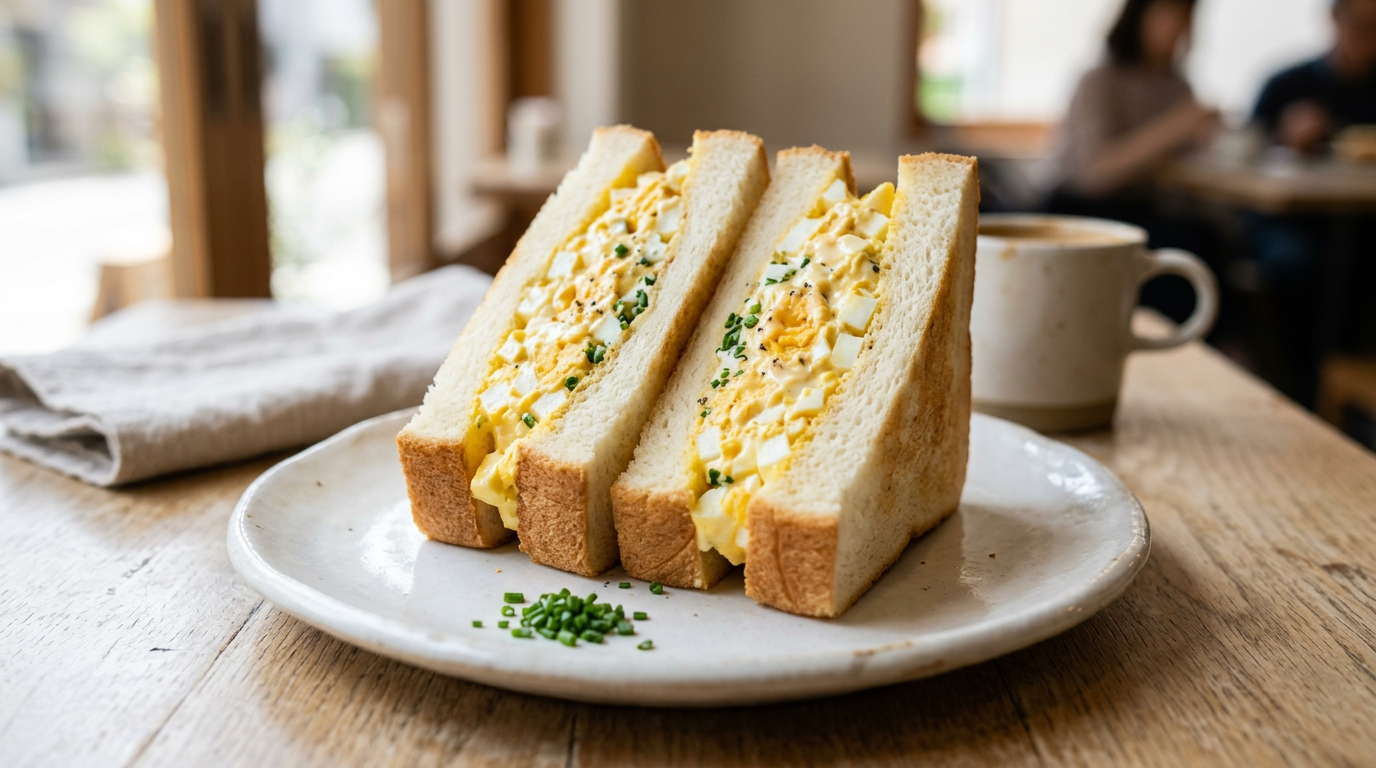
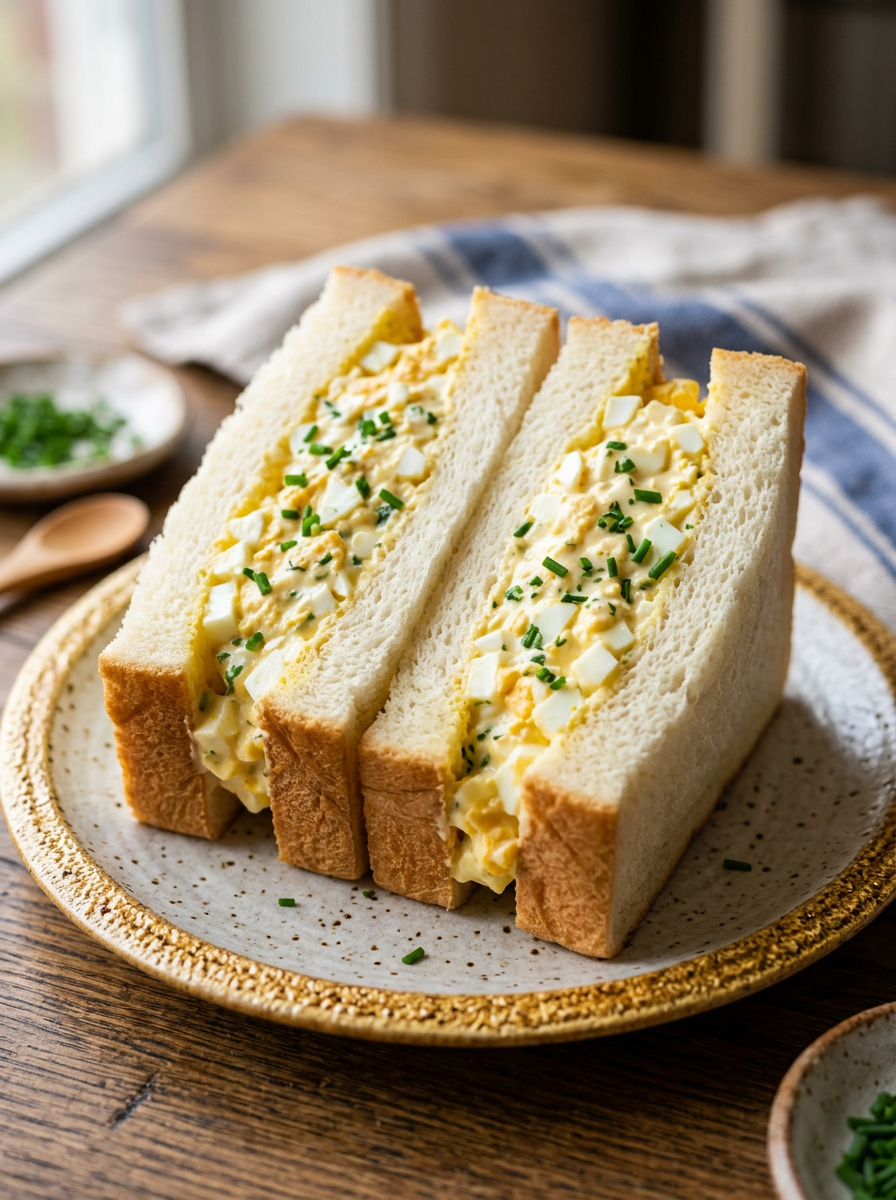
Tamago sando—tamago meaning egg and sando being a Japanese shortening of the English word sandwich—became a fixture of Japanese convenience-store culture in the late 1970s and 1980s as chains like 7-Eleven Japan and Lawson expanded rapidly and developed chilled ready-to-eat food sections. The sandwich draws on a broader Japanese affection for sandwiches made with shokupan, a soft enriched white milk bread introduced to Japan in the late nineteenth century via British bakers. Egg salad sandwiches in various forms existed in Western cuisines long before this, but the Japanese convenience-store version refined the concept toward extreme softness and creaminess, using Japanese mayonnaise—which is richer and slightly tangier than many Western versions due to its use of egg yolks only and a touch of rice vinegar—as the central flavoring agent. Convenience stores in Japan still sell millions of tamago sando each year, and the format has been widely replicated in Japanese cafés, tea rooms, and home kitchens worldwide.
Practical Tips
- Use Japanese mayonnaise (Kewpie) if at all possible. Its flavor—richer and slightly tangier than standard American mayonnaise—is a defining element of this sandwich.
- Do not skip the ice bath. It stops the eggs from overcooking and is the most reliable method for achieving a creamy yolk without a rubbery texture.
- Slightly older eggs peel more cleanly than very fresh eggs because the air pocket inside grows over time and the membrane separates more easily from the white.
- Shokupan is denser, fluffier, and richer than standard American sandwich bread. If you cannot find it at an Asian grocery store, brioche sandwich bread is the closest widely available substitute.
- Wrapping and resting the assembled sandwich before cutting is not optional for a clean cross-section. The wrap holds the layers together so they do not slide when you slice.
- Season the egg salad cautiously—add salt and vinegar in small increments, tasting as you go. The mayonnaise already contains salt, and over-seasoned egg salad cannot be corrected.
- Food safety: refrigerate egg salad in a shallow airtight container within 2 hours of preparation at 40°F (4°C) or below and use within 3 to 4 days. Assembled sandwiches are best eaten the day they are made.
- If you are preparing egg salad in advance, store the filling and bread separately and assemble just before serving to minimize sogginess.
Medium saucepan: Used to boil eggs with enough water to fully submerge them
Slotted spoon: Allows you to lower eggs gently into boiling water and transfer them to the ice bath without cracking
Large bowl: Holds ice water for the egg ice bath to stop cooking immediately
Medium mixing bowl: Used to mix and season the egg salad
Fork or pastry cutter: Mashes the eggs to the desired texture—some chunks, not a paste
Sharp serrated bread knife: Cuts the finished sandwich cleanly without compressing the soft bread
Instant-read thermometer: Confirms safe internal egg temperature if using soft-boiled eggs; also useful for checking yolk doneness
Cutting board: Stable surface for peeling, chopping, and slicing
Plastic wrap or sandwich wrap: Wrapping the assembled sandwich tightly before cutting helps it hold its shape
Soft-Boiled Tamago Sando: Boil the eggs for 8 to 9 minutes instead of 11 to leave the yolk semi-liquid in the center. Mash the whites and partially set yolk together with the dressing for a noticeably more custardy, richer filling. Note that because the yolk is not fully cooked, this variation carries higher food safety risk and should not be served to pregnant individuals, young children, elderly people, or immunocompromised individuals.
Mentaiko Tamago Sando: Stir 1 to 2 tablespoons of mentaiko (spicy salted pollack roe) into the egg salad along with the mayonnaise. The roe adds a briny, mildly spicy flavor and a pop of color. Reduce the added salt to compensate for the saltiness of the roe.
Mustard-Heavy Deli Style: Increase the Dijon mustard to 1 full tablespoon and add a small splash of dill pickle brine (about 1 teaspoon) for a version that bridges Japanese and American deli egg salad styles. Keep the Japanese mayonnaise as the base.
Herb Tamago Sando: Fold 2 tablespoons of finely minced fresh chives or a combination of chives and flat-leaf parsley into the finished egg salad for color and a mild onion note. Avoid strongly flavored herbs like cilantro or rosemary, which overpower the delicate egg flavor.
Double-Layer Presentation: Use three slices of shokupan per sandwich instead of two, with a thin layer of egg salad between the first and second slices and a thicker layer between the second and third. This triple-decker style mimics certain café presentations and is especially visually dramatic when cut to show the cross-section.
What is tamago sando?
Tamago sando is a Japanese egg salad sandwich made with soft shokupan milk bread and a creamy, simply seasoned egg salad. It is one of the most popular items sold in Japanese convenience stores and has become well known internationally through food media and Japanese café culture.
What bread should I use for tamago sando?
Shokupan, also called Japanese milk bread or white bread, is the traditional choice. It is an enriched white bread with a tight, fluffy crumb and very soft crust. It is sold at many Japanese and Asian grocery stores. Brioche sandwich bread or any premium soft white sandwich bread is a reasonable substitute.
Should the crusts be removed?
Many Japanese convenience-store tamago sando are sold without crusts, which enhances the soft, uniform texture. Removing the crusts is a personal choice—there is no food safety or flavor reason to do so. If you prefer the crust-free presentation, trim them with a sharp knife after cutting the sandwich.
What makes Japanese mayonnaise different from regular mayonnaise?
Japanese mayonnaise, most commonly the Kewpie brand, is made using only egg yolks rather than whole eggs, which makes it richer and more emulsified. It is also seasoned with rice vinegar and a small amount of MSG, giving it a distinctive tangy, umami-forward flavor that is different from standard American or European mayonnaise.
Can I make the egg salad ahead of time?
Yes. The egg salad can be made up to 3 to 4 days in advance if stored in a shallow airtight container at 40°F (4°C) or below. Assemble the sandwiches as close to serving time as possible, since the bread softens quickly once it contacts the filling.
How do I store leftover tamago sando?
Wrap assembled sandwiches tightly in plastic wrap and refrigerate within 2 hours of assembly at 40°F (4°C) or below. Eat within 1 day for best texture. Store loose egg salad (not assembled) in a shallow airtight container in the refrigerator and use within 3 to 4 days.
How do I know if my eggs are cooked safely?
For this recipe, fully hard-boiled eggs (12 to 13 minutes at a steady boil) are cooked to a safe temperature throughout. For the slightly creamy 11-minute yolk version, the internal temperature of the yolk should reach at least 160°F (71°C) as measured with an instant-read thermometer. If you are serving anyone who is pregnant, elderly, very young, or immunocompromised, use fully hard-boiled eggs.
Why do I need to wrap the sandwich before cutting it?
Wrapping the sandwich in plastic wrap and letting it rest for 5 minutes compresses and holds the layers together. When you cut through the plastic, the sandwich stays intact and produces a clean, photogenic cross-section instead of falling apart or smearing.
Can I freeze tamago sando or egg salad?
Freezing is not recommended for egg salad or assembled sandwiches. Cooked egg whites become rubbery and watery after freezing and thawing, and mayonnaise-based dressings tend to separate. If you need to preserve extra portions, refrigerate egg salad for up to 3 to 4 days rather than freezing.