Sheet Pan Teriyaki Salmon Recipe – Easy One Pan Dinner
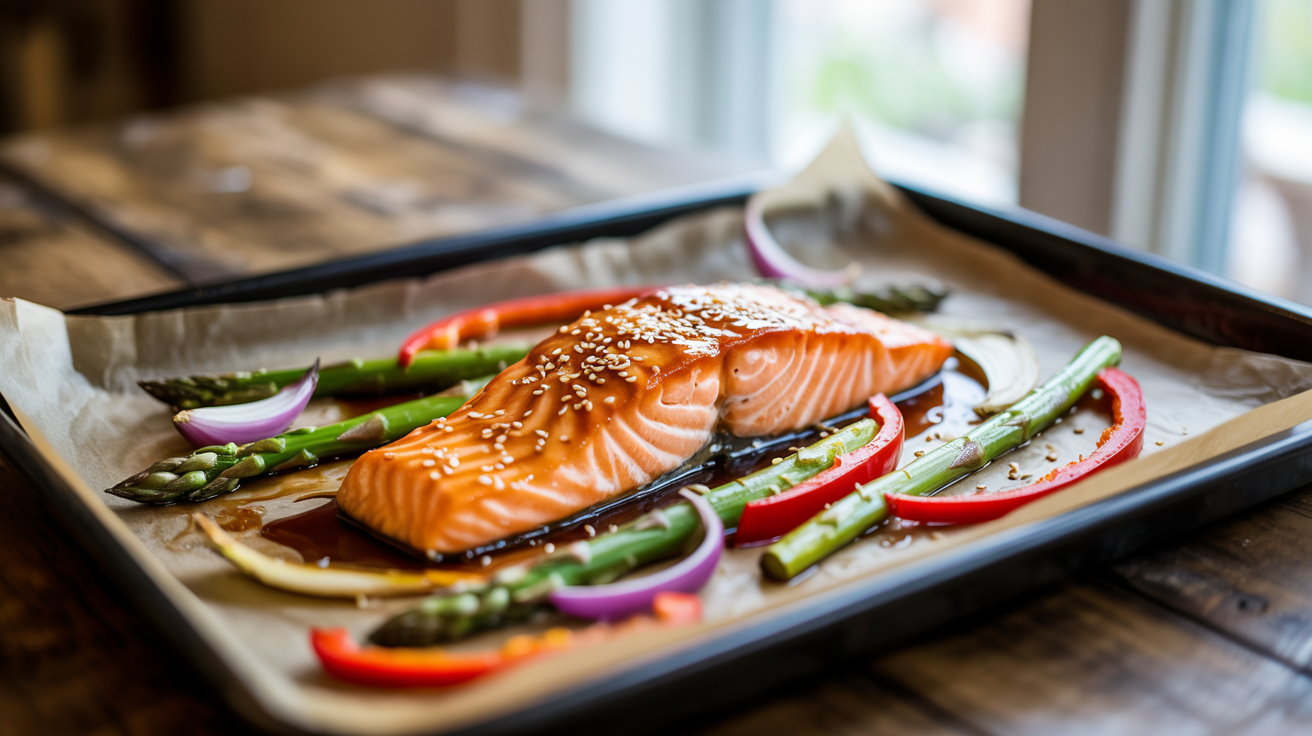
Sheet pan teriyaki salmon transforms your weeknight dinner routine with its perfect balance of sweet and savory flavors delivered in one simple pan. This foolproof recipe combines flaky salmon fillets with a glossy homemade teriyaki glaze that caramelizes beautifully in the oven.
The beauty of sheet pan cooking lies in its simplicity and efficiency. While your salmon bakes to perfection, colorful vegetables roast alongside, absorbing those incredible teriyaki flavors. No multiple pots, no complicated timing – just pure deliciousness with minimal effort.
Whether you are feeding a busy family or meal prepping for the week ahead, this recipe delivers consistent results every single time. The combination of protein-rich salmon and nutrient-packed vegetables makes it both satisfying and wholesome, proving that healthy eating does not have to be complicated or time-consuming.
History and Background
Teriyaki originated in Japan during the 17th century, where teppanyaki chefs developed this cooking technique of grilling fish with a sweet soy-based glaze. The word teriyaki combines teri meaning luster or shine and yaki meaning grilled or broiled, perfectly describing the glossy appearance of the finished dish.
The modern sheet pan cooking method gained popularity in American kitchens during the 2000s as home cooks sought simpler ways to prepare complete meals. This fusion of traditional Japanese teriyaki flavors with contemporary one-pan cooking represents how culinary traditions evolve to meet modern lifestyle needs while preserving authentic taste profiles.
Ingredients
- 1.5 lbs salmon fillets skin removed cut into 4 portions
- 1/3 cup low sodium soy sauce
- 1/4 cup honey
- 2 tablespoons rice vinegar
- 1 tablespoon sesame oil
- 3 cloves garlic minced
- 1 teaspoon fresh ginger grated
- 1 tablespoon cornstarch
- 2 tablespoons water
- 1 large bell pepper sliced
- 1 medium zucchini sliced
- 1 cup broccoli florets
- 2 tablespoons olive oil
- Salt and pepper to taste
- 2 green onions sliced for garnish
- 1 tablespoon sesame seeds for garnish
How to Make It

- Step 1: Preheat oven to 425°F and line a large sheet pan with parchment paper. In a small saucepan, whisk together soy sauce, honey, rice vinegar, sesame oil, minced garlic, and grated ginger. Bring to a simmer over medium heat.
- Step 2: Mix cornstarch and water in a small bowl to create a slurry. Add to the simmering sauce and cook for 2-3 minutes until thickened. Remove from heat and set aside to cool slightly.
- Step 3: Toss bell pepper, zucchini, and broccoli with olive oil, salt, and pepper. Spread vegetables on one side of the prepared sheet pan. Place salmon fillets on the other side and season with salt and pepper.
- Step 4: Brush salmon generously with half of the teriyaki sauce. Roast for 12-15 minutes until salmon flakes easily with a fork and vegetables are tender-crisp.
- Step 5: Remove from oven and brush salmon with remaining teriyaki sauce. Garnish with sliced green onions and sesame seeds before serving immediately.
Pro Tips
- Pat salmon completely dry before seasoning to ensure the teriyaki glaze adheres properly and creates a beautiful caramelized surface
- Cut vegetables into uniform sizes to ensure even cooking – aim for 1-inch pieces for best results
- Make extra teriyaki sauce and store in the refrigerator for up to one week to use on other proteins or stir-fries
Ready to Serve

Nutrition Facts (per serving)
Frequently Asked Questions
Can I make this ahead of time?
Yes you can prepare the teriyaki sauce up to 3 days in advance and store it in the refrigerator. You can also cut the vegetables earlier in the day, but add the salmon just before cooking for best texture.
What other vegetables work well in this recipe?
Try asparagus, snap peas, carrots, or Brussels sprouts. Just adjust cooking times based on the density of the vegetables – harder vegetables may need a few extra minutes.
How do I know when the salmon is done?
Salmon is perfectly cooked when it flakes easily with a fork and reaches an internal temperature of 145°F. The flesh should be opaque and slightly pink in the center.