Apple Cider Braised Pork Recipe – Fall Comfort Food
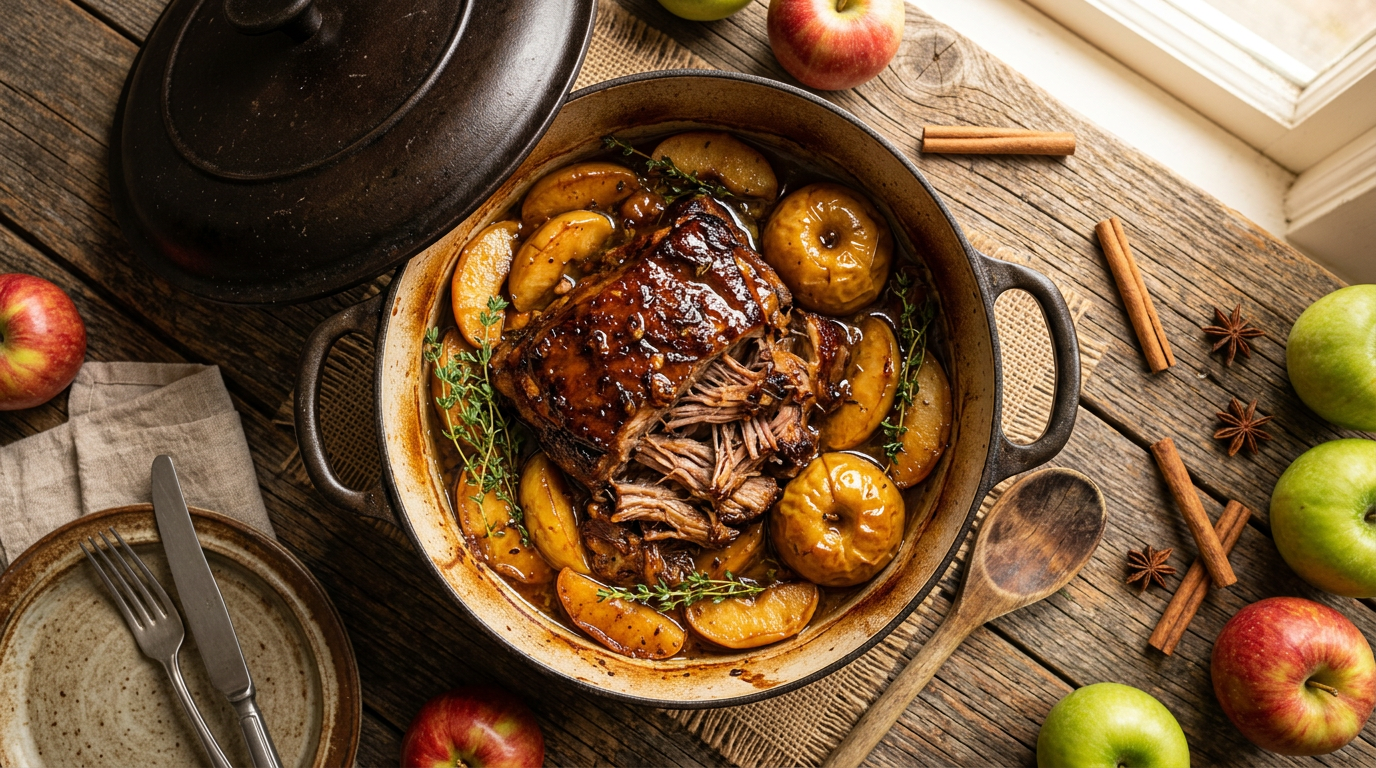
This apple cider braised pork recipe is the kind of dish that turns an ordinary weeknight into something truly memorable, combining the natural sweetness of fresh apple cider with savory pork and fragrant herbs into one deeply satisfying meal. The moment this dish hits the oven, your entire home fills with the warm, intoxicating scent of cinnamon-kissed cider and slow-cooked meat that promises pure comfort in every bite. Whether you are feeding a hungry family or hosting a fall dinner party, this recipe delivers restaurant-quality results with surprisingly simple techniques that anyone can master.
Braising is one of the oldest and most rewarding cooking methods known to home cooks, and it works absolute magic on pork. The low-and-slow cooking process breaks down tough connective tissue, transforming a humble pork shoulder or loin into something extraordinarily silky and tender. When you add apple cider to the braising liquid, you introduce a gentle natural acidity and sweetness that balances the richness of the pork beautifully, creating a sauce that you will want to spoon over absolutely everything on your plate.
What makes this recipe stand out from other braised pork dishes is the layering of flavor at every single step. We start by searing the pork until deeply golden, building a rich fond on the bottom of the pan that becomes the backbone of the sauce. Fresh aromatics like onion, garlic, and thyme join the party alongside whole-grain mustard and a splash of apple cider vinegar for brightness. The result is a dish that tastes like it took all day but is surprisingly approachable for any home cook ready to try something spectacular.
This apple cider braised pork recipe delivers fall-apart tender meat bathed in a rich, tangy-sweet sauce made with fresh apple cider, herbs, and aromatics. It is the ultimate cozy dinner that fills your kitchen with incredible aroma and satisfies every craving at the table tonight.
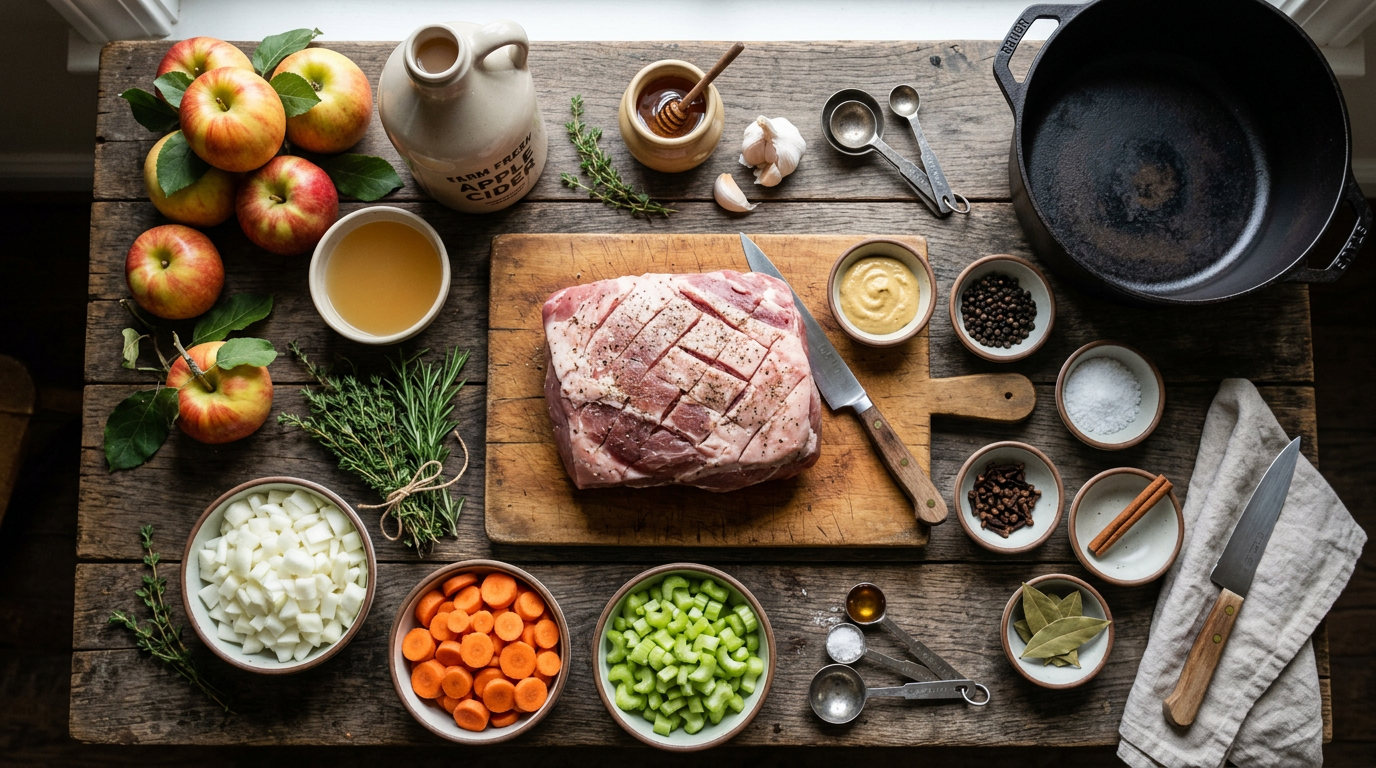
Ingredients
| AMOUNT | INGREDIENT | NOTES |
|---|---|---|
| 3 pounds | bone-in pork shoulder | trimmed of excess fat, or substitute pork loin for a leaner option |
| 2 cups | fresh apple cider | use unfiltered, cloudy apple cider for the richest flavor, not apple juice |
| 2 tablespoons | olive oil | extra virgin, for searing |
| 1 large | yellow onion | thinly sliced |
| 4 cloves | garlic | minced |
| 2 medium | apples | Honeycrisp or Granny Smith, cored and cut into wedges |
| 1 cup | chicken broth | low sodium preferred |
| 2 tablespoons | apple cider vinegar | adds brightness and balances the sweetness |
| 2 tablespoons | whole-grain Dijon mustard | smooth Dijon also works |
| 2 tablespoons | brown sugar | light or dark, packed |
| 4 sprigs | fresh thyme | or substitute 1 teaspoon dried thyme |
| 2 sprigs | fresh rosemary | or substitute half a teaspoon dried rosemary |
| 1 stick | cinnamon | whole cinnamon stick adds warmth without overpowering |
| 1.5 teaspoons | kosher salt | plus more to taste for seasoning the pork |
| 1 teaspoon | black pepper | freshly cracked |
| 0.5 teaspoon | smoked paprika | adds subtle depth and color to the crust |
| 2 tablespoons | unsalted butter | stirred in at the end for a glossy, velvety sauce |
Instructions
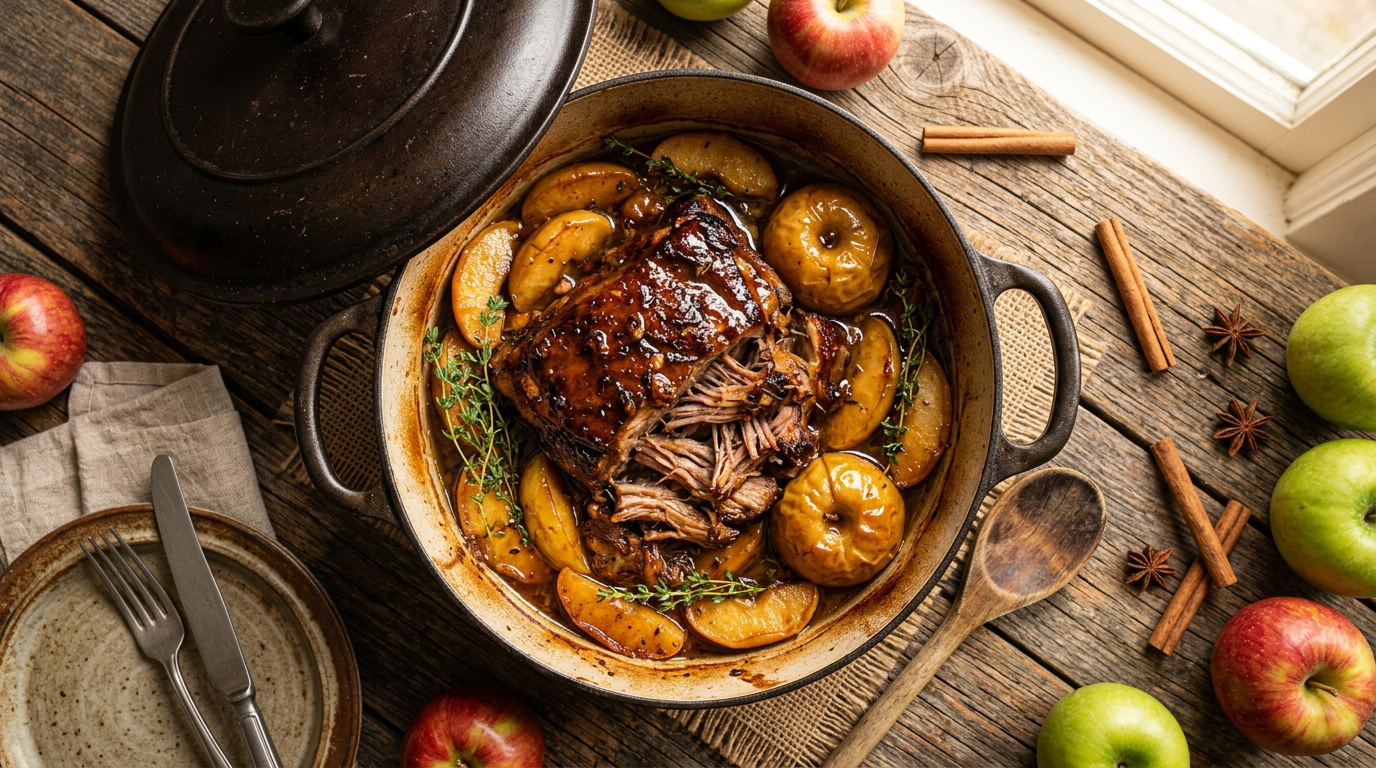
Nutrition (per serving)
About This Recipe
Braising pork in fruit-based liquids has deep roots across European culinary traditions, particularly in France and Germany where the marriage of pork and apples has been celebrated for centuries. In the Normandy region of France, known for its abundant apple orchards and world-famous hard cider production, cooks have long simmered pork alongside local cider to create dishes known as porc au cidre. This tradition was born from practical necessity as much as flavor, since cider was often more readily available than wine in apple-growing regions, and its natural sugars and acidity made it a brilliant braising medium for fatty, rich cuts of pork.
When European settlers arrived in North America, they brought these culinary traditions with them and quickly discovered that the American Northeast offered an equally rich apple culture. New England, in particular, became famous for its cider production, and cooks naturally adapted Old World techniques to their new surroundings. The apple cider braised pork recipe we know and love today is a beautiful evolution of this transatlantic culinary heritage, blending French braising technique with American apple orchard bounty. It has become a beloved staple of fall cooking across the United States, celebrated at harvest festivals, family gatherings, and cozy Sunday dinners from Maine to the Midwest.
Ready to Serve
A Closer Look
Pro Tips for Best Results
- Do not skip the searing step under any circumstances. That deep golden crust is not just about appearance, it creates the Maillard reaction which develops hundreds of complex flavor compounds that become the backbone of your entire braising sauce. Give each side at least 4 full minutes of undisturbed contact with the hot pan.
- Use unfiltered, cloudy apple cider from a local orchard or farmers market if you can find it. This style of cider contains natural apple solids and has a far more complex, robust flavor than the clear filtered variety sold in most grocery stores. The difference in your finished sauce will be noticeable and impressive.
- If your braising liquid tastes too sweet after reducing, stir in an extra splash of apple cider vinegar a little at a time to bring it back into balance. The interplay between sweetness and acidity is what makes this sauce so addictive, and a small adjustment at the end makes a significant difference.
- For the most tender, shreddable pork, aim for an internal temperature between 195 and 205 degrees Fahrenheit rather than the safe minimum of 145 degrees. At this higher temperature, the tough collagen in the pork shoulder fully converts to silky gelatin, giving you that melt-in-your-mouth texture that makes braised pork so incredible.
- This dish is even better the next day. Allow the cooked pork and sauce to cool completely, then refrigerate overnight. The fat will solidify on top of the sauce and can be easily skimmed off for a leaner result, and the flavors will deepen and meld together beautifully during the rest. Reheat gently in a covered pot over low heat.
Essential Equipment
Dutch Oven or Large Braiser: A heavy-bottomed pot with a tight-fitting lid is essential for even heat distribution and trapping steam during the long braise, ensuring the pork stays moist and tender throughout cooking.
Chef Knife: A sharp chef knife makes quick, precise work of chopping onions, mincing garlic, and trimming the pork, which contributes to even cooking and professional-looking results.
Cutting Board: A large, sturdy cutting board gives you ample workspace for prepping vegetables and slicing the finished pork without crowding your station.
Wooden Spoon or Silicone Spatula: Used for deglazing the pan and scraping up the flavorful browned bits from the bottom of the pot, which are critical for building a deep, complex braising sauce.
Tongs: Long-handled tongs give you safe, secure control when searing and flipping the pork, preventing burns and ensuring an even golden crust on all sides.
Ladle: Perfect for spooning the rich apple cider braising sauce over the pork and into serving bowls, making plating easy and elegant.
Meat Thermometer: Takes the guesswork out of doneness, ensuring your pork reaches a safe internal temperature while remaining perfectly juicy rather than overcooked.
Variations
Hard Cider Version: Substitute the fresh apple cider with a dry hard cider for a more complex, slightly boozy depth of flavor. The alcohol cooks off during braising leaving behind a sophisticated, subtly tangy sauce that pairs beautifully with the pork. Choose a dry or semi-dry variety rather than a sweet one to avoid an overly sweet result.
Spiced Autumn Variation: Add a star anise pod, 4 whole cloves, and a pinch of ground nutmeg to the braising liquid alongside the cinnamon stick for a warmly spiced, holiday-worthy version of this dish. This variation is particularly spectacular served at Thanksgiving or Christmas alongside roasted sweet potatoes and cranberry sauce.
Slow Cooker Adaptation: After searing the pork and softening the onions on the stovetop, transfer everything to a slow cooker and cook on low for 8 to 10 hours or on high for 5 to 6 hours. Reduce the braising liquid separately on the stovetop after cooking to achieve the glossy sauce consistency. This hands-off method is perfect for busy weekdays.
Pork Tenderloin Shortcut: Substitute the pork shoulder with two pork tenderloins for a leaner, faster-cooking version. Reduce the braising time to just 45 to 60 minutes at the same oven temperature, checking for doneness at 145 degrees internal temperature. The sauce will be slightly less rich but still incredibly flavorful and satisfying.
Herb Garden Variation: Swap the rosemary and thyme for fresh sage leaves and a few sprigs of tarragon to create a more delicate, French-inspired flavor profile. Add a handful of torn sage leaves directly to the finished sauce just before serving for a burst of bright herbal freshness that complements the apple and pork beautifully.
Frequently Asked Questions
Can I make this apple cider braised pork recipe ahead of time?
Absolutely, and in fact it is highly recommended. You can prepare this dish up to 3 days in advance and store it covered in the refrigerator. The flavors continue to develop and deepen overnight, making the leftovers arguably more delicious than the freshly made version. Reheat gently in a covered pot over low heat, adding a splash of chicken broth or cider if the sauce has thickened too much during storage.
Can I freeze apple cider braised pork?
Yes, this dish freezes exceptionally well. Allow the pork and sauce to cool completely, then transfer to airtight freezer-safe containers or heavy-duty zip-lock bags, removing as much air as possible. Freeze for up to 3 months. Thaw overnight in the refrigerator before reheating gently on the stovetop over low heat. The texture may be slightly softer after freezing but the flavor will remain wonderful.
What cut of pork works best for this recipe?
Pork shoulder, also sold as pork butt or Boston butt, is the ideal cut for braising because its higher fat content and connective tissue break down beautifully during the long, slow cooking process, resulting in incredibly tender and flavorful meat. Pork loin can also be used for a leaner result but requires less cooking time and may not achieve the same fall-apart texture.
What can I serve with apple cider braised pork?
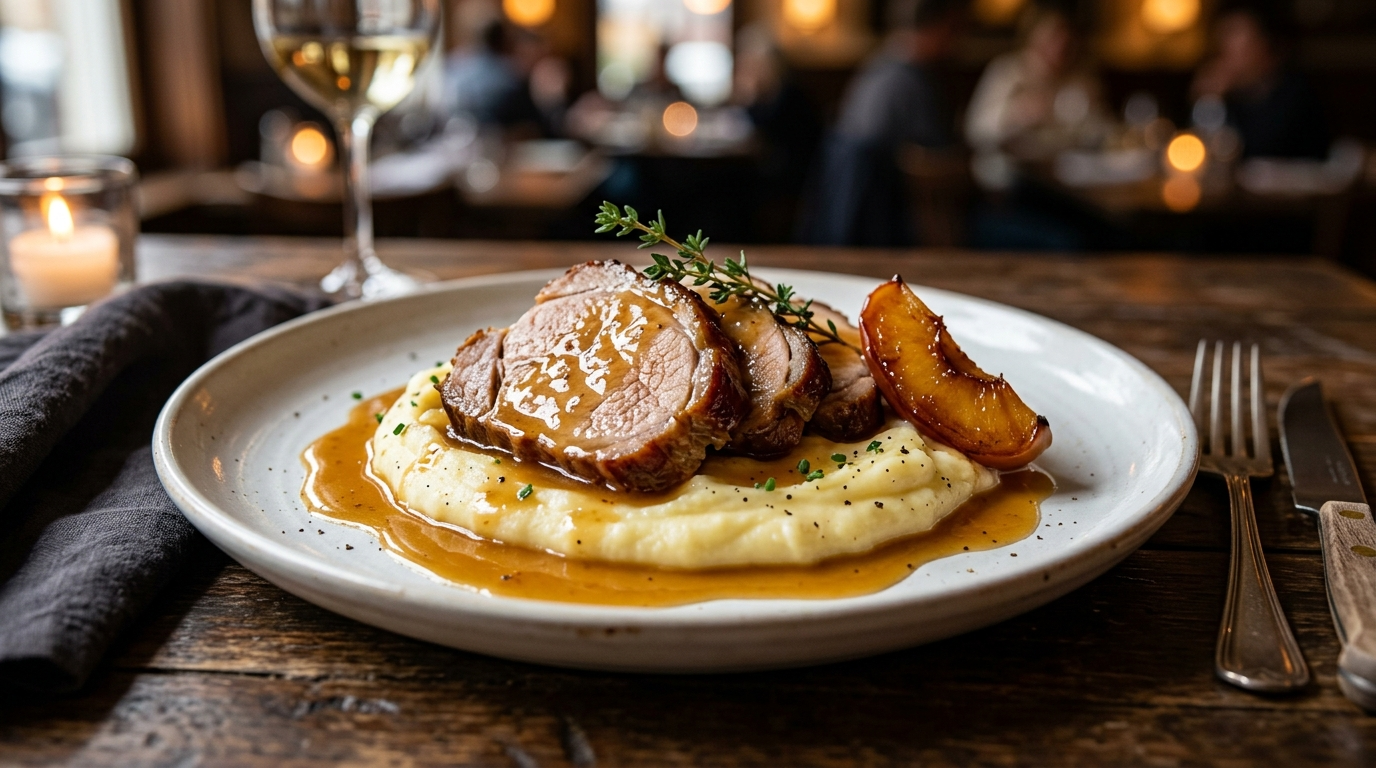
This dish pairs wonderfully with creamy mashed potatoes, which soak up the gorgeous apple cider sauce magnificently. Other excellent options include buttered egg noodles, roasted root vegetables like carrots and parsnips, steamed green beans, roasted Brussels sprouts, or a simple arugula salad with a light vinaigrette to cut through the richness of the pork.
My sauce seems too thin after reducing. How do I fix it?
Continue simmering the sauce uncovered over medium heat for a few more minutes, keeping a close eye on it, until it reaches your desired consistency. If you need to thicken it more quickly, you can whisk together 1 tablespoon of cornstarch with 2 tablespoons of cold water and stir this slurry into the simmering sauce, cooking for 1 to 2 minutes until thickened. Always taste and adjust seasoning after thickening.
Can I use apple juice instead of apple cider?
You can use apple juice as a substitute but the results will differ noticeably. Apple juice is much sweeter and lacks the complex, slightly tart depth of flavor that fresh apple cider provides. If using apple juice, reduce the brown sugar by half and add an extra tablespoon of apple cider vinegar to compensate for the missing acidity. Unfiltered apple cider is strongly preferred for the best results.