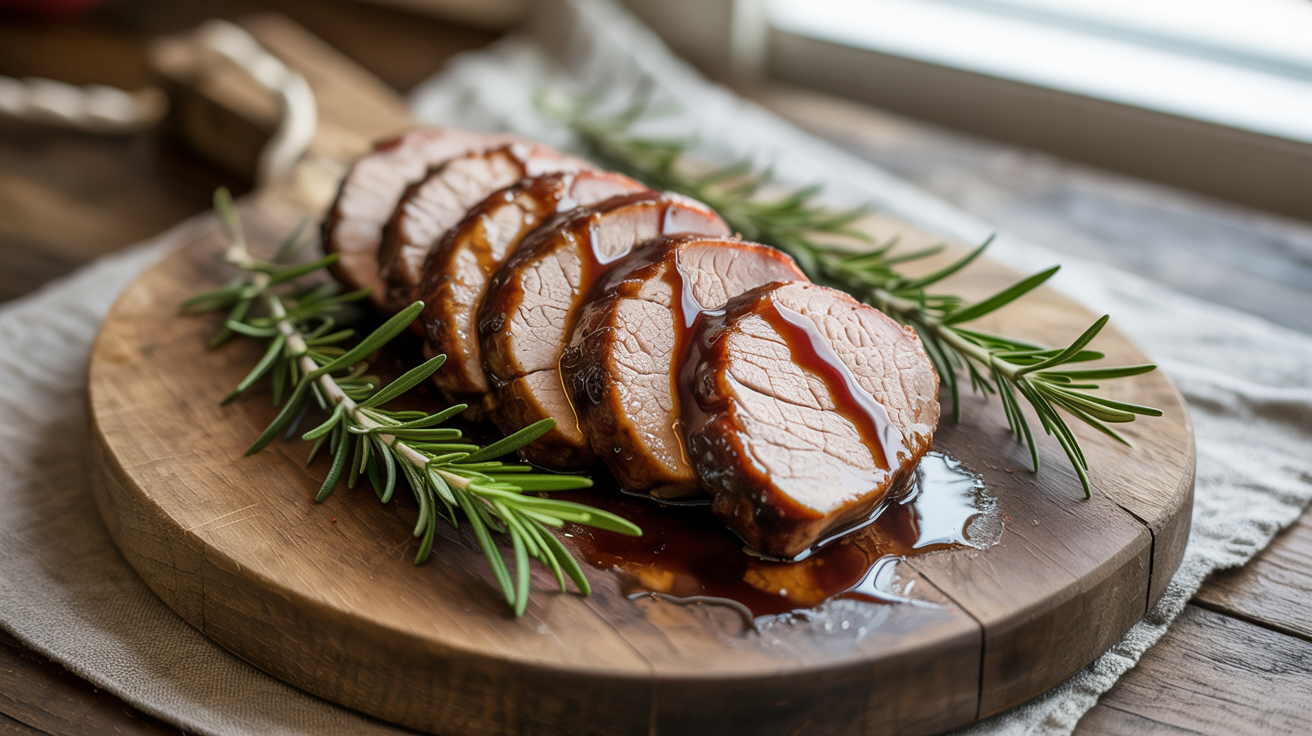
Balsamic Pork Tenderloin Recipe – Juicy & Glazed
This balsamic pork tenderloin recipe delivers restaurant-quality results with minimal effort and maximum flavor. The combination of tangy balsamic vinegar, sweet honey, and aromatic herbs creates a beautiful glaze that transforms ordinary pork tenderloin into an extraordinary meal.
Pork tenderloin is one of the leanest and most versatile cuts of meat, making it perfect for weeknight dinners when you want something special without spending hours in the kitchen. The natural mild flavor of tenderloin pairs beautifully with the complex sweet and sour notes of balsamic vinegar.
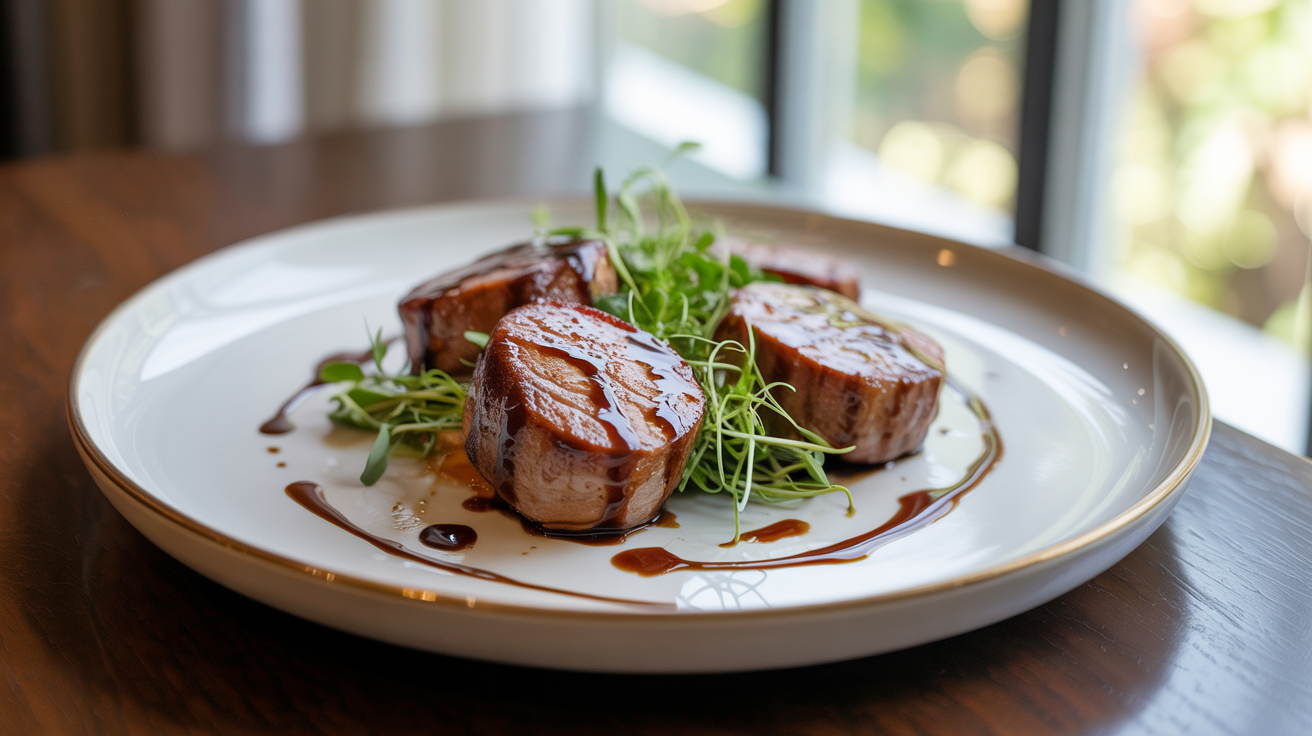
What makes this recipe truly special is how the balsamic glaze caramelizes during cooking, creating a glossy coating that seals in the juices while adding incredible depth of flavor. The result is meat so tender you can cut it with a fork, wrapped in a glaze that will have everyone asking for seconds.
This balsamic pork tenderloin recipe creates perfectly tender meat with a glossy, sweet-tangy glaze that caramelizes beautifully. Simple ingredients transform into restaurant-quality results that will impress your family tonight.
Ingredients
| AMOUNT | INGREDIENT | NOTES |
|---|---|---|
| 2 lbs | pork tenderloin | trimmed of silver skin |
| 1/2 cup | balsamic vinegar | good quality |
| 1/4 cup | honey | |
| 3 cloves | garlic | minced |
| 2 tablespoons | olive oil | divided |
| 2 tablespoons | fresh rosemary | chopped |
| 1 teaspoon | salt | kosher |
| 1/2 teaspoon | black pepper | freshly ground |
| 1 tablespoon | butter | cold |
Instructions
Nutrition (per serving)
About This Recipe
Balsamic vinegar has been produced in the Modena and Reggio Emilia regions of Italy for over 1000 years, originally created by accident when grape must was left to age in wooden barrels. The dark, syrupy condiment became prized by Italian nobility and was even used as a dowry gift. Traditional balsamic vinegar undergoes a complex aging process in progressively smaller barrels made from different woods, developing its characteristic sweet-tart flavor profile.
The pairing of balsamic vinegar with pork became popular in Italian cuisine during the Renaissance period, when wealthy families would serve aged balsamic with various meats as a sign of prosperity. This cooking technique made its way to America in the 1980s and 1990s as Italian cuisine gained popularity, and home cooks discovered how the natural sugars in balsamic vinegar create beautiful glazes when reduced with heat.
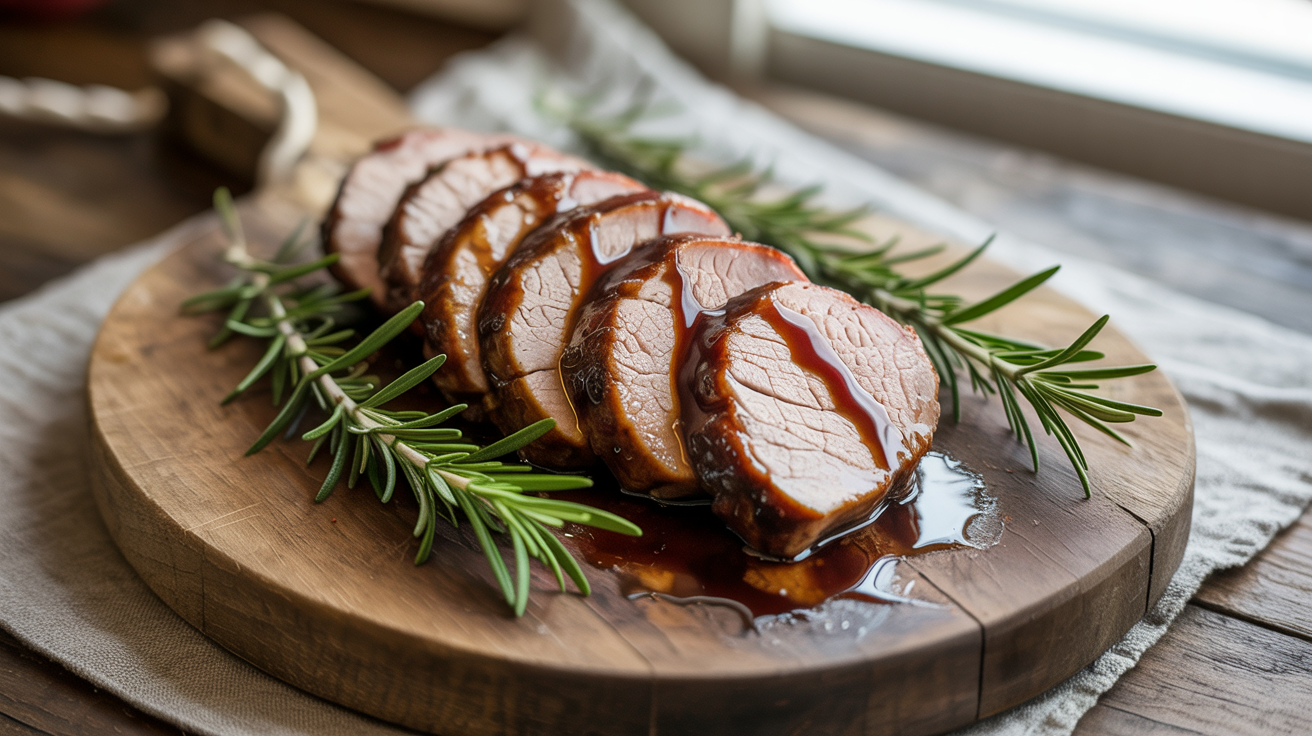
Plated and Ready to Serve
Pro Tips for Best Results
- Let pork come to room temperature 30 minutes before cooking for even results
- Use a meat thermometer to avoid overcooking this lean cut
- Allow proper resting time to redistribute juices throughout the meat
- Slice against the grain in 1/2 inch thick medallions for best texture
- Save extra glaze to drizzle over vegetables or use as finishing sauce
Essential Equipment
Large Oven-Safe Skillet: Essential for searing the pork and transferring directly to oven without losing heat.
Meat Thermometer: Ensures perfect doneness and food safety when cooking pork.
Small Saucepan: For reducing balsamic glaze to proper consistency.
Cutting Board: Provides stable surface for slicing rested meat properly.
Variations
Herb Crusted Version: Add fresh thyme and sage to the rosemary for complex herb flavor profile.
Spicy Balsamic Glaze: Include red pepper flakes or a dash of hot sauce in the glaze reduction.
Fig Balsamic Glaze: Substitute fig jam for honey to create a more sophisticated flavor combination.
Frequently Asked Questions
How do I know when pork tenderloin is done?
Use a meat thermometer to check internal temperature reaches 145 degrees F, then let rest 5 minutes before slicing.
Can I make the glaze ahead of time?
Yes, prepare glaze up to 3 days ahead and gently reheat before serving over the pork.
What sides pair well with this dish?
Roasted vegetables, garlic mashed potatoes, or a simple arugula salad complement the rich balsamic flavors perfectly.