Bibimbap Bowl Meal Prep Recipe (Easy & Healthy)
This bibimbap bowl meal prep recipe is the ultimate solution for anyone who wants bold, restaurant-quality Korean flavors ready and waiting in the fridge all week long. Bibimbap, which literally translates to mixed rice, is a celebration of color, texture, and harmony in a single bowl. Each component brings something special to the table, from the crisp sauteed vegetables to the rich umami of seasoned ground beef and the fiery kick of gochujang sauce.
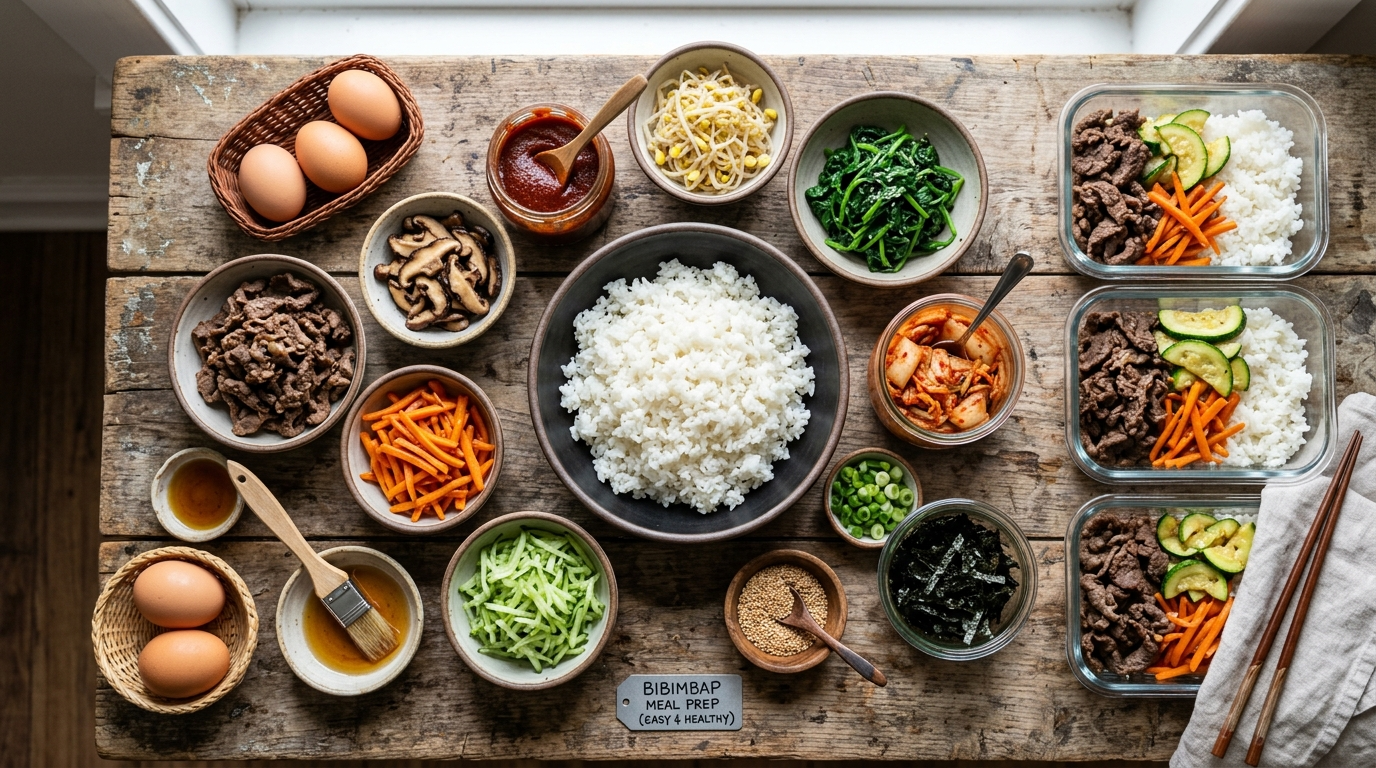
What makes this recipe a meal prep dream is how well each element holds up individually in the refrigerator. Rather than assembling everything at once, you store each topping separately and build your bowl fresh each day. This keeps the vegetables vibrant, the rice fluffy, and every bite as satisfying as the first. Whether you are packing lunch for the office or need a speedy weeknight dinner, these bowls have you completely covered.
Beyond convenience, bibimbap is genuinely one of the most nutritionally balanced meals you can eat. You get lean protein, complex carbohydrates, an abundance of fiber-rich vegetables, and healthy fats all in one bowl. The gochujang sauce adds depth and a gentle heat that ties everything together beautifully. Once you make this recipe, you will wonder how your weekly routine ever survived without it.
This bibimbap bowl meal prep recipe delivers vibrant Korean flavors packed with seasoned vegetables, savory beef, and a bold gochujang sauce. Nutritious, colorful, and endlessly customizable, these bowls store beautifully all week long, making today the perfect day to meal prep like a pro.
Ingredients
| AMOUNT | INGREDIENT | NOTES |
|---|---|---|
| 3 cups | short-grain white rice | uncooked, rinsed until water runs clear |
| 1 pound | lean ground beef | or ground turkey for a lighter option |
| 3 tablespoons | soy sauce | low sodium recommended, divided |
| 1 tablespoon | sesame oil | toasted, divided |
| 4 cloves | garlic | minced, divided |
| 1 teaspoon | fresh ginger | grated |
| 2 large | carrots | julienned into thin matchsticks |
| 2 medium | zucchini | julienned into thin matchsticks |
| 2 cups | fresh spinach | or baby spinach, lightly blanched |
| 1 cup | bean sprouts | rinsed and drained |
| 1 cup | shiitake mushrooms | sliced thin, stems removed |
| 4 large | eggs | one per bowl, fried sunny side up |
| 2 tablespoons | neutral oil | avocado or vegetable oil, divided for sauteing |
| 3 tablespoons | gochujang paste | adjust to desired heat level |
| 1 tablespoon | rice vinegar | for the gochujang sauce |
| 1 tablespoon | honey | or maple syrup for the gochujang sauce |
| 1 tablespoon | soy sauce | for the gochujang sauce |
| 1 teaspoon | sesame oil | for the gochujang sauce |
| 2 tablespoons | sesame seeds | toasted, for garnish |
| 3 stalks | green onions | thinly sliced, for garnish |
Instructions
Nutrition (per serving)
About This Recipe
Bibimbap is one of Korea’s most iconic and beloved dishes, with roots stretching back to the Joseon Dynasty in the late 14th century. Historically, it is believed that bibimbap originated from the custom of mixing together leftover side dishes, known as banchan, with rice at the end of a meal to avoid food waste. This humble and practical origin gave birth to a dish that became deeply woven into Korean culinary identity and eventually recognized as one of the most celebrated foods the country has to offer.
Regionally, bibimbap takes on many personalities across Korea. Jeonju bibimbap, hailing from the city of Jeonju in North Jeolla Province, is widely considered the gold standard and features a rich beef broth-cooked rice base topped with a stunning array of fresh and seasoned vegetables. Dolsot bibimbap, served sizzling in a hot stone pot, creates an irresistibly crispy rice crust at the bottom of the bowl. As Korean cuisine has spread globally through the Korean Wave, or Hallyu, bibimbap has become a gateway dish for countless food lovers around the world, earning a permanent spot on menus from Seoul to New York City.
Ready to Serve
A Closer Look
Pro Tips for Best Results
- Prep all vegetables before you start cooking to keep the workflow smooth and efficient. Since each vegetable is cooked separately and quickly, having everything ready to go prevents any component from overcooking while you are chopping something else.
- Store each topping in its own section or separate small container within your meal prep setup. Keeping components apart until serving prevents sogginess and keeps every element at its peak texture and freshness for up to 5 days.
- Use short-grain or medium-grain Japanese or Korean rice for the most authentic texture. The slight stickiness of these varieties helps the bibimbap hold together beautifully in the bowl and absorbs the gochujang sauce like a dream.
- Do not skip toasting the sesame seeds. Simply place them in a dry skillet over medium heat and shake the pan for 2 to 3 minutes until golden and fragrant. Toasted sesame seeds add a warm, nutty depth that elevates the entire dish significantly.
- Adjust the gochujang sauce heat level carefully if you are serving people with different spice tolerances. Start conservative and offer additional sauce on the side so everyone can customize their own bowl to their preferred level of heat.
Essential Equipment
Large Skillet or Wok: Essential for sauteing multiple vegetable components quickly and evenly over high heat.
Rice Cooker or Medium Saucepan: Produces perfectly cooked, fluffy short-grain rice that forms the foundation of every bowl.
Chef Knife: For precise, uniform julienning and slicing of vegetables to ensure even cooking.
Cutting Board: A large, stable surface is critical when prepping the high volume of vegetables for meal prep.
Small Mixing Bowl: Perfect for whisking together the gochujang sauce ingredients until smooth and well combined.
Meal Prep Containers: Airtight containers with compartments keep each topping separate and fresh for up to 5 days.
Box Grater or Mandoline: Speeds up julienning carrots and zucchini to thin, uniform strips for beautiful presentation.
Variations
Vegetarian Bibimbap Bowl: Omit the ground beef entirely and double up on mushrooms, adding a mix of cremini and oyster varieties sauteed with soy sauce and garlic. Add a cube of pan-fried firm tofu for protein and a completely satisfying plant-based meal prep bowl.
Spicy Tuna Bibimbap: Replace the ground beef with a mixture of canned tuna drained and mixed with gochujang, sesame oil, and a squeeze of lemon juice. This is an incredibly quick and budget-friendly protein option that pairs perfectly with all of the vegetable toppings.
Cauliflower Rice Low-Carb Version: Swap the short-grain white rice for riced cauliflower sauteed with a little garlic and sesame oil. This dramatically reduces the carbohydrate content while keeping all of the bold Korean flavors and satisfying textures fully intact.
Bulgogi Beef Bibimbap: Instead of ground beef, use thinly sliced ribeye or sirloin marinated in a classic bulgogi marinade of soy sauce, pear or apple puree, sesame oil, sugar, and garlic. Grill or pan-sear the slices for an elevated, restaurant-worthy version of these meal prep bowls.
Kimchi Bibimbap Boost: Add a generous spoonful of well-fermented kimchi as an additional topping alongside the sauteed vegetables. The tangy, spicy, probiotic-rich fermented cabbage adds incredible complexity and a gut-health benefit that makes these bowls even more nutritious.
Frequently Asked Questions
How long do bibimbap meal prep bowls last in the refrigerator?
When stored properly with each component in separate airtight containers, your bibimbap meal prep bowls will stay fresh and delicious for up to 5 days in the refrigerator. Keep the gochujang sauce in its own small container and add it only right before eating to maintain the best textures throughout the week.
Can I freeze bibimbap bowls for longer storage?
You can freeze the cooked rice and seasoned ground beef very successfully for up to 3 months in airtight freezer-safe containers. However, the sauteed vegetables do not freeze as well since they become soft and lose their texture upon thawing. For best results, freeze only the rice and protein, then saute fresh vegetables when you are ready to eat.
What is gochujang and where can I find it?
Gochujang is a traditional Korean fermented red chili paste made from red chili powder, glutinous rice, fermented soybeans, and salt. It has a complex flavor that is simultaneously spicy, sweet, savory, and slightly tangy. You can find it in the Asian foods aisle of most major grocery stores, at any Asian supermarket, or easily online. It comes in a distinctive red tub and keeps for months in the refrigerator after opening.
Can I use brown rice instead of white rice?
Absolutely, brown rice works wonderfully as a more fiber-rich and nutritious base for bibimbap bowls. Keep in mind that brown rice takes longer to cook, typically 40 to 45 minutes, and has a chewier texture. The nutty flavor of brown rice actually complements the bold gochujang sauce and savory toppings beautifully, making it a fantastic whole-grain substitution.
Is bibimbap gluten-free?
Traditional bibimbap is not automatically gluten-free because soy sauce contains wheat. However, you can easily make this recipe fully gluten-free by substituting all soy sauce with tamari or coconut aminos in both the beef seasoning and the gochujang sauce. Also check your gochujang label carefully, as some brands include wheat in their formulation, though many gluten-free certified options are now widely available.
What vegetables can I swap or add to my bibimbap bowl?
Bibimbap is wonderfully flexible when it comes to vegetables. Feel free to swap or add thinly sliced radish, blanched broccoli florets, sauteed bell peppers, shredded purple cabbage, corn kernels, or even roasted sweet potato. The key is to season each vegetable component individually with a little salt and sesame oil so every topping contributes its own distinct and delicious flavor to the finished bowl.