Blood Orange Salmon Recipe – Easy 30-Minute Dinner
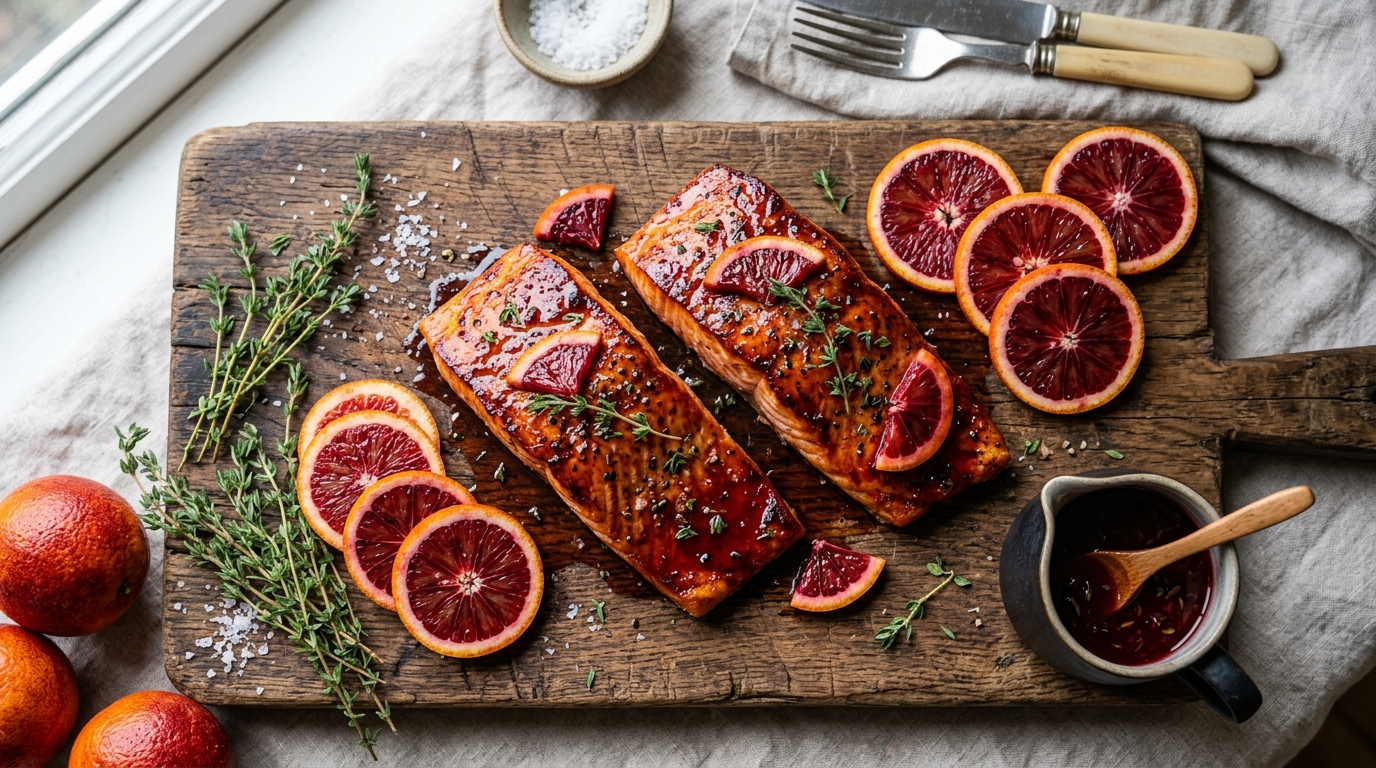
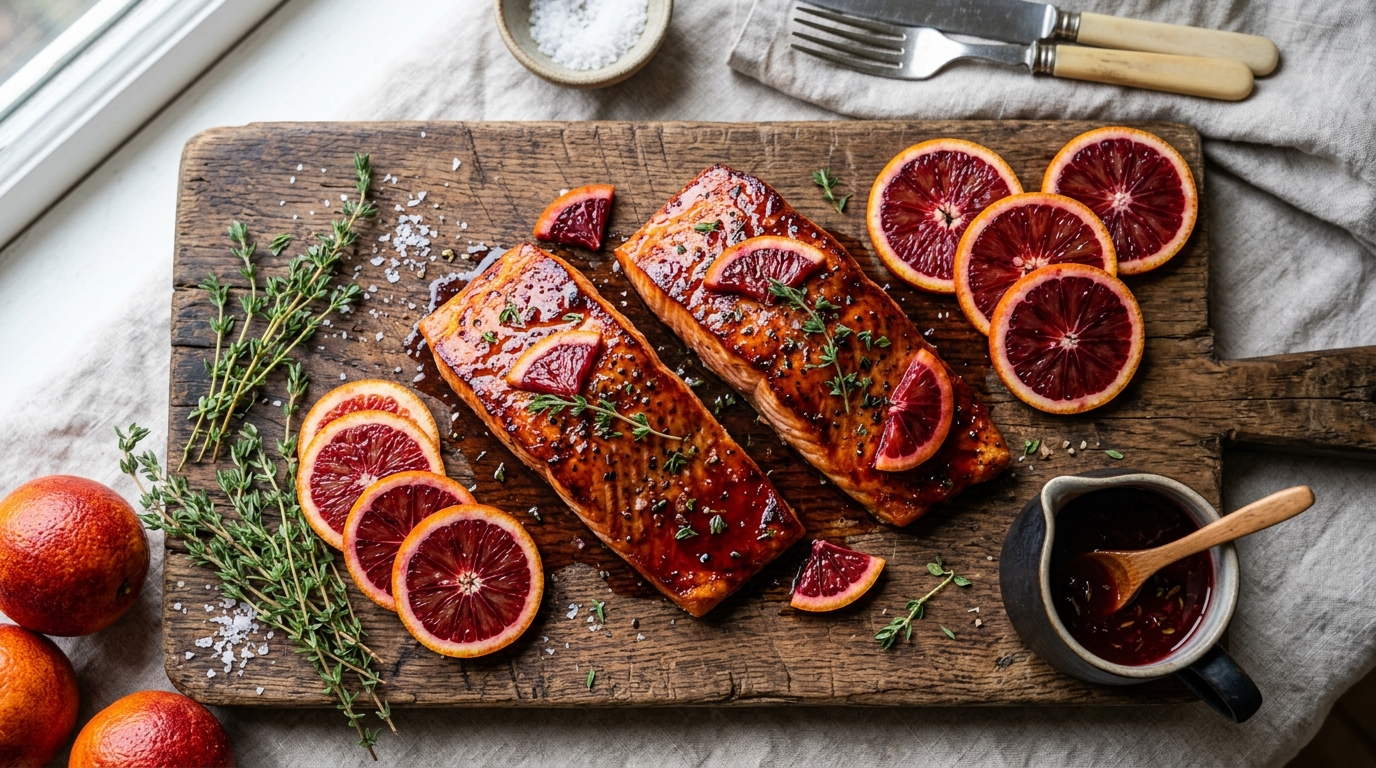
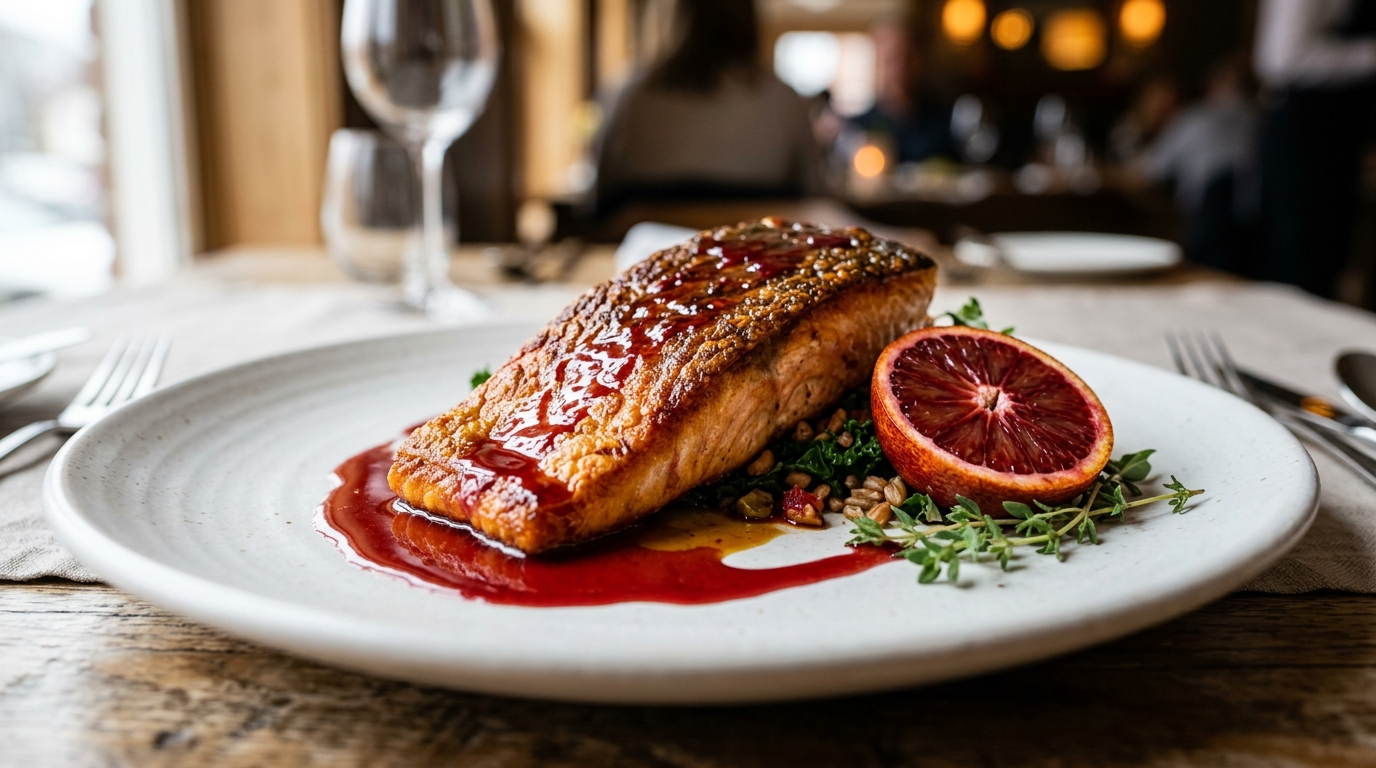
This blood orange salmon recipe is the kind of dish that makes dinner feel like a special occasion without any of the stress. The deep ruby hue of blood orange juice creates a glossy, jewel-toned glaze that coats each salmon fillet in layers of sweet, tart, and slightly floral citrus flavor that you simply cannot replicate with a regular orange.
Blood oranges have a short and glorious season, typically running from December through March, which makes them a prized ingredient among home cooks and chefs alike. When paired with salmon, their naturally rich anthocyanin pigments create a sauce so visually striking that it looks like it took hours to prepare. The truth is that this entire meal comes together in under 30 minutes with just one pan and a handful of pantry staples.
Whether you are cooking for a weeknight family dinner or impressing guests at a dinner party, this recipe delivers on every level. The combination of honey, garlic, fresh herbs, and blood orange juice creates a glaze that caramelizes beautifully in a hot skillet, locking in moisture while building deep, complex flavor. Once you try salmon this way, it will become your go-to preparation all citrus season long.
This blood orange salmon recipe combines rich, flaky salmon with a vibrant citrus glaze that is both stunning and delicious. Packed with omega-3s and bright seasonal flavor, it delivers a restaurant-quality meal in just 30 minutes – making it the perfect weeknight showstopper.
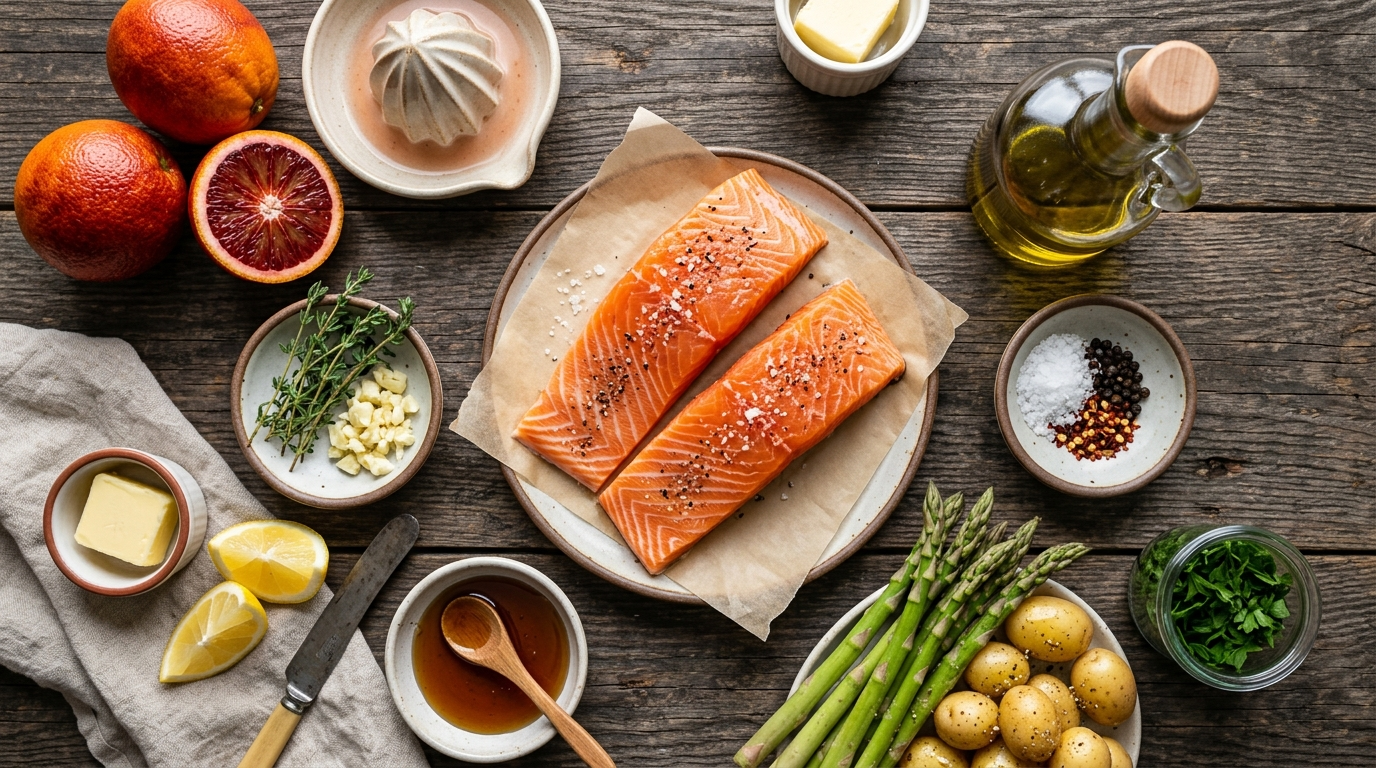
Ingredients
| AMOUNT | INGREDIENT | NOTES |
|---|---|---|
| 4 | salmon fillets | about 6 oz each, skin-on, center-cut preferred |
| 3 | blood oranges | 2 juiced (about half a cup), 1 thinly sliced for garnish |
| 1 teaspoon | blood orange zest | from one of the juiced oranges |
| 2 tablespoons | honey | raw or local preferred |
| 2 tablespoons | soy sauce | low sodium |
| 3 cloves | garlic | minced |
| 1 tablespoon | fresh ginger | peeled and grated |
| 2 tablespoons | olive oil | extra virgin, divided |
| 1 tablespoon | unsalted butter | for finishing the glaze |
| 1 teaspoon | Dijon mustard | adds depth and helps emulsify the glaze |
| half teaspoon | red pepper flakes | optional, for gentle heat |
| 1 teaspoon | kosher salt | plus more to taste |
| half teaspoon | black pepper | freshly cracked |
| 2 tablespoons | fresh thyme leaves | or rosemary, stems removed |
| 2 tablespoons | fresh parsley | chopped, for garnish |
Instructions
Nutrition (per serving)
About This Recipe
Salmon has been a cornerstone of culinary traditions across the Northern Hemisphere for thousands of years, prized by Indigenous peoples of the Pacific Northwest, Scandinavian fishing communities, and Scottish Highland clans who relied on it as a primary protein source. The pairing of salmon with citrus, however, is a more modern European-American development that emerged as global trade routes brought bright acidic fruits into contact with the rich, fatty fish. Citrus marinades and glazes became popular in the mid-20th century as chefs discovered that acidity could cut through the natural oils of salmon and elevate its flavor in remarkable ways.
Blood oranges themselves trace their origins to Sicily and the Mediterranean basin, where they have been cultivated since the 9th century. Their distinctive crimson flesh is caused by anthocyanins that develop during cool nighttime temperatures, a condition perfectly suited to the volcanic soils of Mount Etna. Sicilian blood oranges eventually made their way into Italian and French haute cuisine before crossing the Atlantic and capturing the imagination of American chefs during the farm-to-table movement of the 1990s and 2000s. Combining this storied Mediterranean ingredient with wild-caught salmon represents a beautiful fusion of Northern and Southern culinary heritage.
Ready to Serve
A Closer Look
Pro Tips for Best Results
- Always buy salmon with the skin on for this recipe – the skin acts as a natural insulator during cooking that keeps the flesh moist and tender, and a properly crisped salmon skin is one of the great underrated textures in all of cooking.
- Do not move the salmon once you place it skin-side down in the pan. Resist the urge to peek or shift it around. It will naturally release from the pan surface when the skin is properly seared and crispy, usually after 3 to 4 minutes.
- If blood oranges are out of season, you can use a blend of navel orange juice and a small amount of pomegranate juice to approximate the tart, berry-forward flavor profile that makes blood oranges so distinctive in this glaze.
- For the glossiest, most restaurant-quality glaze, make sure the butter you swirl in at the end is cold and cut into small cubes. Cold butter emulsifies into the warm sauce more smoothly than room-temperature butter, creating a velvety texture.
- Leftover salmon and glaze store very well together in an airtight container in the refrigerator for up to 3 days. Reheat gently in a covered skillet with a splash of water over low heat to avoid drying out the fish, or serve it cold flaked over a salad.
Essential Equipment
Large Oven-Safe Skillet: Allows you to sear the salmon on the stovetop and finish it in the oven in the same pan for even cooking and easy cleanup.
Citrus Juicer: Extracts maximum juice from blood oranges efficiently without seeds or bitter pith falling into your glaze.
Zester or Microplane: Creates fine, fragrant blood orange zest that adds intense citrus aroma and flavor to the glaze.
Fish Spatula: Its thin, flexible edge slides under delicate salmon fillets without breaking them apart during flipping.
Small Saucepan: Used to reduce the blood orange glaze to a thick, glossy consistency before pouring over the fish.
Instant-Read Thermometer: Ensures salmon reaches the ideal internal temperature of 125 to 130 degrees Fahrenheit for a perfectly moist result.
Variations
Honey Miso Blood Orange Salmon: Replace the Dijon mustard with one tablespoon of white miso paste and add a teaspoon of sesame oil to the glaze. The miso adds a savory umami depth that complements the sweet citrus beautifully. Top with toasted sesame seeds and sliced scallions for a Japanese-inspired presentation.
Herb-Crusted Blood Orange Salmon: Before searing, press a mixture of finely chopped fresh dill, parsley, and a tablespoon of panko breadcrumbs onto the flesh side of each fillet. Sear flesh-side down first for 2 minutes to set the herb crust before flipping and applying the blood orange glaze as directed.
Sheet Pan Blood Orange Salmon: Arrange the salmon fillets on a parchment-lined baking sheet surrounded by sliced fennel, red onion, and blood orange rounds. Drizzle everything with the glaze and roast at 425 degrees Fahrenheit for 12 to 15 minutes. This hands-off method requires no stovetop work and is perfect for feeding a crowd.
Blood Orange Salmon Tacos: Flake the cooked salmon into large chunks and serve in warm corn tortillas with shredded purple cabbage, sliced avocado, a drizzle of the blood orange glaze, and a lime crema made from sour cream and lime juice. The combination of flavors makes an incredible taco night centerpiece.
Grilled Blood Orange Salmon: Brush the salmon generously with the glaze and grill over medium-high heat on a well-oiled grate for 4 to 5 minutes per side, reapplying glaze each time you flip. The grill adds a subtle smokiness that pairs wonderfully with the sweet citrus notes, making this version ideal for warm weather outdoor entertaining.
Frequently Asked Questions
Can I use frozen salmon for this blood orange salmon recipe?
Yes, frozen salmon works well in this recipe. Thaw it completely in the refrigerator overnight before cooking and pat it very thoroughly dry with paper towels before seasoning. Frozen salmon often releases more moisture than fresh, so extra drying time is important for achieving a proper sear rather than steaming the fish in its own liquid.
What can I substitute for blood oranges if I cannot find them?
The closest substitution is a combination of fresh navel orange juice with a tablespoon of pomegranate juice added to mimic the tart, berry-like undertones of blood orange. Ruby red grapefruit juice also works well and creates a slightly more bitter, sophisticated glaze. Cara Cara oranges are another excellent option when blood oranges are not available at your local market.
How do I know when the salmon is perfectly cooked?
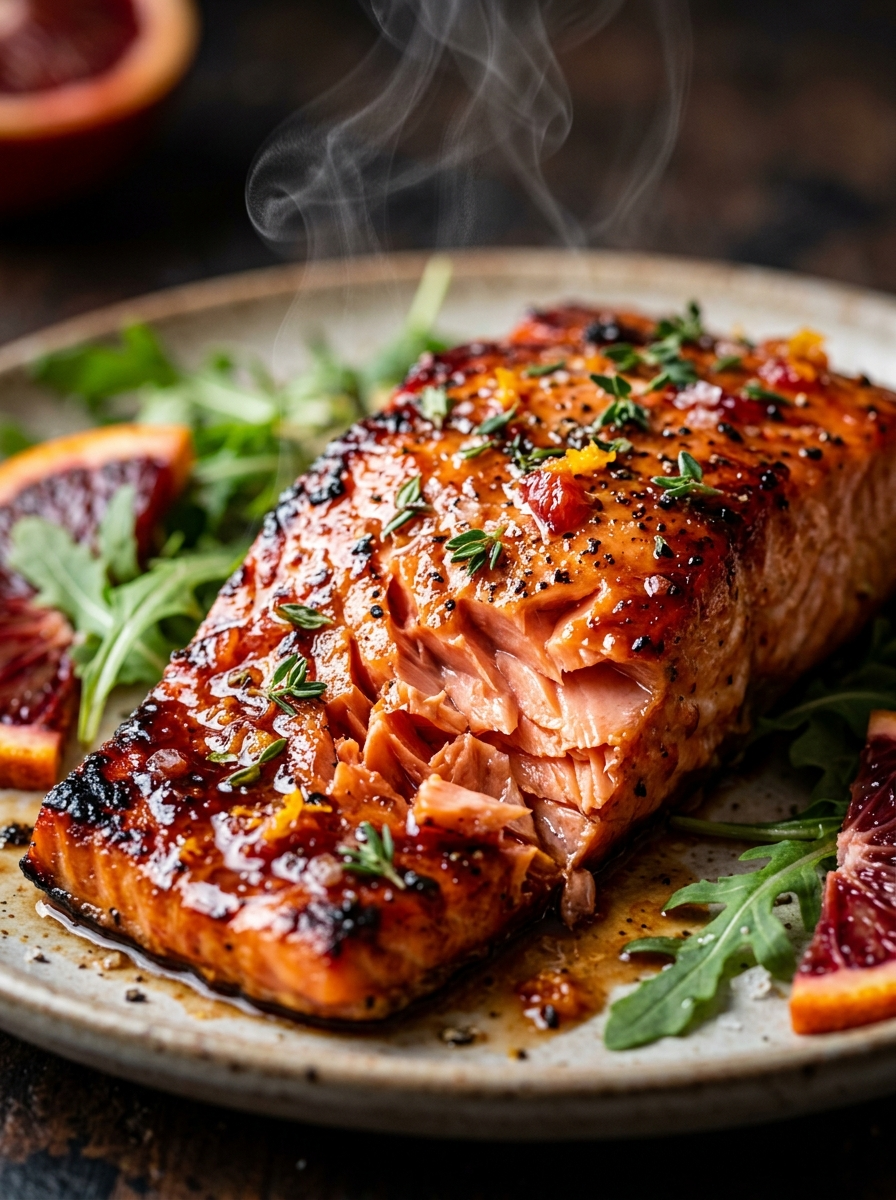
The most reliable method is using an instant-read thermometer inserted into the thickest part of the fillet. Aim for 125 to 130 degrees Fahrenheit for a moist, slightly translucent center that is considered medium doneness by culinary standards. If you do not have a thermometer, press the fillet gently with your finger – it should feel firm on the outside but still give slightly in the very center, and the flesh should flake apart easily when pulled with a fork.
Can I make the blood orange glaze in advance?
Absolutely. The glaze can be made up to 3 days ahead and stored in an airtight jar or container in the refrigerator. It will thicken considerably when cold due to the honey and reduction. Reheat it gently in a small saucepan over low heat, whisking in a tablespoon of fresh blood orange juice if needed to loosen it back to a pourable consistency before using.
What side dishes pair best with blood orange salmon?
This dish pairs beautifully with sides that complement its citrusy brightness without competing with it. Roasted asparagus, steamed broccolini with garlic, or a simple arugula salad dressed with lemon and shaved Parmesan are excellent green options. For starches, try herbed couscous, wild rice pilaf, or creamy polenta. Roasted fennel is a particularly elegant pairing as its subtle anise flavor harmonizes with both the salmon and the blood orange glaze.
Is this blood orange salmon recipe suitable for meal prep?
Yes, it is a great meal prep option. Cook the salmon fillets and prepare the glaze as directed, then store them separately in airtight containers in the refrigerator for up to 3 days. Keep the glaze in a separate container and reheat it before serving. For best texture results, reheat the salmon gently in a covered skillet over low heat with a splash of water, or serve it at room temperature flaked over grain bowls or salads throughout the week.