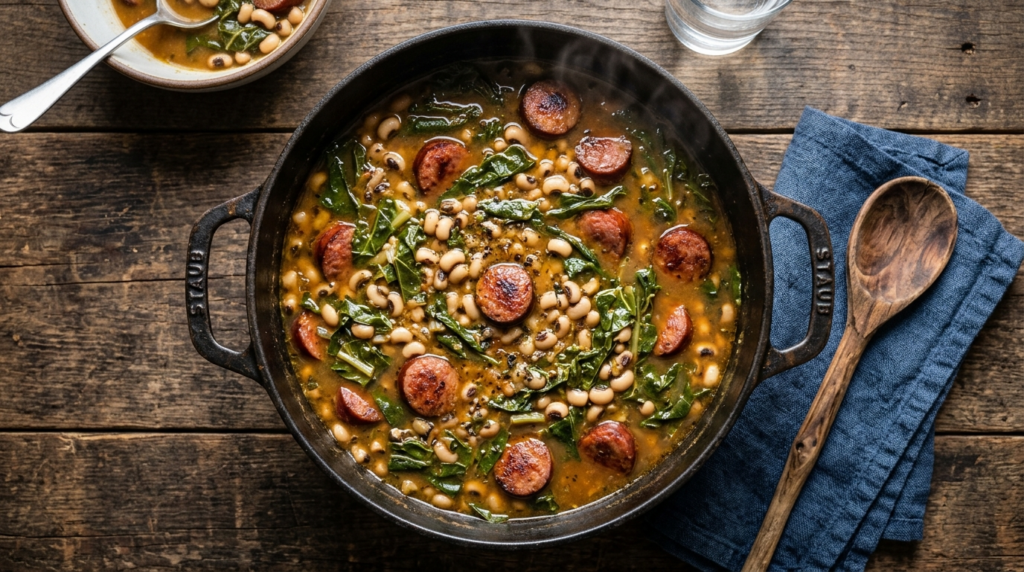
Black eyed pea collard green stew is the kind of recipe that earns a permanent spot in your weekly rotation. It is straightforward enough for a weeknight but hearty enough to serve at a gathering, and it scales easily for a crowd. The stew leans on humble ingredients — dried or canned black eyed peas, sturdy collard greens, smoked pork or a plant-based substitute, and a base of onion, garlic, and tomatoes — that together produce a broth that is rich, slightly smoky, and deeply satisfying.
What makes this dish especially appealing is its flexibility. You can use dried black eyed peas that you soak overnight for the creamiest texture, or reach for canned peas when time is short and still produce an excellent stew. The collard greens soften and mellow as they cook, losing their raw bitterness and absorbing the smoky broth. A splash of apple cider vinegar added at the end brightens everything and balances the richness. Serve it over steamed rice, with cornbread, or on its own — it holds its own either way.
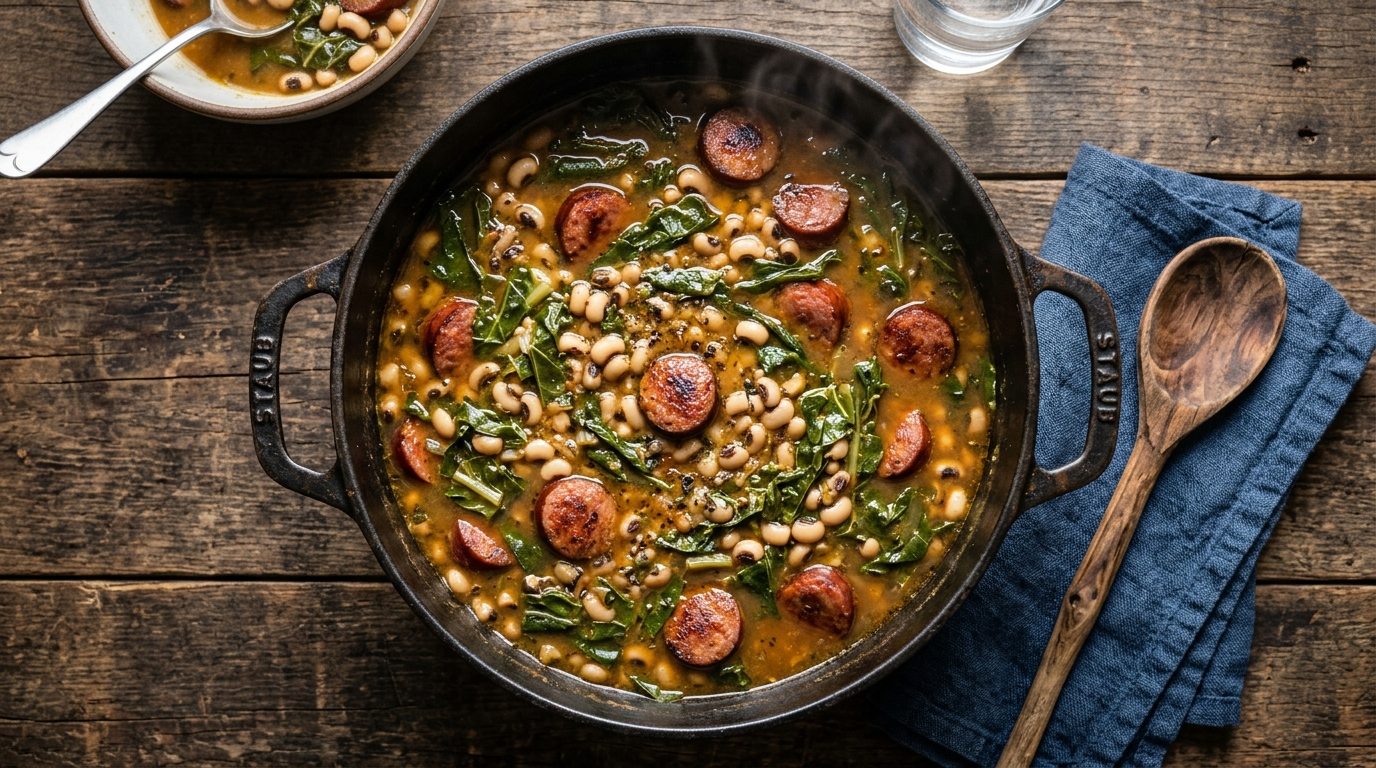
Black Eyed Pea Collard Green Stew – Hearty Southern One-Pot Recipe
This black eyed pea collard green stew is a deeply flavorful, budget-friendly one-pot meal built on a Southern tradition of cooking legumes and greens together low and slow. Smoky, earthy, and nourishing, it comes together in about two hours with mostly pantry staples.
Prep: 25 minutes | Cook: 95 minutes | Servings: 6
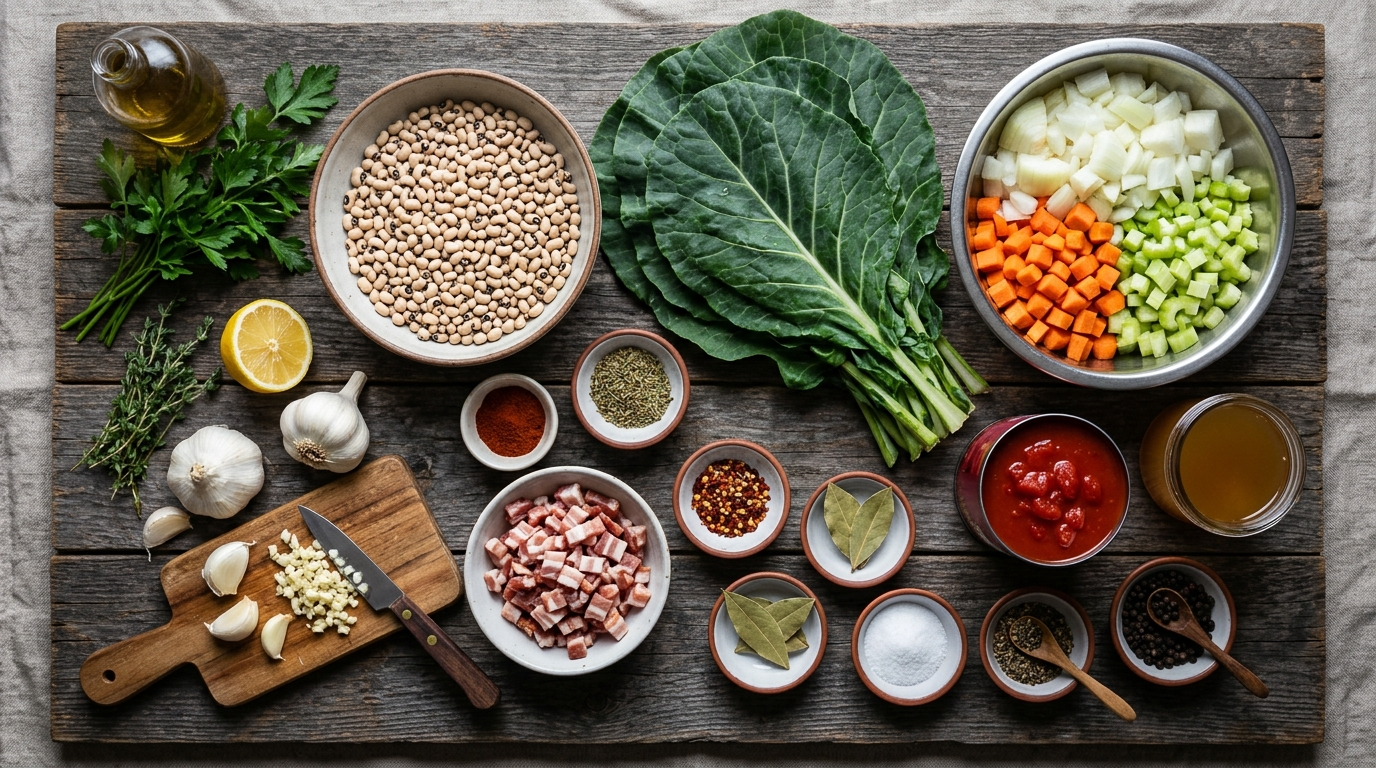
Ingredients
- 1 pound dried black eyed peas Soaked overnight in cold water and drained, or substitute three 15-ounce cans of black eyed peas, drained and rinsed
- 1 pound smoked pork sausage or smoked turkey sausage Sliced into half-inch rounds; use smoked turkey for a lighter version or a fully cooked plant-based smoked sausage for vegetarian
- 1 large yellow onion Diced, approximately 1.5 cups
- 4 cloves garlic Minced
- 3 stalks celery Sliced thin, approximately 1 cup
- 1 medium green bell pepper Diced
- 1 14.5-ounce can diced tomatoes With their juices
- 6 cups low-sodium chicken broth or vegetable broth Use vegetable broth for a vegetarian version
- 1 bunch fresh collard greens About 10 to 12 ounces after removing stems; leaves stacked, rolled, and sliced into half-inch ribbons
- 2 tablespoons olive oil or neutral cooking oil
- 1 teaspoon smoked paprika
- 1 teaspoon dried thyme
- 0.5 teaspoon crushed red pepper flakes Adjust to taste; omit for mild
- 0.5 teaspoon black pepper Freshly ground
- 1 teaspoon kosher salt Plus more to taste at the end; hold salt until late in cooking if using canned peas, as they are already salted
- 2 tablespoons apple cider vinegar Stirred in at the very end to brighten the broth
- 2 leaves dried bay leaves Remove before serving
Instructions
- If using dried black eyed peas: Place them in a large bowl, cover with at least 3 inches of cold water, and soak for 8 to 12 hours or overnight at room temperature. Drain and rinse thoroughly in a colander. If using canned peas, drain them in a colander and rinse under cold running water; set aside.
- Prepare the collard greens: Working with one leaf at a time, fold each leaf in half lengthwise and strip or cut away the thick center rib. Stack several leaves, roll them tightly into a cylinder, and slice crosswise into half-inch ribbons. Place the sliced greens in a large bowl of cold water, swish to release any grit, and lift them out. Repeat if the water is very dirty. Drain and set aside.
- Heat 2 tablespoons of oil in a 6-quart or larger heavy-bottomed pot or Dutch oven over medium-high heat until shimmering, about 2 minutes.
- Add the sliced sausage in a single layer. Cook undisturbed for 2 to 3 minutes until the cut sides develop a brown crust, then stir and cook 1 to 2 minutes more. Remove the sausage with a slotted spoon and set aside on a plate, leaving the rendered fat in the pot.
- Reduce heat to medium. Add the diced onion, celery, and bell pepper to the pot. Cook, stirring occasionally, for 6 to 8 minutes until the onion is softened and translucent and the edges are just beginning to color.
- Add the minced garlic, smoked paprika, dried thyme, crushed red pepper flakes, and black pepper. Stir constantly for 60 seconds until the garlic is fragrant and the spices are toasted into the vegetables.
- Pour in the can of diced tomatoes with their juices. Scrape the bottom of the pot with your spoon to lift any browned bits. Cook for 2 minutes, stirring, until the tomatoes begin to break down slightly.
- If using dried soaked black eyed peas: Add them to the pot now along with the 6 cups of broth, the bay leaves, and 1 teaspoon of kosher salt. Stir to combine. Bring to a boil over high heat, then reduce heat to maintain a steady, gentle simmer. Cook uncovered for 45 minutes to 1 hour, stirring occasionally, until the peas are nearly tender but still hold their shape. Skim any foam that rises to the surface during the first 15 minutes.
- If using canned black eyed peas: Add the broth and bay leaves to the pot after step 7. Bring to a boil, then proceed directly to adding the collard greens in the next step. Add the canned peas in the final 20 minutes of cooking.
- Add the washed, sliced collard green ribbons to the pot in two or three batches, stirring each batch down into the liquid before adding more. The pot will look very full but the greens will wilt quickly.
- Return the browned sausage to the pot. Stir everything together to combine. If the stew looks too thick, add up to 1 cup of additional broth or water to reach your preferred consistency.
- Continue simmering over medium-low heat for 25 to 35 minutes, stirring occasionally, until the collard greens are fully tender and silky and the peas are completely soft and creamy throughout. For canned peas, check at 20 minutes to avoid them breaking down.
- Remove and discard the bay leaves. Stir in 2 tablespoons of apple cider vinegar. Taste the stew and adjust salt and pepper as needed. For more heat, add additional red pepper flakes.
- Serve hot, ladled into bowls. Offer hot sauce, additional apple cider vinegar, or a pinch of red pepper at the table.
- Food safety for leftovers: Divide the stew into shallow airtight containers in portions no deeper than 2 inches within 2 hours of cooking. Refrigerate at 40 F or below and use within 3 to 4 days. For longer storage, freeze in airtight containers or freezer bags. When reheating on the stovetop, bring the stew to a full rolling boil, stir to ensure even heating, and confirm it reaches 165 F with an instant-read thermometer before serving.
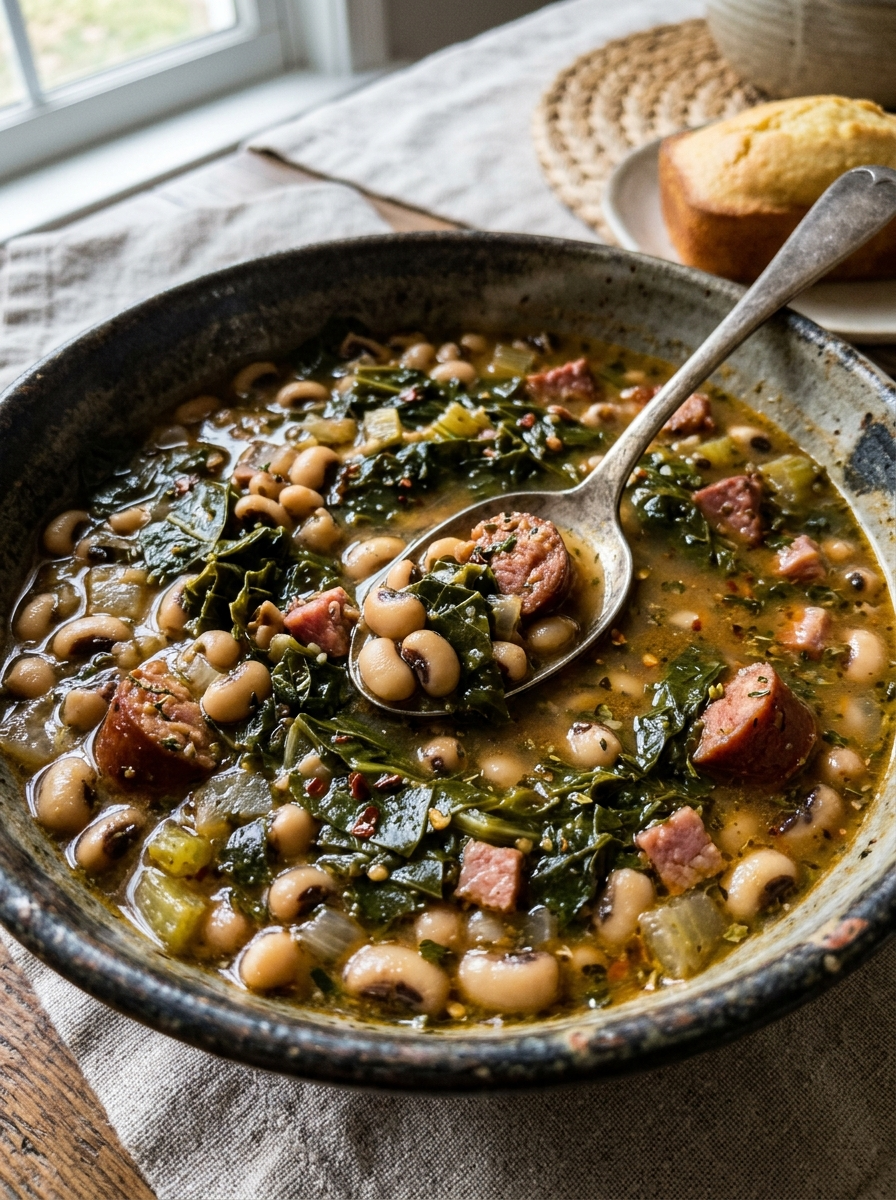
Black eyed peas, botanically classified as Vigna unguiculata, originated in West Africa and arrived in the American South through the Atlantic slave trade. Enslaved African cooks incorporated them into the Southern foodways they shaped, often pairing them with leafy greens and smoked pork scraps — ingredients that were economical and widely available. Collard greens share a similar trajectory, having been a staple of West and Central African cooking for centuries before becoming a cornerstone of Southern African American cuisine. The combination of peas and greens cooked in a pot with smoked meat became a defining dish of Southern soul food and remains closely associated with New Year's Day traditions across the American South, where black eyed peas symbolize good luck and collards represent financial prosperity. The stew format — as opposed to separate side dishes — reflects a practical approach to stretching ingredients into a filling, complete meal.
Practical Tips
- Do not salt dried peas heavily at the start of cooking — heavy salting before they are tender can cause the skins to toughen. Add the full amount of salt in the last 20 to 30 minutes when using dried peas.
- Removing the tough center rib from collard green leaves is essential — the rib stays fibrous even after long cooking and creates an unpleasant texture in the stew.
- For a thicker, creamier broth, use the back of a spoon or a potato masher to gently crush about one cup of cooked peas against the side of the pot before adding the greens.
- Smoked paprika is not a substitute for a smoked meat — if you are making the stew vegetarian, consider adding a tablespoon of soy sauce or a small piece of kombu seaweed to the broth for added savory depth.
- Collard greens can be replaced weight-for-weight with kale, mustard greens, or turnip greens, though cooking times may vary slightly — kale cooks faster and mustard greens add a sharper, more peppery flavor.
- The stew thickens noticeably as it sits and will be even thicker the next day. Thin leftovers with a splash of broth or water when reheating.
- If your sausage is raw rather than pre-cooked smoked sausage, cook it through to an internal temperature of 160 F before proceeding with the recipe.
Large heavy-bottomed pot or Dutch oven (6-quart or larger): Provides even heat distribution for sautéing and long simmering without scorching
Sharp chef's knife: Needed to slice collard green leaves off the tough center rib and chop all aromatics
Cutting board: Safe, stable surface for all prep work
Wooden spoon or heat-resistant silicone spatula: For stirring and scraping up browned bits from the pot bottom
Colander: For draining and rinsing canned black eyed peas or draining soaked dried peas
Ladle: For serving the stew and transferring hot liquid to storage containers
Instant-read thermometer: To verify that smoked sausage or added pork reaches a safe internal temperature of 165 F when reheating leftovers or cooking raw additions
Shallow airtight storage containers: Required for safe, rapid cooling and refrigeration of leftovers
Fully Vegetarian or Vegan: Omit the sausage entirely and use vegetable broth. Add 1 tablespoon of olive oil for sautéing. For smoky flavor, increase smoked paprika to 1.5 teaspoons and add 1 tablespoon of soy sauce or tamari and half a teaspoon of liquid smoke. A piece of kombu added to the broth and removed before serving adds savory depth.
Ham Hock Version: Replace the sliced sausage with 1 to 2 smoked ham hocks. Add them to the pot with the broth and dried peas at the start. After the peas and greens are fully cooked, remove the ham hocks, strip the meat from the bones, chop or shred it, and return the meat to the pot. Discard the bones, skin, and any hard cartilage.
Spicy Cajun Style: Add 1 teaspoon of Cajun or Creole seasoning blend along with the other spices. Increase red pepper flakes to 1 teaspoon. Add 2 stalks of diced jalapeño or one diced poblano pepper with the other vegetables in step 5.
Tomato-Free Version: Omit the canned diced tomatoes. Replace with an equal volume of additional broth. Add 1 tablespoon of apple cider vinegar earlier in the cooking process to introduce acidity without tomato flavor.
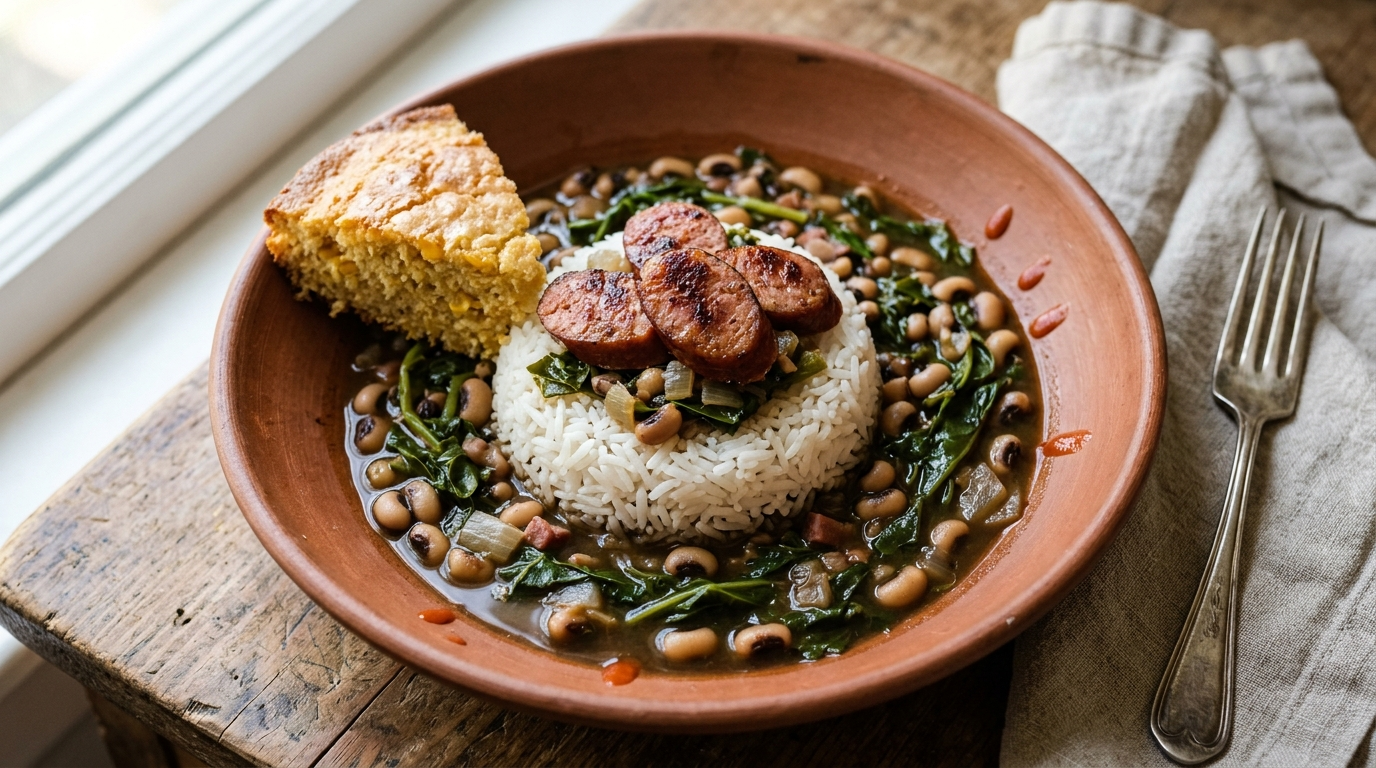
Rice and Stew (Hoppin' John Style): Stir 1.5 cups of cooked long-grain white rice directly into the finished stew during the last 5 minutes of cooking, or serve the stew ladled generously over individual bowls of hot steamed rice.
Do I have to soak the dried black eyed peas overnight?
An overnight soak is recommended for the creamiest texture and to reduce cooking time, but black eyed peas cook faster than most dried legumes. If you skip the soak, add them directly to the pot with the broth and expect a longer cook time — roughly 90 minutes to 2 hours of simmering — and check them frequently. A quick-soak method also works: cover peas with water in a pot, bring to a boil for 2 minutes, remove from heat, let stand for 1 hour, then drain and proceed.
Can I use frozen black eyed peas instead of dried or canned?
Yes. Frozen black eyed peas do not require soaking and cook faster than dried. Add them to the pot with the broth and collard greens and simmer for 25 to 35 minutes until completely tender.
How do I keep the collard greens from turning mushy?
Add the greens after the peas are nearly cooked, not at the beginning. Collard greens need about 25 to 35 minutes of simmering to become tender and silky. Adding them too early risks over-softening, though even very long-cooked collards remain chewier than more delicate greens.
How long does leftover black eyed pea collard green stew keep?
Refrigerate leftovers in shallow airtight containers within 2 hours of cooking, stored at 40 F or below. Use within 3 to 4 days. For longer storage, freeze in airtight containers or freezer bags. Reheat to 165 F, bringing it to a full rolling boil on the stovetop before serving.
The stew is too thin — how do I thicken it?
Mash roughly one cup of the cooked peas against the side of the pot with the back of a spoon or a potato masher and stir them back in. Continue simmering uncovered for 10 to 15 minutes to allow the starch to thicken the broth. Avoid adding raw flour or cornstarch slurry unless you are comfortable adjusting seasoning afterward, as this can dull the flavors.
What can I serve with this stew?
Common pairings include steamed white or brown rice, skillet cornbread or corn muffins, and simple sautéed greens. Hot sauce or pickled jalapeños on the table complement the stew's earthy richness. Crusty bread also works well for soaking up the broth.
Can I make this stew in a slow cooker?
Yes. Sauté the sausage, onion, celery, pepper, and garlic in a skillet on the stovetop first to develop flavor, then transfer everything to a slow cooker. Add the rinsed dried or canned peas, broth, tomatoes, spices, and bay leaves. Cook on low for 7 to 8 hours or on high for 4 to 5 hours. Add the collard green ribbons in the last 1.5 to 2 hours on low, or the last 45 minutes on high. Stir in vinegar before serving.