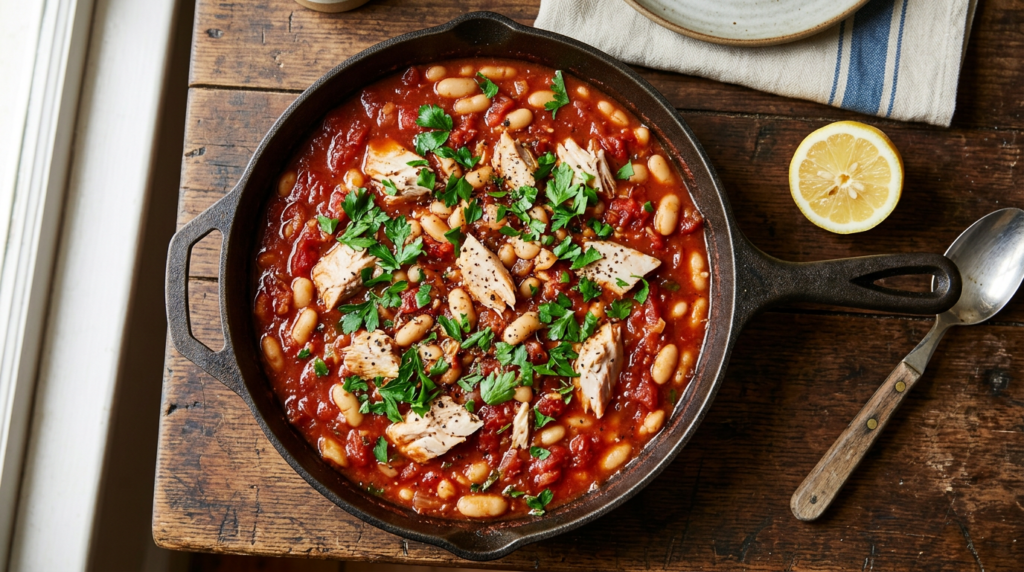
When dinner needs to happen fast and the refrigerator is looking sparse, canned pantry staples earn their keep. This tuna white bean tomato skillet pulls together canned tuna, white beans, and crushed tomatoes into a deeply savory, lightly herbed skillet meal that feels far more intentional than its simple ingredient list suggests.
The combination works because each component brings something distinct. Oil-packed tuna contributes richness and a meaty texture. Cannellini beans add creaminess and body, soaking up the tomato sauce without turning mushy. A base of garlic, onion, and red pepper flakes builds the kind of depth that makes the dish taste like it simmered for an hour even though it cooked for about twenty minutes. Finished with fresh parsley and a squeeze of lemon, it is bright enough to feel balanced rather than heavy.
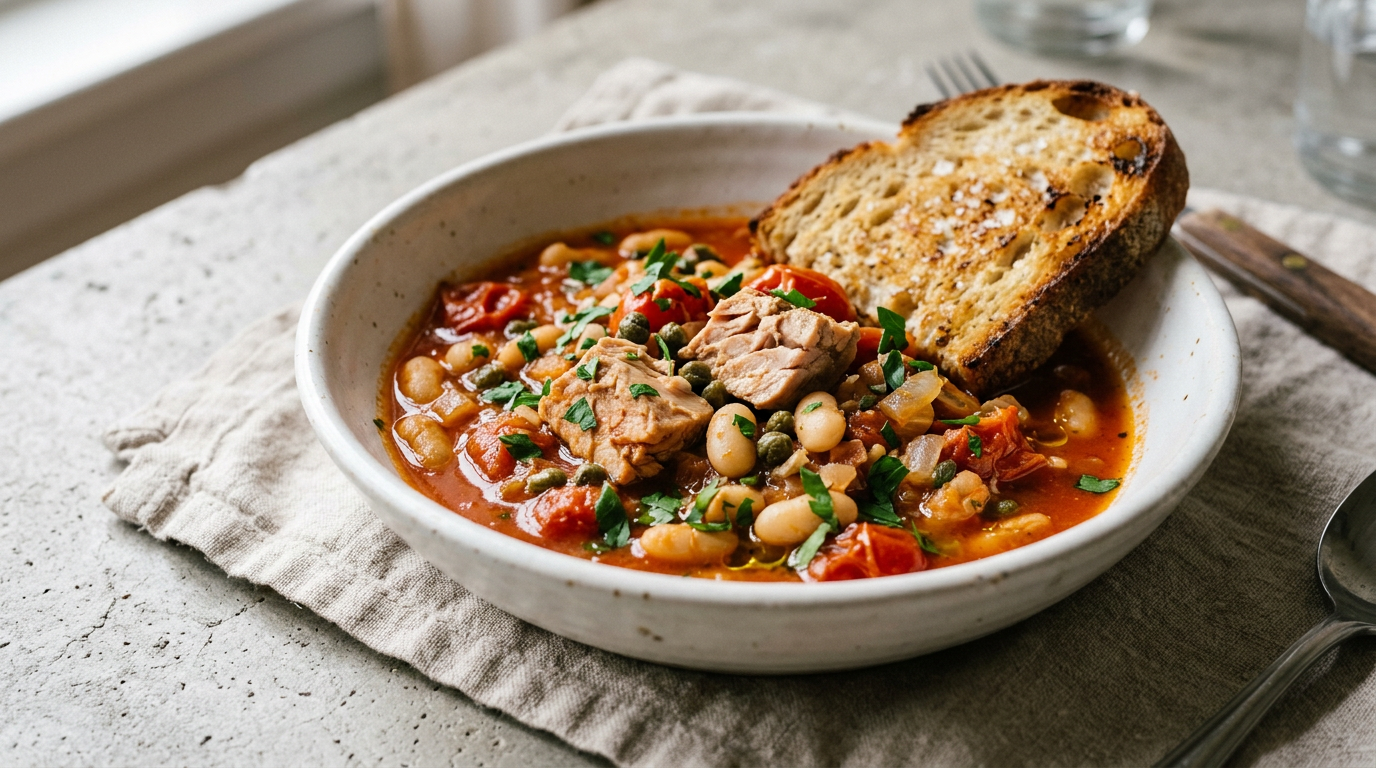
Serve it straight from the skillet over crusty bread, polenta, or pasta, or spoon it alongside a simple green salad. It reheats well, making it a practical choice for a planned second meal during the week.
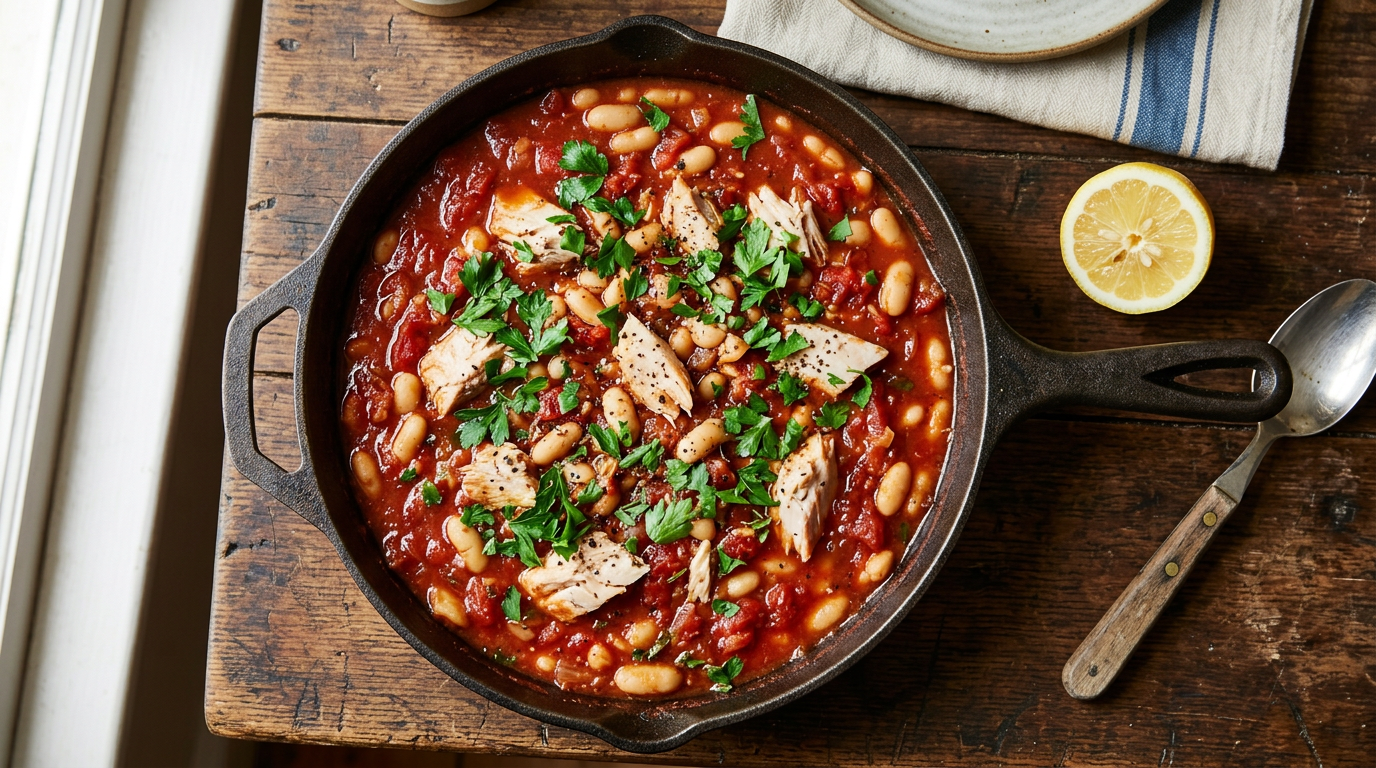
Tuna and White Bean Tomato Skillet – Easy 30-Minute Weeknight Dinner
A fast, pantry-friendly tuna white bean tomato skillet built on canned tuna, creamy cannellini beans, and a garlicky tomato sauce. Ready in 30 minutes with minimal cleanup.
Prep: 10 minutes | Cook: 20 minutes | Servings: 4
Ingredients
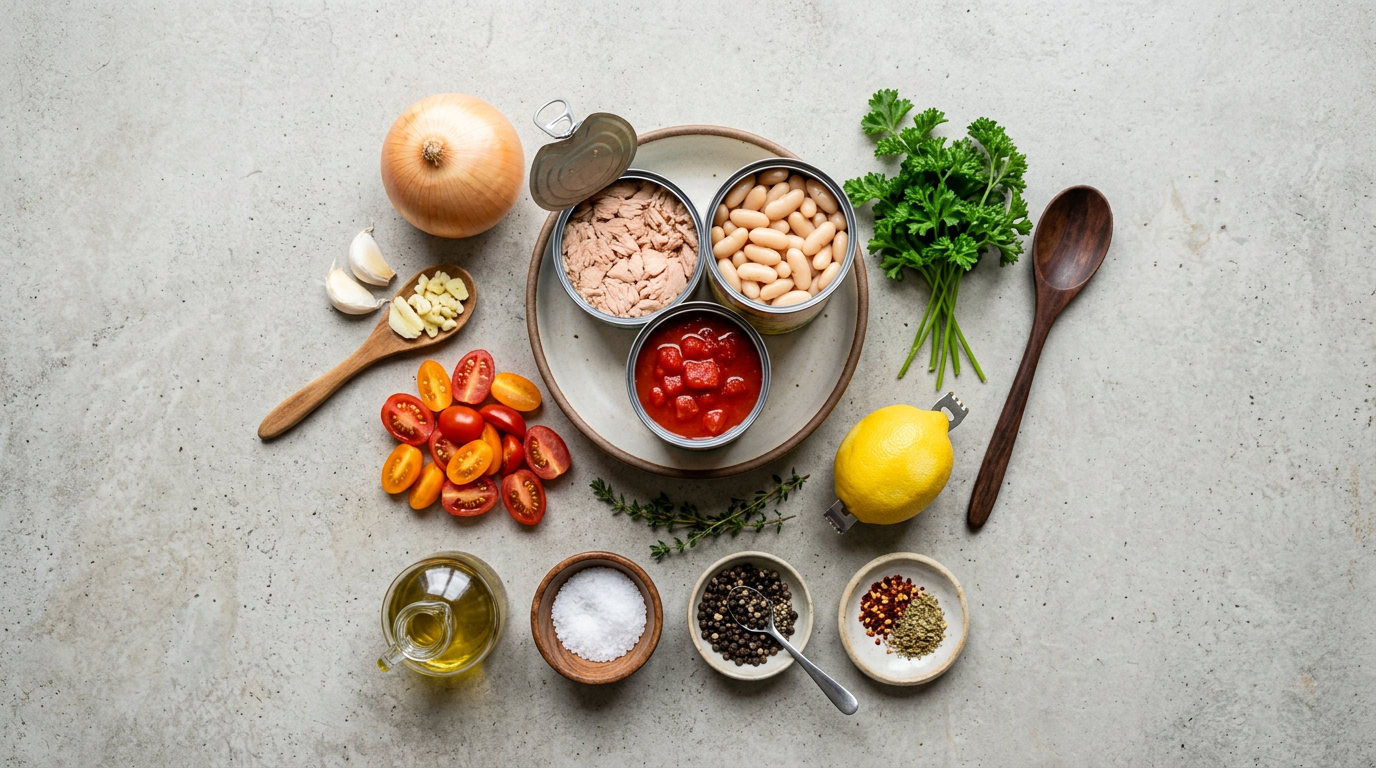
- 3 tablespoons extra-virgin olive oil Divided; use a good-quality oil since it carries the flavor base
- 1 medium yellow onion Finely diced, about 1 cup
- 4 cloves garlic Thinly sliced or minced
- 1/2 teaspoon red pepper flakes Adjust to taste; reduce to 1/4 teaspoon for less heat
- 1 28-ounce can crushed tomatoes San Marzano style preferred; do not drain
- 1/2 teaspoon dried oregano
- 1/2 teaspoon kosher salt Plus more to taste
- 1/4 teaspoon black pepper Freshly ground
- 2 15-ounce cans cannellini beans Drained and rinsed; navy beans or Great Northern beans can substitute
- 2 5-ounce cans solid white albacore tuna packed in oil Drained; oil-packed gives richer flavor, but water-packed works and is milder
- 1 teaspoon lemon zest From about half a lemon
- 1 tablespoon fresh lemon juice Added at the end to brighten the dish
- 1/4 cup fresh flat-leaf parsley Roughly chopped; for finishing
- 2 tablespoons capers Drained; optional but recommended for briny depth
Instructions
- Gather and prep all ingredients before you begin cooking: dice the onion, slice the garlic, drain and rinse the beans in a fine-mesh strainer, drain the tuna, zest and juice the lemon, and roughly chop the parsley. Having everything ready makes this recipe fast and stress-free.
- Heat 2 tablespoons of the olive oil in a 12-inch skillet over medium heat. Allow the oil to shimmer, about 1 to 2 minutes, before adding the onion.
- Add the diced onion and cook, stirring occasionally, until softened and translucent, about 5 to 7 minutes. Do not rush this step; properly softened onion forms the flavor foundation of the sauce.
- Add the sliced garlic and red pepper flakes to the skillet. Cook, stirring frequently, for 1 to 2 minutes until the garlic is fragrant and just beginning to turn golden at the edges. Watch carefully and lower the heat if needed—burned garlic will make the dish bitter.
- Pour in the entire can of crushed tomatoes. Stir to combine with the onion and garlic. Add the dried oregano, 1/2 teaspoon kosher salt, and black pepper. Stir well.
- Raise the heat to medium-high and bring the tomato sauce to a gentle boil, then reduce to medium-low. Simmer uncovered for 8 minutes, stirring occasionally, until the sauce thickens slightly and the flavors meld.
- Add the drained and rinsed cannellini beans. Stir gently to coat the beans in the tomato sauce. If using capers, add them now. Cook for 3 minutes, stirring occasionally, until the beans are heated through.
- Add the drained tuna in large chunks, folding it gently into the sauce with a wooden spoon or spatula. Try to keep some larger pieces intact for texture rather than breaking the tuna down completely. Cook for 2 to 3 minutes just until the tuna is heated through.
- Remove the skillet from heat. Drizzle with the remaining 1 tablespoon of olive oil. Add the lemon zest and lemon juice and stir gently to incorporate. Taste and adjust salt, pepper, and lemon juice as needed.
- Scatter the chopped fresh parsley over the top. Serve immediately directly from the skillet over crusty bread, cooked pasta, polenta, or alongside a green salad.
- For leftovers: transfer the skillet contents to shallow airtight containers within 2 hours of cooking. Refrigerate promptly at 40°F or below and consume within 3 to 4 days. To reheat, warm in a saucepan over medium heat, stirring often, until an instant-read thermometer reads 165°F throughout. Add a splash of water or broth if the mixture has thickened. Freeze extra portions in freezer-safe containers for up to 2 months; thaw overnight in the refrigerator before reheating.
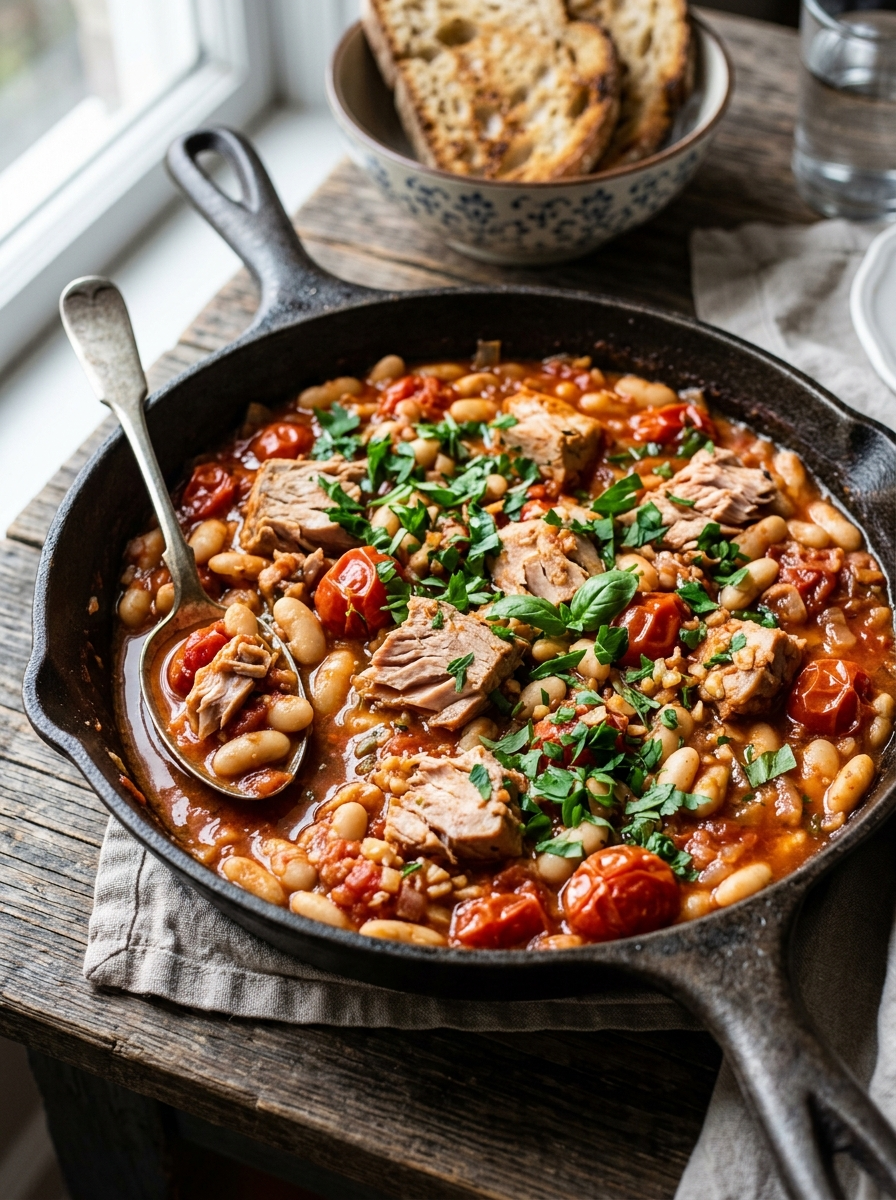
The pairing of tuna and white beans is a classic of Italian cucina povera—the tradition of resourceful, ingredient-driven cooking that made the most of inexpensive, shelf-stable foods. Tonno e fagioli, a simple salad of canned or jarred tuna dressed with cannellini beans, olive oil, onion, and lemon, has appeared on Italian tables for generations, particularly in Tuscany. Canned tuna became widely available in Italy and across Europe through the early-to-mid twentieth century, and its combination with legumes became a practical staple because both ingredients stored well and together formed a nutritionally complete meal. The skillet version builds on that foundation by adding tomato—itself a cornerstone of southern Italian cooking—to create a warm, saucy dish suited to cooler months and heartier appetites.
Practical Tips
- Oil-packed tuna delivers noticeably more flavor and a richer mouthfeel than water-packed. If you use water-packed tuna, consider adding an extra tablespoon of olive oil to compensate.
- Do not over-stir the tuna once it goes into the skillet. Folding gently and cooking briefly keeps the texture meaty rather than crumbled and pasty.
- If the tomato sauce tastes acidic before the beans go in, add a small pinch of sugar—no more than 1/4 teaspoon—to balance it without sweetening the dish.
- Rinsing canned beans removes excess sodium from the canning liquid and prevents them from making the sauce overly salty or cloudy.
- The lemon juice and zest should go in off the heat or at the very end. Heat dissipates citrus brightness quickly, so adding it last preserves that fresh, clean finish.
- Crusty bread is ideal for serving because it soaks up the tomato sauce. Sourdough, ciabatta, or a simple Italian loaf all work well.
- For a thicker sauce, let the tomatoes simmer for up to 12 minutes in step 6 before adding the beans.
12-inch skillet or sauté pan with lid: Wide surface area allows the sauce to reduce evenly and gives you room to stir without spilling
Wooden spoon or silicone spatula: For stirring without scratching the pan surface
Can opener: Needed to open the tuna, beans, and tomatoes
Fine-mesh strainer or colander: For draining and rinsing the canned beans
Chef's knife and cutting board: For chopping the onion, garlic, and parsley
Measuring spoons and cups: For accurate seasoning and liquid quantities
Instant-read thermometer: To verify reheated leftovers reach 165°F
Pasta Skillet: Cook 8 ounces of short pasta such as rigatoni, penne, or orecchiette separately according to package directions. Reserve 1/2 cup of pasta cooking water before draining. Stir the cooked pasta directly into the finished skillet, adding splashes of the starchy pasta water to loosen the sauce as needed. Toss well and serve immediately.
Spicy Calabrian Chile Version: Replace the red pepper flakes with 1 to 2 teaspoons of minced Calabrian chiles in oil for a fruitier, more complex heat. Reduce or omit the added olive oil at the end since the chile oil adds richness.
Anchovy-Boosted: Add 3 to 4 oil-packed anchovy fillets to the skillet along with the garlic. Stir and let them melt completely into the oil before adding the onion or tomatoes. They dissolve fully and deepen the savory, umami backbone of the dish without tasting fishy.
Olive and Caper Version: Add 1/3 cup of pitted and roughly chopped Kalamata or Castelvetrano olives along with the capers for a puttanesca-style flavor profile. Reduce added salt since both olives and capers contribute significant saltiness.
Wilted Greens Addition: Stir in 2 to 3 large handfuls of baby spinach or roughly chopped kale just after the beans have warmed through. Cook, stirring, for 2 to 3 minutes until wilted before adding the tuna. This adds color and bulk without altering the overall flavor.
Polenta Bowl: Prepare a batch of soft polenta according to package directions. Spoon the finished tuna and white bean skillet over individual bowls of polenta for a hearty, comforting presentation. A shaving of Parmesan or Pecorino Romano over the top is a natural complement.
Can I use chunk light tuna instead of solid white albacore?
Yes. Chunk light tuna, typically made from skipjack, has a slightly stronger flavor and a softer texture than solid white albacore. It will break apart more easily when stirred, so fold it in very gently. Both water-packed and oil-packed varieties work.
Can I use fresh tuna instead of canned?
You can, though the dish will taste quite different and cook differently. Sear a 6- to 8-ounce tuna steak in the skillet over high heat for about 2 minutes per side until the exterior is cooked and the center is still slightly pink, then remove it and rest it while you build the sauce. Flake it over the finished dish just before serving rather than cooking it in the tomato sauce, which would make it tough and dry.
What white beans work best in this recipe?
Cannellini beans are ideal because of their creamy texture and mild flavor. Great Northern beans are a close substitute. Navy beans are smaller but work well and hold their shape nicely. Chickpeas can also substitute and will add a firmer, nuttier element.
Is this recipe gluten-free?
The skillet recipe itself contains no gluten-containing ingredients. If you plan to serve it over bread or pasta, choose certified gluten-free versions of those accompaniments if needed. Always verify that your specific canned goods are produced in a gluten-free facility if cross-contamination is a concern.
How do I prevent the garlic from burning?
Add garlic after the onion has already softened and formed a moisture-rich base. Keep the heat at medium, not medium-high, during the garlic step. Stir frequently and have the crushed tomatoes ready to pour in immediately once the garlic smells fragrant and looks pale golden. The tomatoes will drop the pan temperature quickly and stop the garlic from continuing to cook.
Can I make this ahead of time?
The tomato and bean base can be made up to 2 days ahead and refrigerated in a shallow airtight container at 40°F or below. When ready to serve, reheat the base in the skillet over medium heat until it reaches 165°F on an instant-read thermometer, then fold in the drained tuna and cook just until heated through. Add the lemon and parsley fresh before serving. This keeps the tuna from overcooking during reheating.
Can I freeze this dish?
Yes. Transfer cooled leftovers to freezer-safe shallow containers and freeze for up to 2 months. Thaw overnight in the refrigerator at 40°F or below. Reheat in a saucepan over medium heat, stirring often, until an instant-read thermometer reads 165°F throughout. The beans may soften further after freezing, which affects texture but not flavor.
What should I serve with this skillet?
Crusty bread is the most traditional accompaniment and is ideal for scooping up the sauce. Cooked pasta, soft polenta, or steamed rice all work well as a base. A simple green salad dressed with lemon and olive oil balances the richness of the skillet.