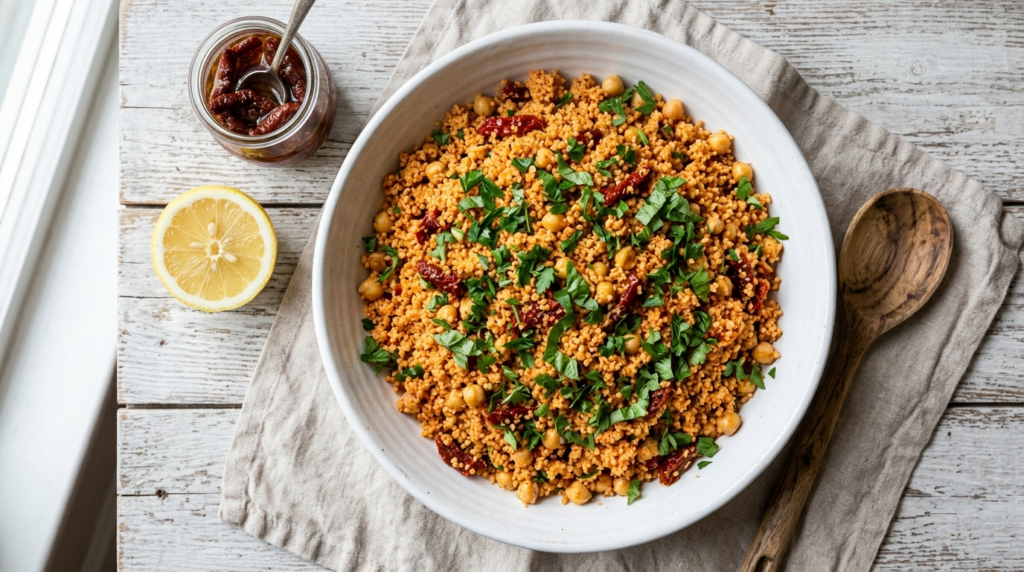
Sun dried tomato couscous with chickpeas is the kind of recipe that earns a permanent spot in your weeknight rotation. It requires minimal active cooking time, uses ingredients most cooks already keep on hand, and delivers a deeply savory, slightly tangy result that feels far more involved than it actually is.
Couscous is one of the fastest-cooking grains in any kitchen, needing only boiling liquid and a covered rest period to become perfectly tender. Pairing it with oil-packed sun dried tomatoes brings a concentrated, sweet-tart tomato flavor that ordinary fresh or canned tomatoes cannot match. Chickpeas round out the dish with a creamy, nutty bite and make it filling enough to serve as a complete meal. A handful of pantry spices — cumin, smoked paprika, and dried oregano — tie everything together with a warm Mediterranean character.
This recipe works equally well as a main dish or a hearty side. It is naturally vegan and dairy-free as written, and it scales up easily for meal prep or feeding a crowd.
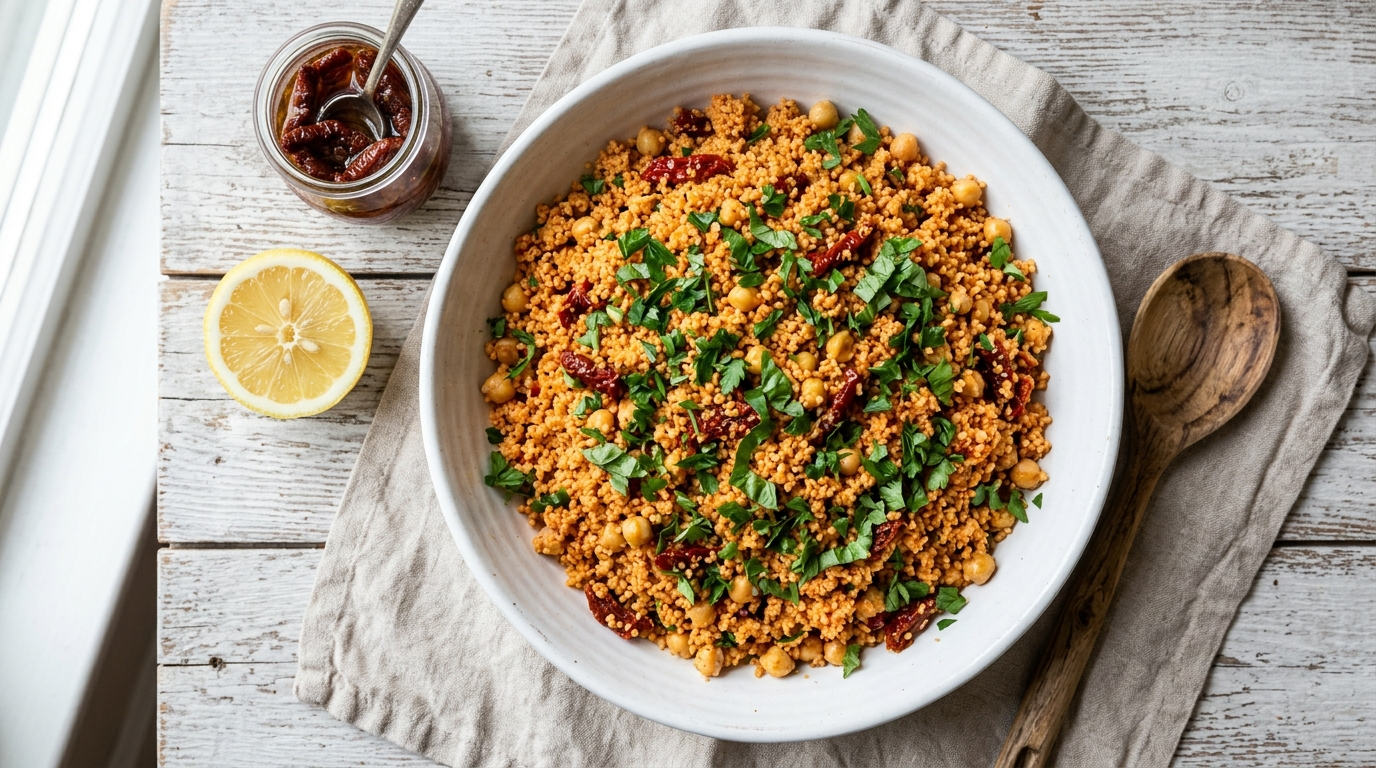
Sun Dried Tomato Chickpea Couscous – Easy One-Bowl Recipe
This sun dried tomato chickpea couscous comes together in about 30 minutes using pantry staples. Fluffy couscous absorbs a savory broth infused with sun dried tomatoes, garlic, and warm spices, while chickpeas add protein and substance to every bite.
Prep: 10 minutes | Cook: 20 minutes | Servings: 4
Ingredients
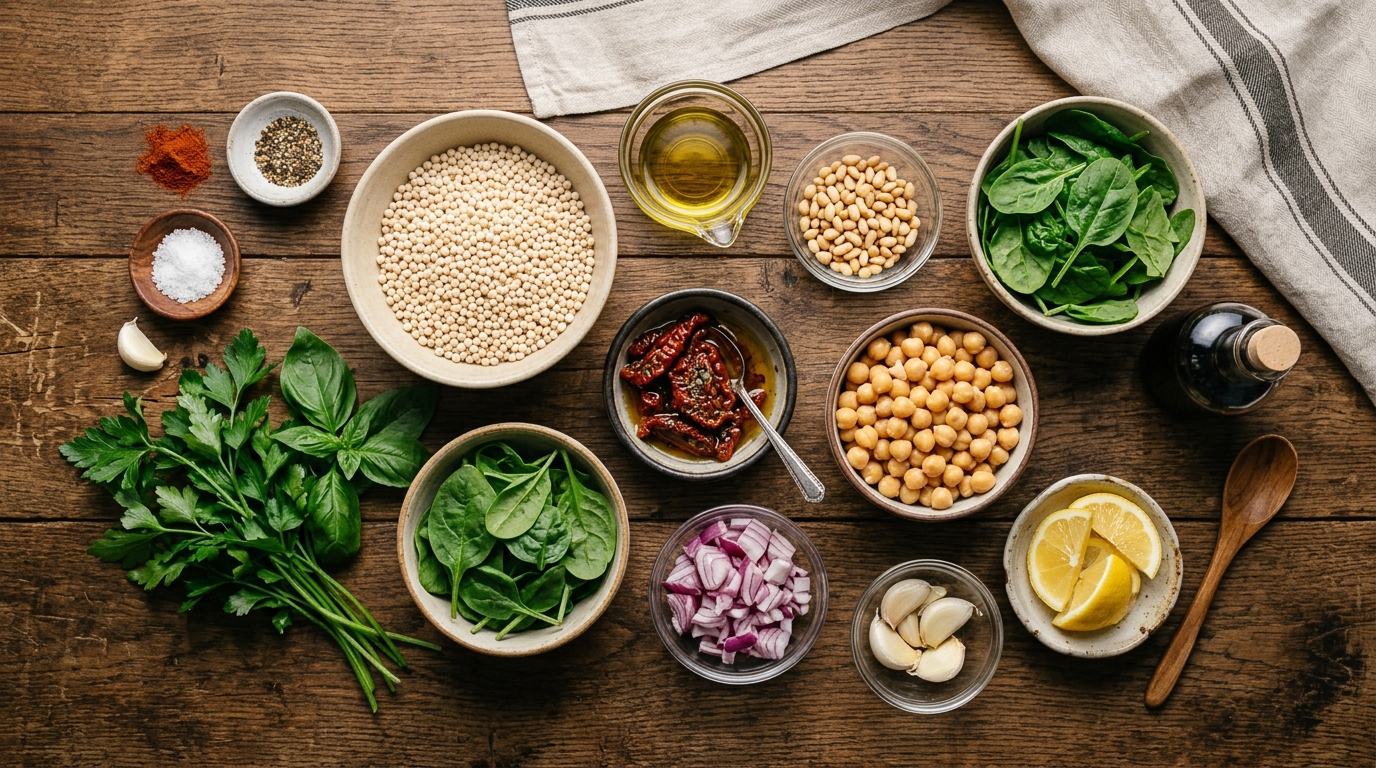
- 2 tablespoons olive oil Use the oil from the sun dried tomato jar for extra flavor if available
- 1 medium yellow onion Finely diced, about 1 cup
- 4 cloves garlic Minced, about 1 heaping tablespoon
- 0.5 cup oil-packed sun dried tomatoes Drained and roughly chopped; about 3 ounces drained weight
- 2 tablespoons tomato paste Deepens color and adds concentrated tomato flavor
- 1 teaspoon ground cumin
- 1 teaspoon smoked paprika Regular sweet paprika can be substituted
- 0.5 teaspoon dried oregano
- 0.25 teaspoon crushed red pepper flakes Optional; adjust to taste or omit for a mild dish
- 0.5 teaspoon fine salt Plus more to taste at the end
- 0.25 teaspoon black pepper Freshly ground preferred
- 1 15-ounce can chickpeas Drained and rinsed; about 1.5 cups cooked chickpeas
- 1.75 cups vegetable broth Low-sodium preferred so you control the salt level; chicken broth works if not keeping vegan
- 1.5 cups instant couscous Plain, not flavored; also called quick-cooking couscous
- 1 tablespoon fresh lemon juice From about half a lemon; added after cooking to brighten the dish
- 0.25 cup fresh parsley Roughly chopped; for garnish and freshness
- 2 tablespoons fresh basil Optional; torn or sliced thin for garnish
Instructions
- Place a 2- to 3-quart saucepan over medium heat. Add the 2 tablespoons of olive oil (or sun dried tomato jar oil) and let it warm for about 1 minute until it shimmers.
- Add the finely diced onion and a pinch of salt. Cook, stirring occasionally, for 6 to 8 minutes until the onion is softened and translucent but not browned.
- Add the minced garlic to the pan. Stir constantly and cook for 1 minute until fragrant. Do not allow the garlic to turn dark brown or it will taste bitter.
- Add the chopped sun dried tomatoes and the 2 tablespoons of tomato paste. Stir everything together and cook for 2 minutes, pressing the tomato paste against the bottom of the pan to let it toast slightly. This step deepens the tomato flavor.
- Sprinkle in the ground cumin, smoked paprika, dried oregano, red pepper flakes (if using), salt, and black pepper. Stir to coat the tomato and onion mixture with the spices and cook for 30 seconds until fragrant.
- Add the drained and rinsed chickpeas to the pan. Stir to combine with the tomato base and cook for 2 minutes so the chickpeas absorb some of the flavors.
- Pour in the 1.75 cups of vegetable broth. Stir to lift any stuck bits from the bottom of the pan. Increase the heat to medium-high and bring the broth to a full rolling boil.
- Once the liquid reaches a rolling boil, remove the pan from the heat entirely. Immediately pour in the 1.5 cups of dry instant couscous in an even layer. Do not stir yet.
- Place the lid on the saucepan and let the couscous steam, off heat, for 5 minutes. Do not lift the lid during this time, as the trapped steam is what cooks the couscous.
- After 5 minutes, remove the lid and use a fork to fluff the couscous with a gentle lifting and tossing motion, working from the outer edges toward the center. This separates the granules and prevents clumping.
- Drizzle the 1 tablespoon of fresh lemon juice over the couscous and stir gently to incorporate. Taste the dish and adjust salt, black pepper, and lemon juice as needed.
- Scatter the chopped fresh parsley and optional fresh basil over the top. Serve immediately directly from the pot, or transfer to a serving bowl.
- To store leftovers safely, divide portions into shallow airtight containers and refrigerate within 2 hours of cooking, at 40°F or below. Use refrigerated leftovers within 3 to 4 days. For longer storage, freeze individual portions in freezer-safe containers or bags for up to 3 months.
- To reheat refrigerated leftovers, place the desired portion in a small saucepan or skillet over medium heat. Add a splash of water or broth (about 2 tablespoons per cup of couscous) to prevent drying out. Stir and heat until the internal temperature reaches 165°F on an instant-read thermometer before serving.
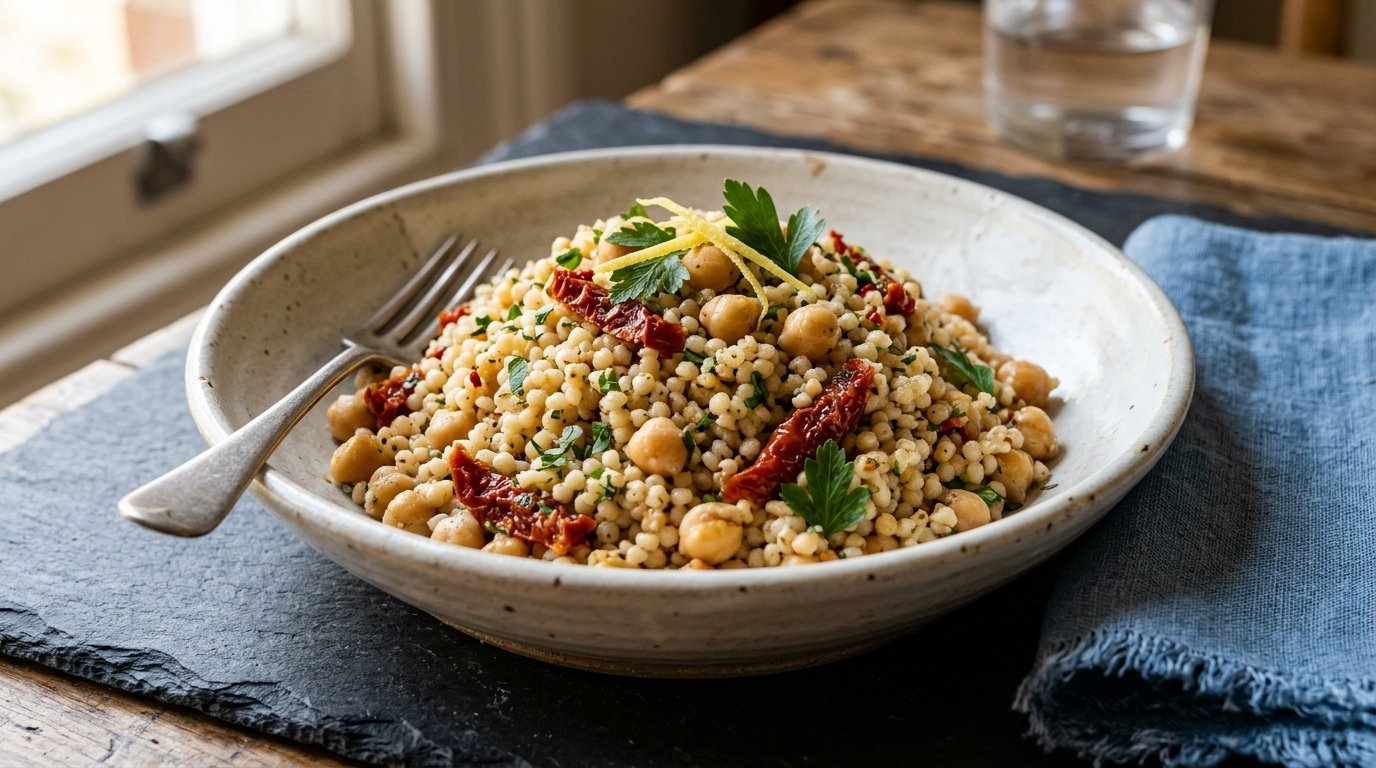
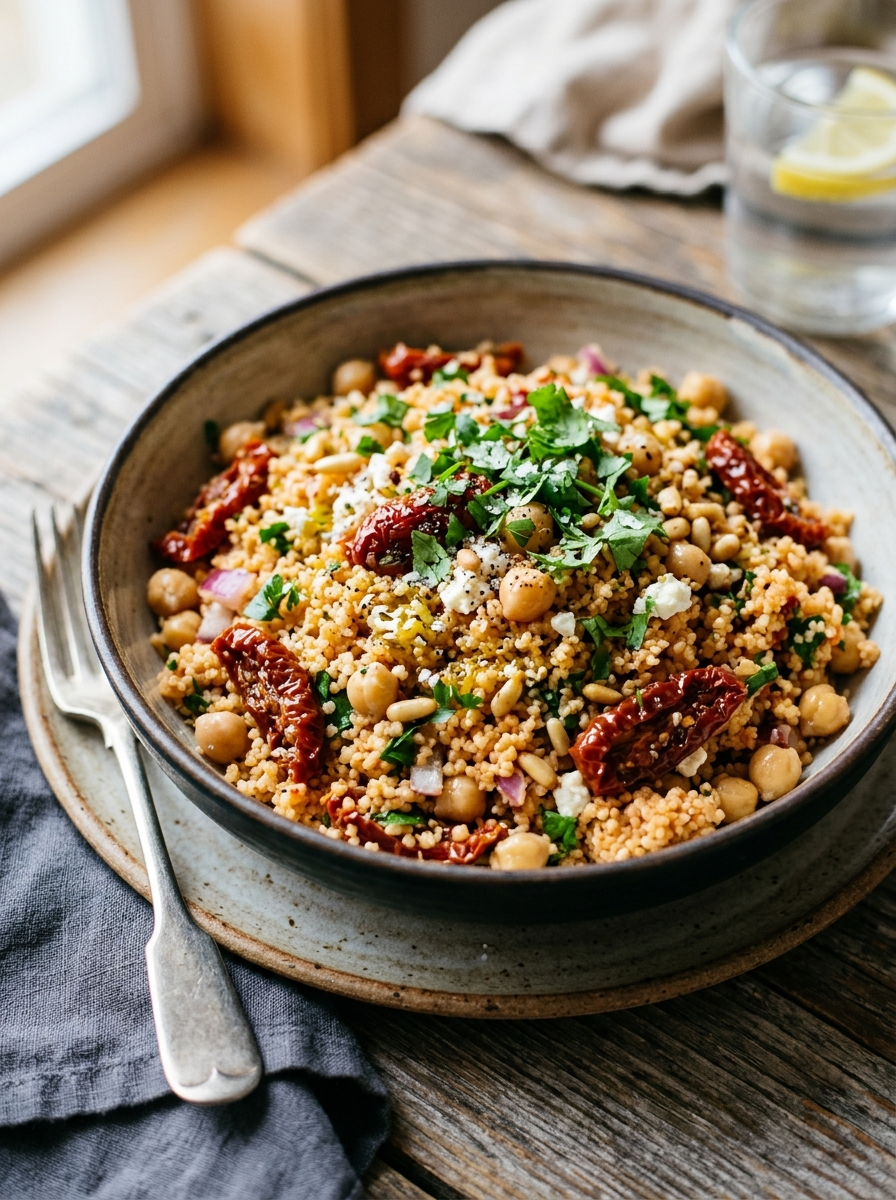
Couscous originates in North Africa, with roots tracing back to the Berber peoples of the Maghreb region — present-day Morocco, Algeria, Tunisia, and Libya — where it has been a staple food for at least several centuries. Traditional couscous is made from semolina wheat that is moistened, rolled into tiny granules, and steamed over a seasoned broth in a clay pot called a couscoussier. The instant or quick-cooking couscous widely sold in Western supermarkets is pre-steamed and dried, which is why it only requires soaking in hot liquid rather than lengthy steaming. Chickpeas have been cultivated across the Mediterranean basin, Middle East, and Indian subcontinent for thousands of years and appear prominently in North African and Levantine cooking. Sun drying tomatoes as a preservation method has long been practiced in southern Italy and parts of the Mediterranean, concentrating the tomatoes' sugars and acids and extending their shelf life. Combining these three ingredients reflects the broader Mediterranean pantry tradition of using shelf-stable, intensely flavored ingredients to create satisfying everyday meals.
Practical Tips
- The liquid-to-couscous ratio of approximately 1.17 to 1 (1.75 cups liquid to 1.5 cups couscous) accounts for the liquid already absorbed by the tomato base. Stick to this ratio for properly cooked, not mushy, results.
- Use oil-packed sun dried tomatoes rather than dry-packed for this recipe. Oil-packed tomatoes are already soft and pliable, while dry-packed ones would need to be rehydrated in warm water for 10 to 15 minutes before chopping.
- Reserve the oil from the sun dried tomato jar. It is infused with tomato flavor and makes an excellent substitute for plain olive oil in the sauté step.
- Toasting the tomato paste directly in the pan for 1 to 2 minutes before adding liquid removes the raw, tinny flavor and adds a richer, more complex taste.
- Do not use a spoon to fluff the couscous. A fork's tines separate the granules without pressing them into dense clumps.
- Instant couscous brands vary slightly. If your couscous still seems undercooked after 5 minutes, place the lid back on for an additional 2 minutes before fluffing.
- For a more substantial meal, stir in 2 large handfuls of fresh baby spinach immediately after fluffing the couscous. The residual heat will wilt the spinach within 1 to 2 minutes.
- Add the lemon juice after steaming, not before. Acid added to the broth can slightly toughen the couscous granules.
Medium saucepan with lid (2- to 3-quart): Used to sauté aromatics, build the sauce, and then steam the couscous all in one vessel
Wooden spoon or heat-resistant silicone spatula: For stirring the aromatics and tomato paste without scratching the pan
Fork: Essential for fluffing the couscous after steaming; a spoon presses the granules together and makes them clump
Measuring cups and spoons: Precise liquid-to-couscous ratio ensures properly cooked, non-soggy results
Chef's knife and cutting board: For mincing garlic, chopping sun dried tomatoes, and prepping any optional garnishes
Fine mesh strainer or colander: For draining and rinsing canned chickpeas before adding them to the pan
Instant-read food thermometer: For verifying reheated leftovers reach 165°F
Feta and Olive Addition: After fluffing the couscous, fold in 0.5 cup of crumbled feta cheese and 0.25 cup of pitted, sliced Kalamata olives. The salty, briny additions complement the sweet-tart sun dried tomatoes well. Note this version is no longer vegan.
Spicy Harissa Version: Replace the smoked paprika and red pepper flakes with 1 to 2 tablespoons of harissa paste, stirred in with the tomato paste. Harissa varies significantly in heat level between brands, so start with 1 tablespoon, taste, and add more if desired.
Lemon Herb with Arugula: Increase the lemon juice to 2 tablespoons and add 1 teaspoon of lemon zest after fluffing. Serve the couscous over a bed of fresh arugula rather than mixing the greens in — the warm couscous wilts the arugula slightly where it touches, creating two distinct textures.
Roasted Vegetable Version: Toss 2 cups of diced zucchini, bell pepper, or eggplant in olive oil and roast at 425°F for 20 to 25 minutes until tender and lightly caramelized. Fold the roasted vegetables into the finished couscous just before serving.
Chicken Addition: Dice 2 boneless, skinless chicken breasts (about 1 pound total) into 0.75-inch cubes. After the garlic is cooked, push the aromatics to the side of the pan and add the chicken. Cook the chicken, stirring occasionally, until an instant-read thermometer inserted into the thickest piece reads 165°F, about 6 to 8 minutes. Then proceed with adding the sun dried tomatoes and remaining ingredients. Note this version is no longer vegan.
Can I use regular couscous instead of instant couscous?
Traditional couscous requires steaming in a couscoussier or multi-stage cooking and is not a direct substitute in this recipe. Instant or quick-cooking couscous — which is pre-steamed and dried — is the correct product for this method. Most couscous sold in North American and European supermarkets is the instant variety. Check the package: if it says to just add boiling water and let stand, it is instant couscous.
Can I use dried chickpeas instead of canned?
Yes. You would need to cook them separately before starting this recipe. Cover 0.75 cup of dried chickpeas with several inches of water and soak overnight, or use the quick-soak method (boil for 2 minutes, then soak 1 hour). Drain, then simmer the soaked chickpeas in fresh water for 45 minutes to 1.5 hours until completely tender before draining and using in place of the canned chickpeas.
My couscous turned out mushy. What went wrong?
Mushy couscous is almost always caused by too much liquid or by stirring the couscous while it steams. Measure your broth precisely at 1.75 cups, add the couscous to the hot liquid off heat without stirring, cover immediately, and do not lift the lid for the full 5 minutes. If you are using a brand that absorbs less liquid, try reducing the broth to 1.5 cups on your next attempt.
Is this recipe gluten-free?
No. Couscous is made from semolina wheat and contains gluten. For a gluten-free version, substitute an equal volume of cooked quinoa, white rice, or a certified gluten-free grain following its own package cooking instructions, then stir it into the finished tomato and chickpea base.
How long does sun dried tomato chickpea couscous keep in the refrigerator?
Store leftovers in shallow airtight containers in the refrigerator at 40°F or below within 2 hours of cooking. Properly stored, they are safe to eat for 3 to 4 days. Couscous tends to absorb moisture as it sits, so you may need to add a small splash of water or broth when reheating. Always reheat to an internal temperature of 165°F before serving.
Can I make this dish ahead of time?
Yes. You can prepare the tomato and chickpea base up through adding the spices and chickpeas, cool it in a shallow container, and refrigerate for up to 2 days. When ready to serve, reheat the base in the saucepan until it reaches a rolling boil, then proceed with adding the broth, bringing it back to a boil, and steaming the couscous as directed. Alternatively, the fully finished dish reheats well with a splash of added liquid.
Can I freeze this recipe?
Yes. Divide cooled leftovers into individual freezer-safe containers or resealable freezer bags and freeze for up to 3 months. Thaw overnight in the refrigerator. Reheat on the stovetop or in the microwave, adding a tablespoon or two of water or broth to restore moisture, and heat to 165°F on an instant-read thermometer before serving.
What can I serve alongside this dish?
This couscous works well on its own as a complete meal. It also pairs nicely with a simple green salad, roasted vegetables, warm pita bread, a dollop of plain hummus, or a side of cucumber and tomato salad dressed with olive oil and lemon.