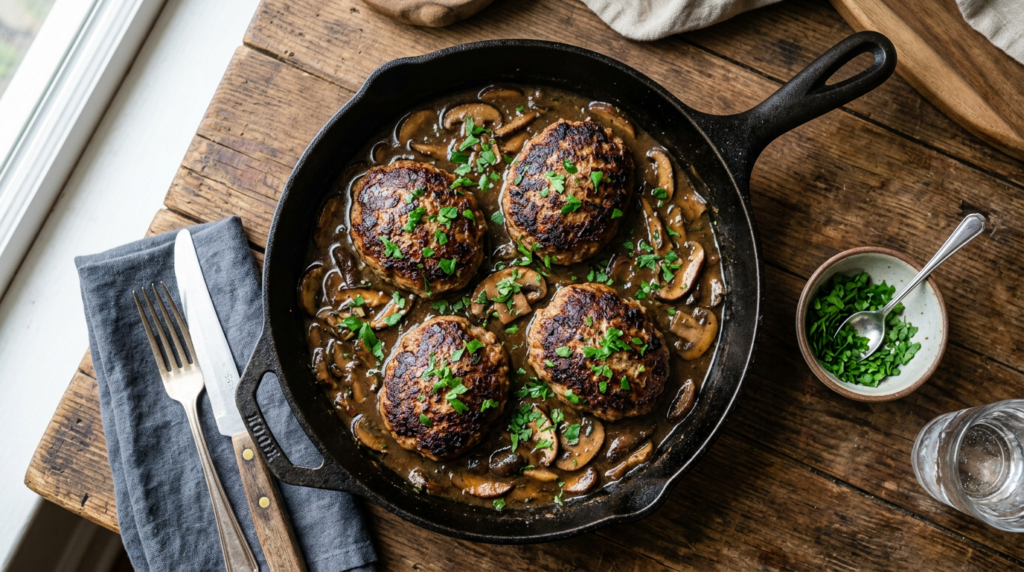
Hambagu (ハンバーグ) is one of the most popular home-cooked meals in Japan, and once you try it you will understand exactly why. These thick, juicy hamburger steaks have a texture that sits somewhere between a meatloaf and a burger patty – soft, moist, and deeply savory thanks to a blend of ground beef, sautéed onion, and a panade of panko and milk. Unlike an American burger, hambagu is always served fully cooked on a plate, never in a bun, and it is almost always accompanied by a glossy sauce.
For this recipe the sauce is a mushroom gravy built from the fond left in the pan after searing the patties. A combination of cremini and shiitake mushrooms adds both earthy depth and a hint of umami that ties the dish together beautifully. The gravy comes together quickly in the same skillet, so cleanup is minimal and every bit of flavor stays in the pan. Serve over steamed white rice with a simple green salad and you have a complete meal the whole family will request again.
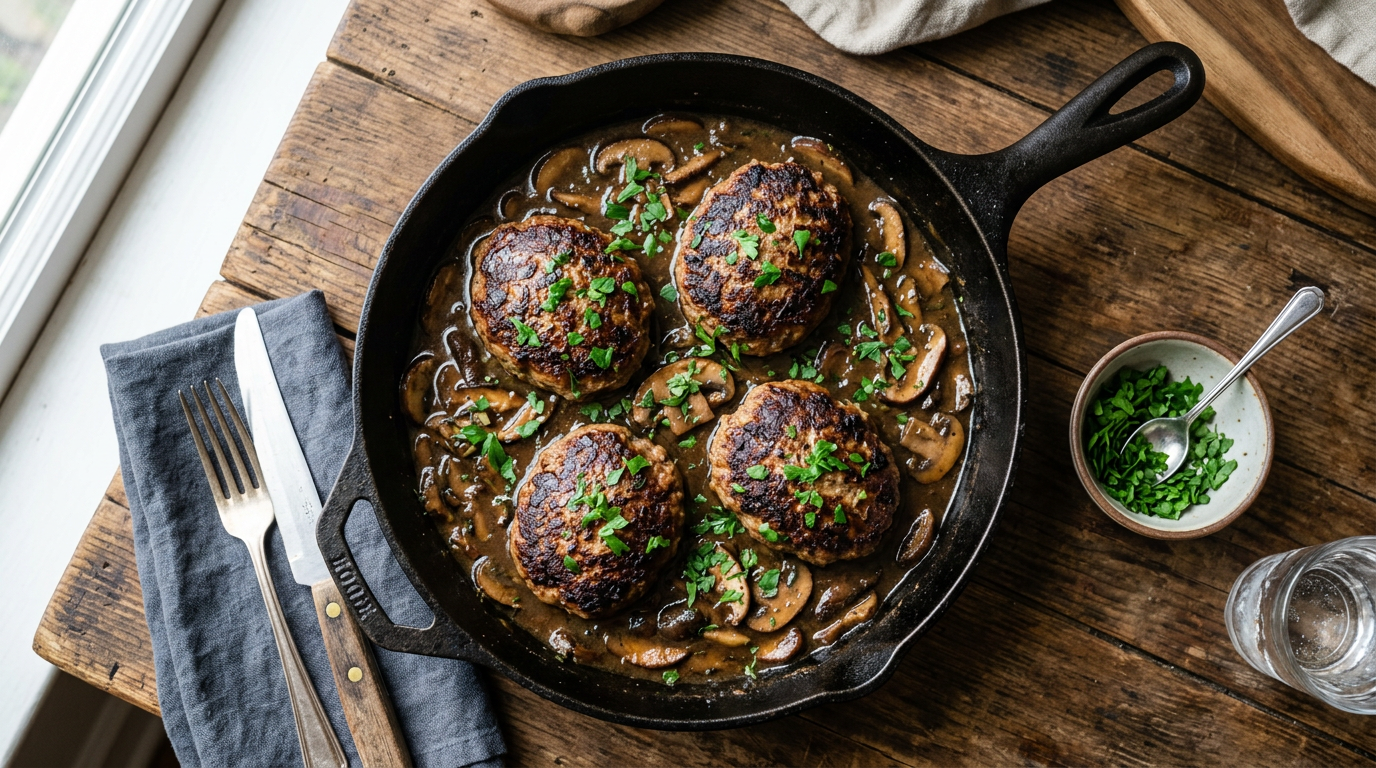
Hambagu Mushroom Gravy Recipe – Japanese Hamburger Steak at Home
Hambagu is a beloved Japanese comfort dish of tender pan-fried hamburger steaks served with a rich mushroom gravy. This home-cooking recipe walks you through every step for a satisfying weeknight dinner.
Prep: 30 minutes | Cook: 30 minutes | Servings: 4
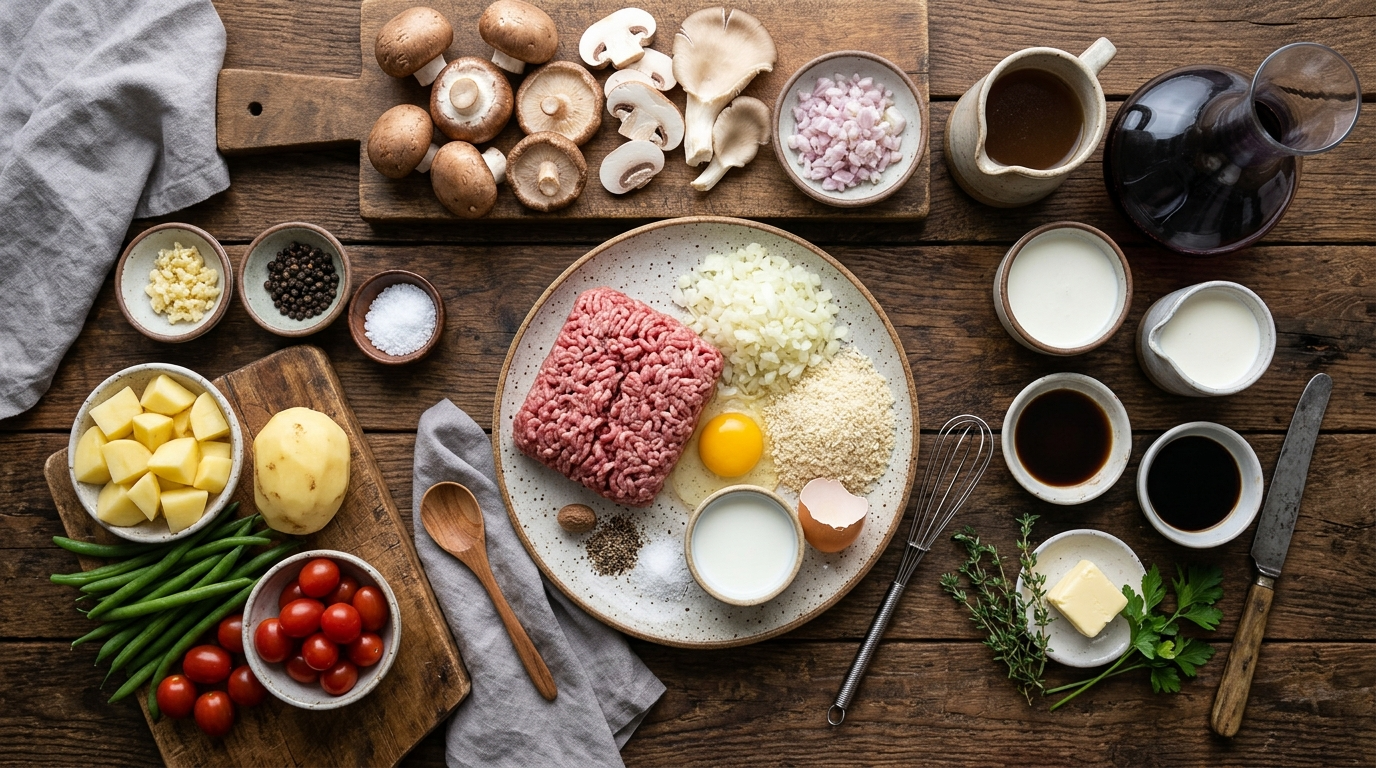
Ingredients
- 1 pound ground beef (80/20 fat ratio) Higher fat content keeps patties moist; leaner blends can dry out
- 1/4 pound ground pork Optional but traditional; adds richness and tenderness; omit and use all beef if preferred
- 1 medium yellow onion Grated on the large holes of a box grater; excess liquid squeezed out gently
- 2 teaspoons neutral oil (such as vegetable or canola oil) For sautéing the grated onion before adding to the meat
- 1/2 cup panko breadcrumbs Japanese-style breadcrumbs; regular fine breadcrumbs can substitute
- 3 tablespoons whole milk Used to soak the panko; creates a panade that keeps patties tender
- 1 large egg Lightly beaten; acts as a binder
- 1 tablespoon soy sauce Adds umami and a subtle savory depth to the meat mixture
- 1 teaspoon Worcestershire sauce For the meat mixture
- 1/4 teaspoon fine salt For the meat mixture
- 1/4 teaspoon black pepper, freshly ground For the meat mixture
- 1/8 teaspoon freshly grated nutmeg Classic Japanese hambagu seasoning; optional but recommended
- 1 tablespoon neutral oil For searing the patties in the skillet
- 6 ounces cremini mushrooms Cleaned with a damp cloth and sliced 1/4-inch thick
- 4 ounces fresh shiitake mushrooms Stems removed and discarded or saved for stock; caps sliced 1/4-inch thick
- 2 cloves garlic Minced finely
- 1 tablespoon unsalted butter For sautéing the mushrooms and building the gravy
- 2 tablespoons all-purpose flour For thickening the gravy
- 1/2 cup dry red wine (such as merlot or shiraz) For deglazing; substitute with additional beef broth if preferred
- 1 cup beef broth, low-sodium Forms the base of the gravy; use homemade or store-bought
- 1 tablespoon soy sauce For the mushroom gravy
- 1 teaspoon Worcestershire sauce For the mushroom gravy
- 1 teaspoon ketchup Adds subtle sweetness and body to the gravy; a common yoshoku technique
- 1 tablespoon unsalted butter (cold) Whisked into the finished gravy off heat to add gloss and richness
- to taste salt and black pepper For final seasoning of the gravy
- 2 tablespoons fresh flat-leaf parsley Chopped; for garnish
Instructions
- Sauté the onion: Heat 2 teaspoons of neutral oil in the skillet over medium heat. Add the grated onion and cook, stirring frequently, for 6 to 8 minutes until softened, translucent, and lightly golden. Transfer to a plate and spread into a thin layer to cool for at least 10 minutes. The onion must be cooled before it goes into the raw meat mixture to avoid partially cooking the egg and fat.
- Make the panade: Combine the panko and milk in a small bowl. Stir together and let sit for 3 to 4 minutes until the milk is fully absorbed and the mixture resembles a soft paste.
- Mix the meat: In a large mixing bowl, combine the ground beef, ground pork (if using), cooled sautéed onion, soaked panko, beaten egg, soy sauce, Worcestershire sauce, salt, pepper, and nutmeg. Using clean hands, mix firmly until the mixture is uniform and slightly sticky, about 1 to 2 minutes. Do not overmix beyond this point as it can make the patties dense.
- Form the patties: Divide the meat mixture into 4 equal portions, approximately 5 to 6 ounces each. Roll each portion into a ball between your palms, then flatten into an oval patty about 3/4 inch thick. To prevent puffing during cooking, press a shallow dimple into the center of each patty with your thumb. Place formed patties on a plate, cover loosely with plastic wrap, and refrigerate for 15 to 20 minutes. Chilling firms the patties and helps them hold their shape during searing.
- Preheat the skillet: Add 1 tablespoon of neutral oil to the cleaned skillet and heat over medium-high heat until the oil shimmers and just begins to show the first wisps of smoke, about 2 minutes.
- Sear the patties: Remove the patties from the refrigerator and carefully place them in the hot skillet without crowding. Sear undisturbed for 3 to 4 minutes until a deep brown crust forms on the bottom. Using tongs, carefully flip each patty. Reduce heat to medium and cook the second side for another 3 to 4 minutes.
- Check doneness with a thermometer: Begin checking internal temperature after the second side has cooked for 3 minutes. Insert an instant-read thermometer into the thickest part of a patty. The internal temperature must reach 160 F for ground beef and pork mixtures to be safe. If needed, reduce heat to medium-low, cover the skillet with a lid or foil tent, and continue cooking in 1-minute increments, checking temperature each time, until 160 F is reached throughout all patties.
- Rest the patties: Transfer the cooked patties to a clean plate, tent loosely with aluminum foil, and set aside. Do not discard the drippings in the skillet – they are essential to the gravy.
- Sauté the mushrooms: With the skillet still over medium heat, add the butter. Once it melts and foams, add the sliced cremini and shiitake mushrooms in a single layer. Cook undisturbed for 2 to 3 minutes until they begin to brown on the bottom, then stir and continue cooking for another 2 to 3 minutes until mushrooms are tender and well-browned. Do not salt at this stage as it draws out moisture and prevents browning.
- Add garlic: Push the mushrooms to the edges of the pan and add the minced garlic to the center. Cook for 30 seconds, stirring the garlic constantly, until fragrant. Stir the garlic into the mushrooms.
- Deglaze with wine: Pour the red wine into the skillet. Using a wooden spoon or spatula, scrape up all the browned fond from the bottom of the pan. Allow the wine to simmer for 2 minutes, reducing by about half.
- Build the roux: Sprinkle the flour evenly over the mushroom mixture. Stir constantly for 1 full minute, coating the mushrooms in the flour and cooking out the raw flour taste.
- Add broth and seasonings: Pour in the beef broth gradually while stirring continuously to prevent lumps from forming. Add the soy sauce, Worcestershire sauce, and ketchup. Stir to combine everything thoroughly.
- Simmer and thicken the gravy: Bring the gravy to a steady simmer over medium heat, stirring frequently. Simmer for 4 to 5 minutes until the gravy has thickened to a consistency that coats the back of a spoon. If it thickens too much, add broth one tablespoon at a time. Taste and season with salt and black pepper as needed.
- Finish the gravy: Remove the skillet from heat. Add the cold tablespoon of butter and swirl or whisk it into the gravy until melted and the gravy is glossy. This step is called monter au beurre and adds sheen and body.
- Serve: Return the rested patties to the skillet or place them on individual plates and spoon the mushroom gravy generously over the top. Garnish with chopped fresh parsley. Serve immediately alongside steamed white rice or mashed potatoes.
- Store leftovers safely: Refrigerate any leftover patties and gravy in separate shallow airtight containers within 2 hours of cooking. Store at 40 F or below and use within 3 to 4 days. To freeze, place cooled patties in freezer-safe bags with parchment between them and freeze the gravy separately for up to 2 months. Reheat patties and gravy to an internal temperature of 165 F before serving.
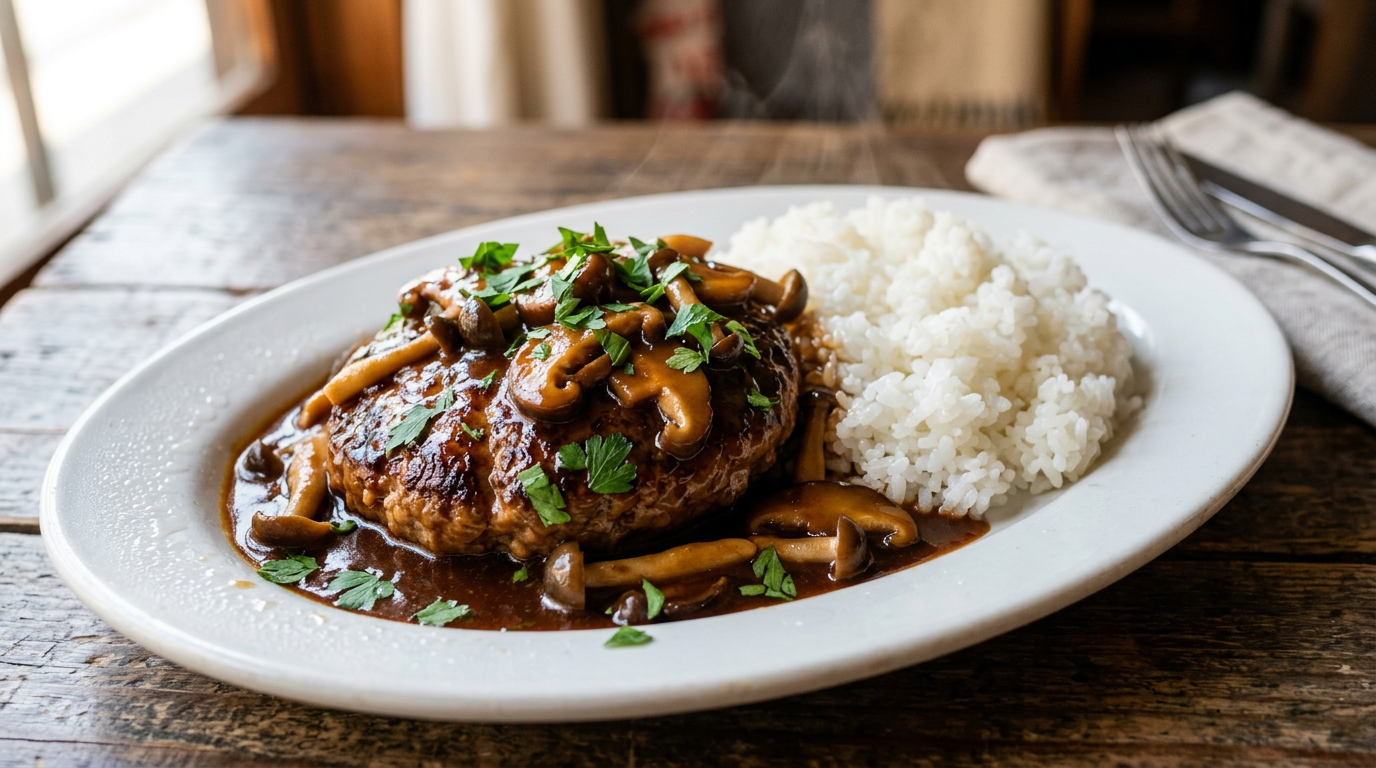
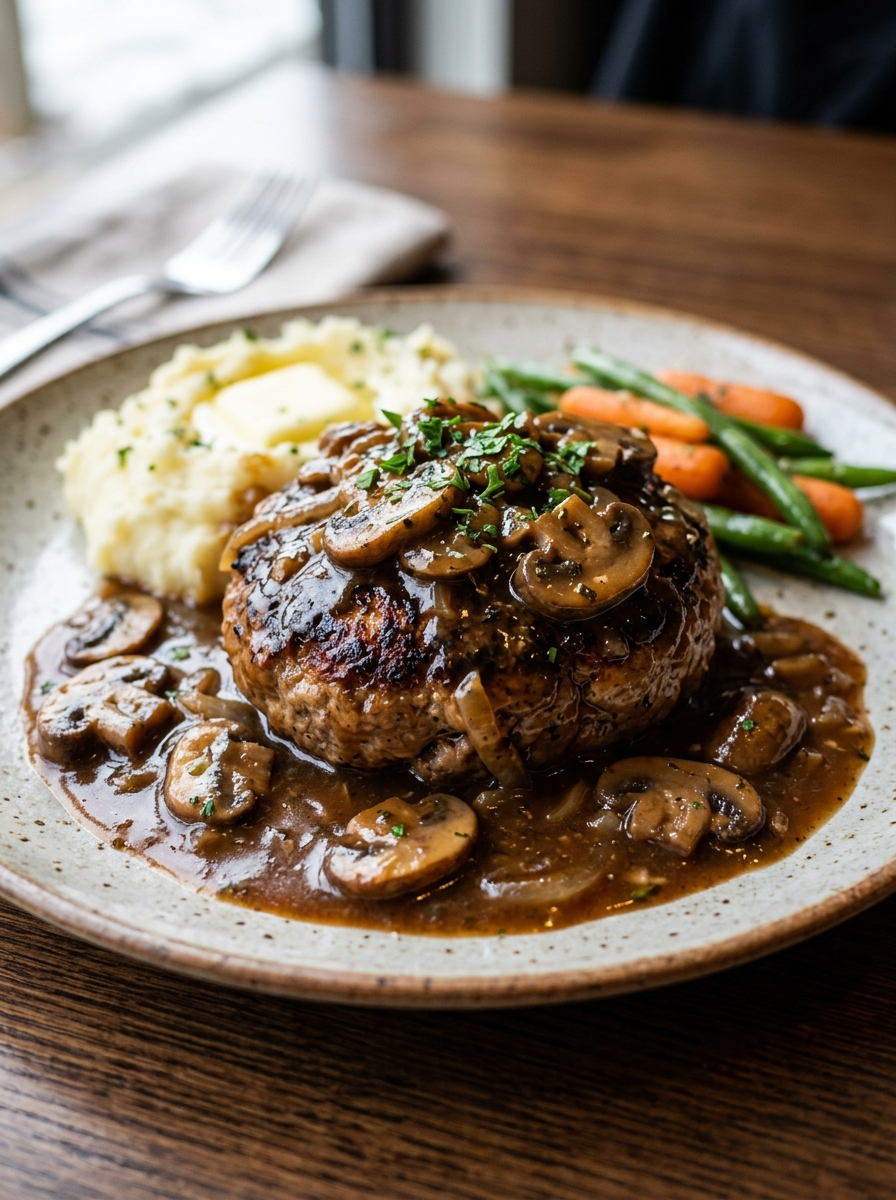
Hambagu arrived in Japan during the Meiji era (1868–1912) as Western-influenced cuisine began entering Japanese cooking through port cities and foreign residents. The dish takes its name directly from Hamburg steak, a European preparation of seasoned ground beef that became popular in the United States among German immigrants and later spread globally. Japanese cooks adapted the recipe to suit local tastes and ingredient availability, incorporating ingredients such as tofu, panko, and soy sauce, and pairing the steaks with Japanese-style sauces rather than Western accompaniments. By the mid-20th century hambagu had become a staple of yoshoku (Western-influenced Japanese home cooking) and is now a fixture on family restaurant menus and in home kitchens throughout Japan.
Practical Tips
- Keep your hands slightly damp with cold water when forming the patties to prevent the mixture from sticking to your palms.
- Do not skip the refrigeration step after forming the patties. It firms the fat in the mixture and dramatically reduces the risk of patties cracking or falling apart in the pan.
- Resist the urge to press down on the patties with a spatula while they sear. Pressing squeezes out the juices that keep them moist.
- If you do not have a thermometer, the thumb-indent method is not reliable for food safety. Invest in an inexpensive instant-read thermometer and verify that ground meat reaches 160 F.
- Use a wine you would be willing to drink – its flavor concentrates in the sauce. Avoid 'cooking wine' products, which contain added salt and preservatives that alter the flavor.
- For a non-alcoholic version, substitute the wine with an equal amount of additional beef broth plus 1 teaspoon of balsamic vinegar for acidity.
- If your skillet is not large enough to hold all four patties without touching, cook in two batches and add a small amount of additional oil between batches.
- The gravy will thicken further as it sits. If reheating, add a splash of beef broth and stir gently over medium-low heat until it returns to a pourable consistency, then confirm the temperature reaches 165 F.
Large skillet or sauté pan (12-inch, preferably cast iron or stainless steel): Provides enough surface area to sear all four patties without crowding and creates good fond for the gravy
Mixing bowls (one medium, one small): For combining the meat mixture and soaking the panko separately
Box grater or food processor: To grate the onion finely so it incorporates evenly into the meat without large chunks
Wooden spoon or heat-resistant spatula: For stirring the gravy and scraping the fond from the pan bottom
Instant-read meat thermometer: To confirm the patties reach a safe internal temperature of 160 F throughout
Tongs: For safely flipping the patties without breaking them
Plate and aluminum foil: For tenting the cooked patties to keep them warm while the gravy is made
Measuring cups and spoons: For accurate liquid and seasoning quantities
Shallow airtight containers: For safe refrigeration of leftovers within 2 hours of cooking
Tofu Hambagu: Replace one-third of the ground beef with an equal weight of firm tofu that has been pressed dry and crumbled. The tofu lightens the texture and reduces the richness of the patty. Ensure the internal temperature still reaches 160 F.
Ponzu Butter Sauce: Skip the mushroom gravy and finish the patties with a sauce made from 3 tablespoons of ponzu (citrus soy sauce), 1 tablespoon of mirin, and 1 tablespoon of cold butter swirled in off heat. Top with grated daikon radish and chopped green onion.
Demi-Glace Style Gravy: For a richer, restaurant-style sauce, add 1 tablespoon of tomato paste with the garlic and substitute 1/2 cup of the beef broth with store-bought demi-glace. The result is a deeper, more intensely flavored gravy.
Cheese-Stuffed Hambagu: Press a 1-inch cube of fresh mozzarella or fontina into the center of each patty before forming it, then seal the meat around the cheese completely. Cook as directed, verifying the internal temperature reaches 160 F. The cheese melts inside for a molten center.
Hambagu with Fried Egg: A popular diner-style yoshoku variation: fry an egg sunny-side up in a separate pan while the gravy simmers, then place it on top of the plated hambagu before serving. The runny yolk mixes with the mushroom gravy on the plate.
Can I use all ground beef instead of a beef and pork blend?
Yes. An 80/20 ground beef used on its own produces a delicious result. The pork adds a slightly softer texture, but all-beef hambagu is traditional in many households. The same 160 F internal temperature applies regardless of whether pork is included.
Why does my hambagu crack and fall apart in the pan?
The most common causes are skipping the refrigeration step before searing, having too little binder (egg or panko), or handling the patties too roughly when flipping. Make sure the mixture is well combined, that the patties have chilled for at least 15 minutes, and that the skillet is fully preheated before the patties go in.
Can I make the patties ahead of time?
Yes. Form the patties, place them on a parchment-lined plate, cover tightly with plastic wrap, and refrigerate for up to 24 hours before cooking. For longer storage, freeze raw patties separated by parchment in a freezer bag for up to 1 month. Thaw in the refrigerator overnight before cooking.
What can I serve alongside hambagu besides rice?
Mashed potatoes, steamed or roasted broccoli, corn, a simple shredded cabbage salad with Japanese sesame dressing, or buttered egg noodles all work well. Japanese family-style hambagu meals often include a side of corn and a small salad.
My gravy turned out lumpy. How do I fix it?
Pour the gravy through a fine-mesh strainer into a saucepan, pressing the solids through if desired, or whisk vigorously over medium heat. Adding the broth gradually while stirring constantly after the flour step is the best prevention. If the gravy is too thick, thin it with a tablespoon of broth at a time.
Is it safe to reheat hambagu the next day?
Yes, provided the patties were refrigerated in a shallow container within 2 hours of cooking and stored at 40 F or below. Reheat the patties and gravy together in a covered skillet over medium-low heat, adding a splash of broth if needed, until the internal temperature of the patties reaches 165 F on an instant-read thermometer.
Can I make this recipe gluten-free?
Substitute gluten-free panko (available at most grocery stores) for regular panko, use tamari in place of soy sauce, and replace the all-purpose flour in the gravy with 1 tablespoon of cornstarch whisked into 2 tablespoons of cold broth before stirring it in. Confirm your Worcestershire sauce is gluten-free, as formulations vary by brand.