Green Smoothie Bowl Recipe: Fresh, Easy and Nourishing
This green smoothie bowl recipe is the vibrant, nutrient-dense breakfast you have been looking for to kickstart your mornings with real energy and flavor. Unlike a drinkable smoothie, a smoothie bowl is thick enough to eat with a spoon, giving you the satisfying texture of a full meal along with all the benefits of leafy greens, frozen fruit, and wholesome toppings.
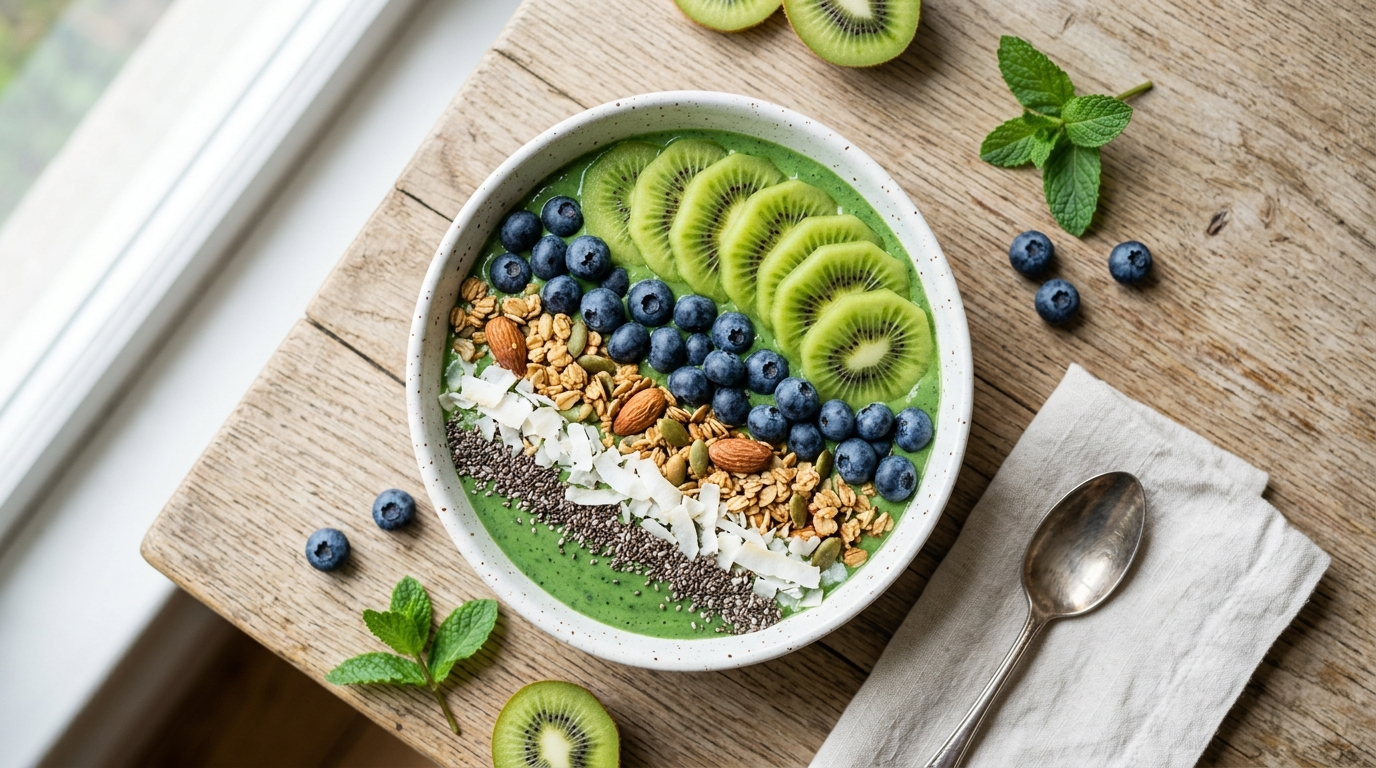
What makes a green smoothie bowl truly special is the art of layering flavors and textures. The base is blended to a creamy, spoonable consistency using spinach or kale paired with frozen mango or banana, creating a naturally sweet and deeply green foundation. Once poured into your bowl, the real fun begins as you arrange colorful toppings like granola, sliced kiwi, chia seeds, and coconut flakes into a visually stunning pattern.
Whether you are a longtime health food enthusiast or just beginning to explore cleaner eating habits, this recipe is approachable, customizable, and endlessly rewarding. It takes less than ten minutes to prepare, requires no cooking whatsoever, and can be adapted to suit virtually any dietary preference. Once you make your first green smoothie bowl, it will absolutely become a staple in your weekly routine.
This green smoothie bowl recipe delivers a powerhouse of vitamins, fiber, and natural energy in one gorgeous bowl. Packed with leafy greens, tropical fruit, and crunchy toppings, it is as beautiful as it is nourishing. Make it today for the ultimate feel-good breakfast.

Ingredients
| AMOUNT | INGREDIENT | NOTES |
|---|---|---|
| 2 cups | fresh baby spinach | tightly packed, or substitute kale with stems removed |
| 1 cup | frozen mango chunks | adds natural sweetness and helps thicken the base |
| 1 medium | frozen banana | sliced before freezing for easier blending |
| 0.5 cup | unsweetened almond milk | or any plant-based milk, add more as needed |
| 1 tablespoon | fresh lime juice | brightens the green flavor |
| 1 teaspoon | pure vanilla extract | optional but adds warmth and depth |
| 0.25 cup | granola | for topping, choose a low-sugar variety |
| 0.5 medium | kiwi | peeled and thinly sliced for topping |
| 0.25 cup | fresh blueberries | for topping, washed and dried |
| 1 tablespoon | chia seeds | for topping, adds omega-3s and texture |
| 1 tablespoon | unsweetened coconut flakes | for topping, lightly toasted if preferred |
| 1 teaspoon | raw honey or maple syrup | optional, for drizzling on top if extra sweetness is desired |
Instructions

Nutrition (per serving)
About This Recipe
The smoothie bowl as we know it today traces its roots to the acai bowl tradition of Brazil, where thick blended acai berry pulp has been consumed as a street food and athletic recovery meal for decades. Surfers along the beaches of Bahia popularized the concept of topping a thick fruit puree with granola and fresh banana, and as Brazilian culture spread globally through surf communities in the early 2000s, the format of the thick blended bowl made its way into health-conscious cafes across the United States, Australia, and Europe.
The green smoothie bowl specifically emerged from the broader green smoothie movement popularized by raw food advocates in the mid-2000s, most notably through Victoria Boutenko whose research on wild edible greens brought leafy green blending into mainstream wellness culture. As smoothie bowls became a social media sensation around 2014 and 2015, food creators began combining the thick bowl format with green blends, giving birth to the visually striking and nutritionally superior green smoothie bowl. Today it is a global breakfast staple celebrated for its balance of beauty, nutrition, and simplicity.
Ready to Serve

A Closer Look

Pro Tips for Best Results
- Always freeze your banana before making this recipe. A frozen banana is the single most important factor in achieving a thick, scoopable smoothie bowl base. Peel and slice bananas in advance and store them in a zip-lock bag in the freezer so you always have them on hand.
- Use as little liquid as possible when blending. The most common mistake people make with smoothie bowls is adding too much milk, which results in a thin consistency that is more like a drinkable smoothie. Start with less than you think you need and only add more if the blender is truly struggling.
- Chill your serving bowl in the freezer for five minutes before pouring in the smoothie base. A cold bowl keeps the base from warming up and becoming runny while you are arranging your toppings, giving you more time to create a beautiful presentation.
- For an extra nutrient boost, blend in a tablespoon of spirulina powder or matcha powder with the greens. Both deepen the green color dramatically and add a concentrated source of antioxidants, though they do bring a slightly earthy or grassy flavor that pairs well with the sweetness of mango and banana.
- Prep your smoothie bases in advance by blending without toppings and freezing in individual portions in a sealed bag. The night before you want to enjoy one, move a portion from the freezer to the refrigerator to thaw slightly, then re-blend briefly in the morning for a perfectly thick bowl in under two minutes.
Essential Equipment
High-Powered Blender: Essential for achieving a thick, ultra-smooth green base without leafy green chunks or fibrous texture.
Wide Shallow Bowl: A wide bowl gives you more surface area for arranging toppings in an attractive and photogenic pattern.
Rubber Spatula: Needed to scrape every bit of the thick smoothie base out of the blender jar cleanly.
Measuring Cups and Spoons: Ensures consistent ratios of greens, fruit, and liquid so the texture comes out perfectly every time.
Sharp Paring Knife: For slicing delicate toppings like kiwi, strawberries, and banana with precision and clean edges.
Cutting Board: Provides a safe and stable surface for prepping all your fresh fruit toppings.
Variations
Tropical Paradise Bowl: Replace the spinach with half spinach and half frozen pineapple, and add a quarter of an avocado to the base for extra creaminess. Top with toasted macadamia nuts, fresh mango cubes, passion fruit pulp, and a sprinkle of toasted coconut for a deeply tropical experience.
Protein-Packed Gym Bowl: Add one scoop of unflavored or vanilla plant-based protein powder to the base before blending along with a tablespoon of almond butter. Top with hemp seeds, sliced almonds, and banana coins for a post-workout smoothie bowl that delivers around 20 grams of protein per serving.
Detox Green Bowl: Use kale instead of spinach, add half a cucumber and a small knob of fresh ginger to the base, and blend with coconut water instead of almond milk. Top with sliced green apple, cucumber ribbons, mint leaves, and a sprinkle of flaxseed for a deeply cleansing and refreshing bowl.
Creamy Avocado Green Bowl: Add half a ripe avocado to the blender base along with the spinach and frozen fruit. The avocado creates an extraordinarily creamy, rich texture and adds healthy monounsaturated fats. This version pairs beautifully with sliced strawberries, pomegranate seeds, and a drizzle of balsamic glaze.
Kid-Friendly Hidden Greens Bowl: Use extra frozen mango and a few frozen strawberries to naturally sweeten and tint the base so it appears more colorful and less intensely green. Top with fun toppings like mini chocolate chips, rainbow sprinkles, and sliced strawberries to make a smoothie bowl that kids will eat without hesitation.
Frequently Asked Questions
Can I make a green smoothie bowl ahead of time?
You can blend the base the night before and store it in a sealed container in the freezer. In the morning, let it sit on the counter for three to five minutes and then stir vigorously or give it a very brief re-blend to restore the creamy texture. Add your toppings fresh right before eating for the best results.
Why does my smoothie bowl turn out too thin?
The most likely cause is using too much liquid or fresh instead of frozen fruit. Make sure your banana and mango are fully frozen solid before blending, and start with the minimum amount of almond milk listed. You can always add a splash more but you cannot take it back once it is already in the blender.
Can I use kale instead of spinach?
Yes, kale works very well in this recipe and delivers a slightly more robust, earthy flavor along with a deeper green color. Remove the tough center stems before adding kale to the blender since they can create a bitter or stringy result. Baby kale is the mildest option if you are new to green smoothie bowls.
Is a green smoothie bowl actually healthy?
Yes, a well-made green smoothie bowl is an excellent source of vitamins A, C, and K from the leafy greens, natural carbohydrates and potassium from the fruit, and additional fiber and omega-3 fatty acids from toppings like chia seeds and flaxseed. The key is to keep toppings balanced and avoid loading up on high-sugar granolas or excessive sweeteners.
What blender works best for smoothie bowls?
A high-powered blender with at least 1000 watts is ideal for breaking down frozen fruit and leafy greens into a completely smooth base. Brands like Vitamix, Blendtec, and Ninja Professional are excellent choices. If you are using a standard blender, let the frozen fruit sit at room temperature for five minutes to soften slightly before blending.
Can I make this recipe without banana?
Yes, you can substitute the frozen banana with half an avocado plus a quarter cup of frozen cauliflower florets, which sounds unusual but creates a remarkably thick and creamy base without any noticeable flavor impact. You may want to add a small amount of honey or dates to compensate for the natural sweetness that banana would have contributed.