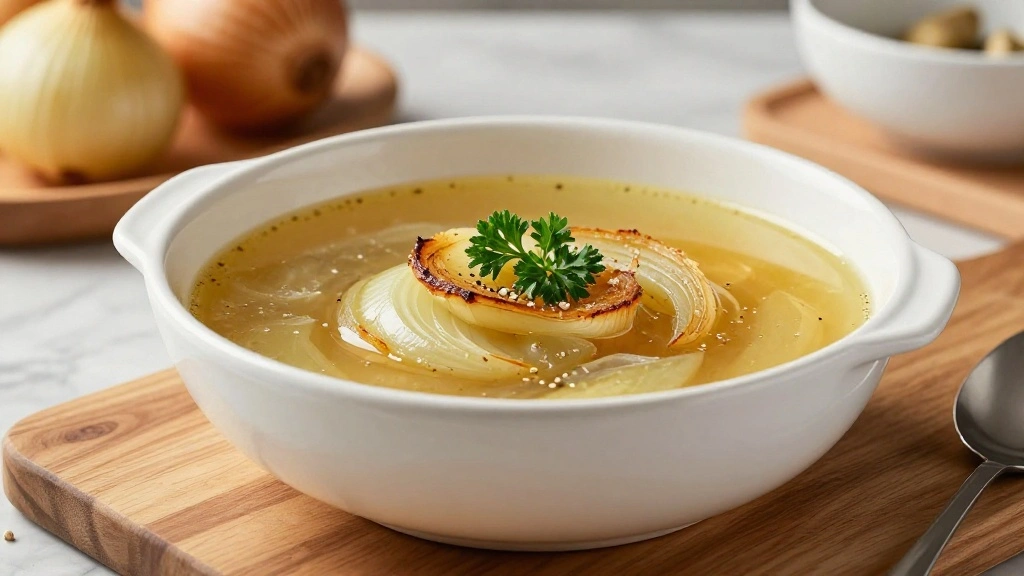
How to Make Classic French Onion Soup: A Comforting Bowl of Goodness
This classic French Onion Soup brings together centuries of culinary tradition with modern techniques to create a dish that’s both comforting and elegant.
The harmonious balance of sweet caramelized onions, rich beef broth, and gooey melted cheese creates a memorable dining experience that will have everyone asking for your secret.
I discovered this recipe during my travels through France, where local chefs have perfected it through generations of careful refinement.
Whether you’re preparing a casual family dinner or hosting a special celebration, this French Onion Soup delivers impressive results with straightforward preparation.
As the weather turns chilly, there’s nothing more satisfying than a warm, flavorful bowl of this iconic soup.
The History and Cultural Significance
• Classic French Onion Soup traces its origins to 18th-century France, where it was originally created by humble innkeepers and market workers.
• The dish evolved over decades as onion varieties became more refined and cheese selections expanded, eventually becoming the beloved version we know today.
• In French culture, this dish traditionally appears at family gatherings and bistros, symbolizing warmth and hospitality.
• While many variations exist across different regions, the authentic version maintains the key characteristic of slow-cooked caramelized onions that sets it apart from imitations.
Recipe Overview
Nutritional Information
Essential Equipment Guide
Heavy-bottomed Pot: A heavy-bottomed pot is crucial for evenly caramelizing the onions without burning them. If you don’t have one, a Dutch oven can work as an alternative. Look for pots with a thick base to distribute heat evenly.
Broiler-safe Bowls: These are essential for achieving the perfect melted cheese topping without the risk of cracking. Oven-safe ceramic bowls are a good alternative. Ensure they can withstand high temperatures.
Sharp Chef’s Knife: A sharp knife is important for slicing onions uniformly, which ensures even caramelization. A mandoline slicer can be an alternative for consistent slices. Choose a knife with a comfortable grip and balanced weight.
Ingredients
For the Base
|
| Amount | Ingredient | Notes |
|---|---|---|
| 6 large | yellow onions | thinly sliced for sweetness |
| 3 tablespoons | unsalted butter | adds richness |
Seasonings
| Amount | Ingredient | Notes |
|---|---|---|
| 1 teaspoon | salt | enhances flavor |
| 1 teaspoon | black pepper | adds depth |
| 2 cloves | garlic | minced for aroma |
For the Broth
| Amount | Ingredient | Notes |
|---|---|---|
| 6 cups | beef broth | richness and depth |
| 1 cup | dry white wine | adds acidity and complexity |
Toppings
| Amount | Ingredient | Notes |
|---|---|---|
| 4 slices | baguette | toasted for texture |
| 1 cup | gruyere cheese | grated, for melting |
Preparation Methods
Caramelization: Caramelizing onions is essential for developing the soup's deep flavor. This technique involves cooking the onions slowly over low heat until they turn golden brown. Patience is key; stirring occasionally ensures even cooking without burning.
Deglazing: Deglazing the pan with white wine lifts the flavorful bits from the bottom, enriching the broth. Pour the wine into the hot pan and scrape with a wooden spoon. This enhances the soup's complexity.
Broiling: Broiling the soup with cheese-topped bread creates a bubbly, golden crust. Place the bowls under a hot broiler for a few minutes until the cheese is melted and slightly browned. Watch closely to prevent burning.
Step 1: Prepare Ingredients
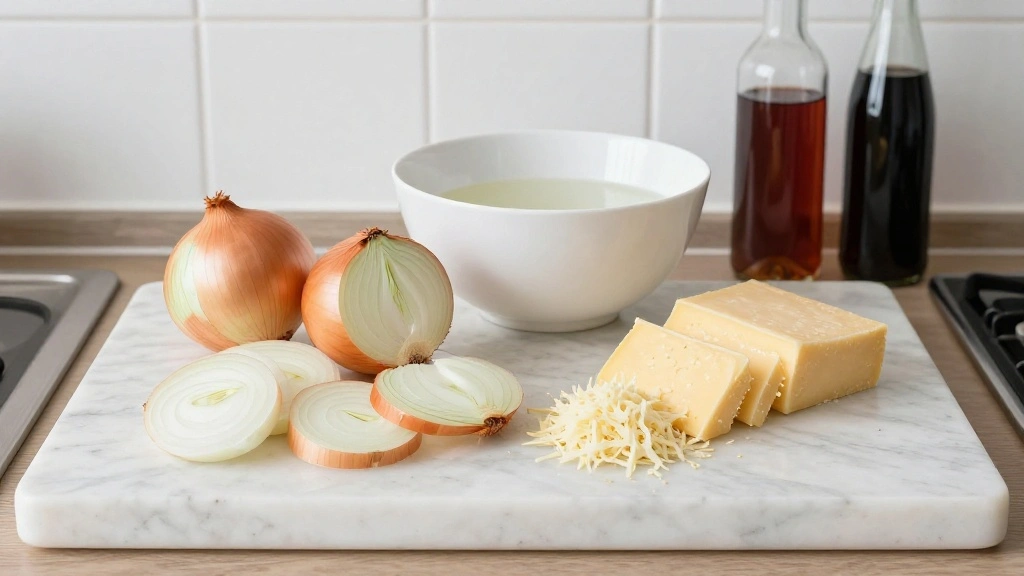
Gather all ingredients and equipment.
Peel and thinly slice the onions evenly.
Grate the Gruyere cheese and set aside.
Measure the wine and broth for easy access.
Step 2: Caramelize the Onions
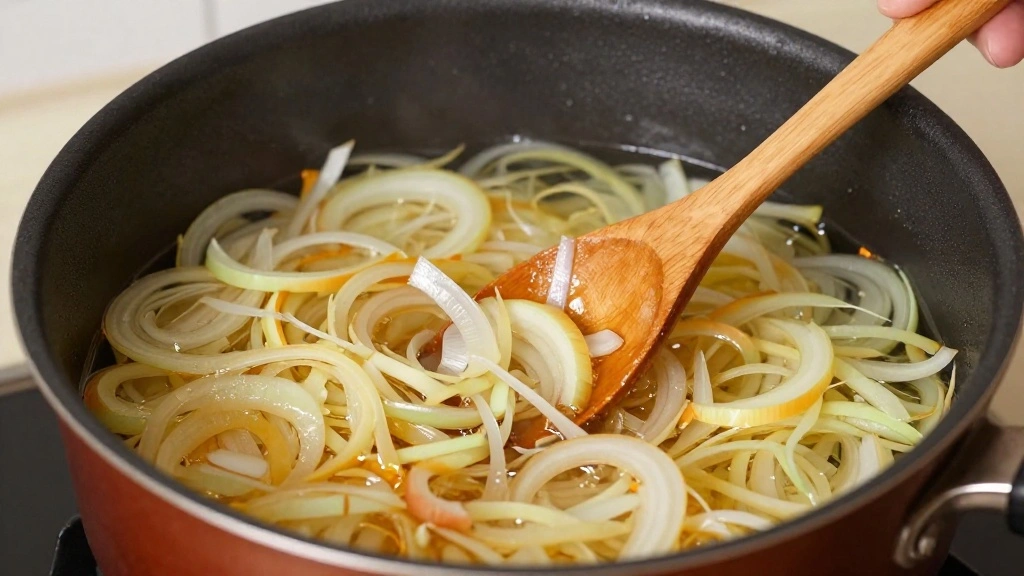
Melt butter in a heavy-bottomed pot over low heat.
Add the sliced onions and a pinch of salt.
Cook slowly, stirring occasionally, until onions are golden brown and caramelized.
This should take about 30 minutes, ensuring the sweetness is drawn out.
Step 3: Add Garlic and Deglaze
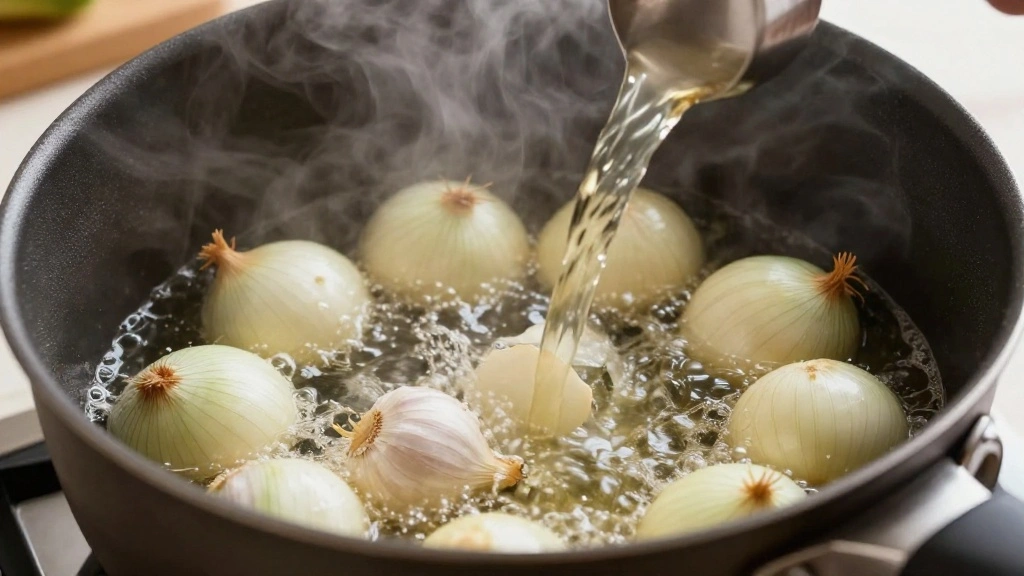
Add minced garlic to the caramelized onions.
Stir briefly until fragrant, about 1 minute.
Pour in the white wine to deglaze the pot, scraping the bottom with a wooden spoon.
Simmer until the wine reduces by half.
Step 4: Add Broth and Seasonings
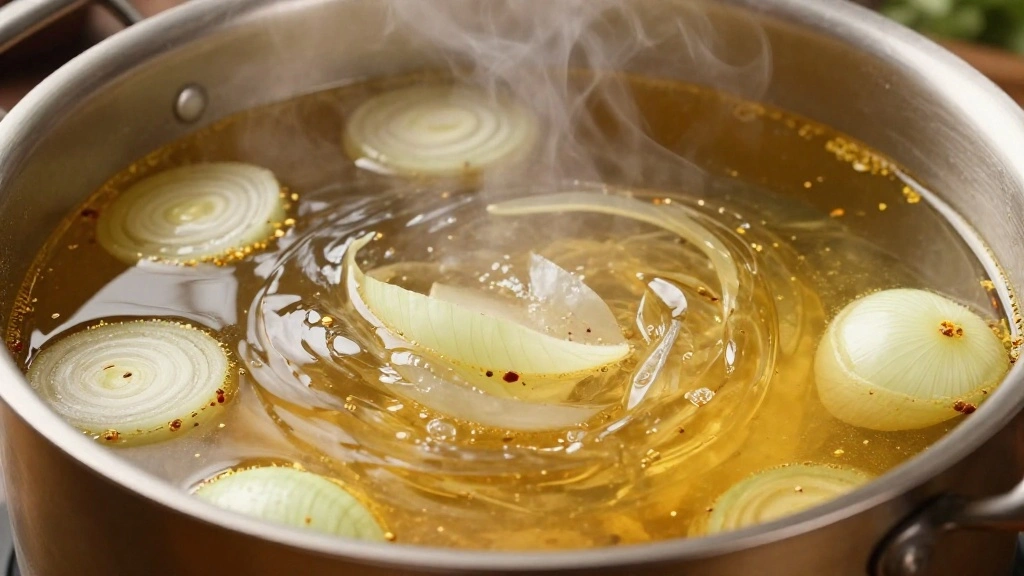
Pour the beef broth into the pot with the onions and garlic.
Add black pepper and adjust salt to taste.
Bring the mixture to a gentle simmer over medium heat.
Let it simmer for about 20 minutes to blend flavors.
Step 5: Prepare the Baguette
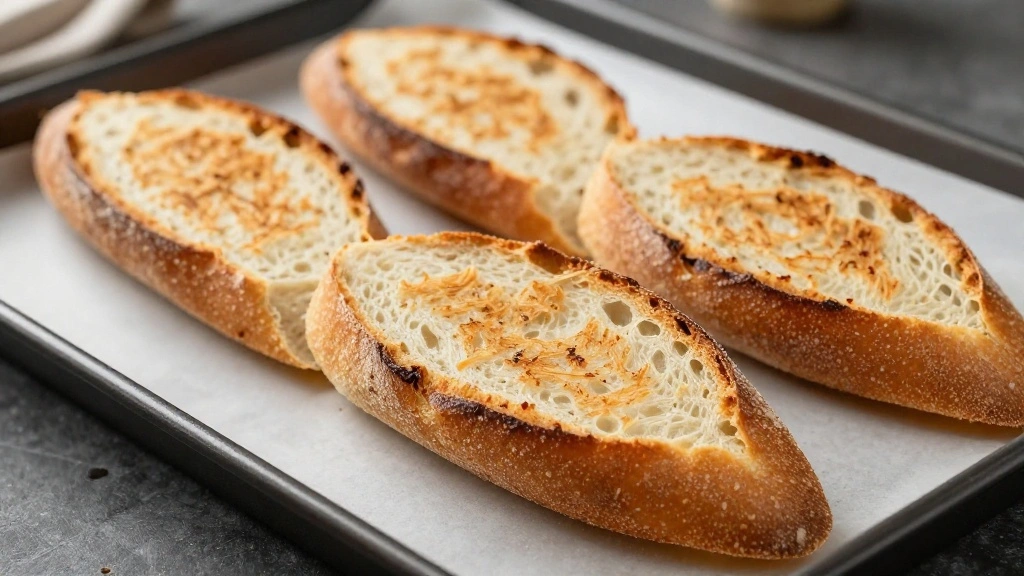
Preheat the broiler in your oven.
Slice the baguette into thick slices.
Toast the slices until golden and crisp.
This will provide a sturdy base for the cheese topping.
Step 6: Assemble the Soup
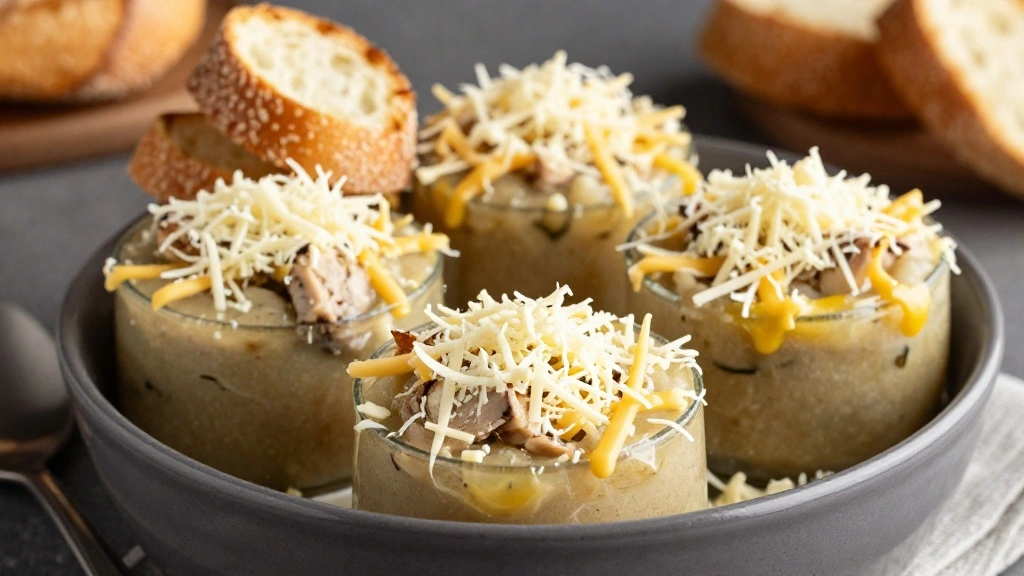
Ladle the hot soup into broiler-safe bowls.
Place a toasted baguette slice on top of each bowl.
Sprinkle generously with grated Gruyere cheese.
Ensure the cheese covers the bread completely for even melting.
Step 7: Broil the Topped Bowls
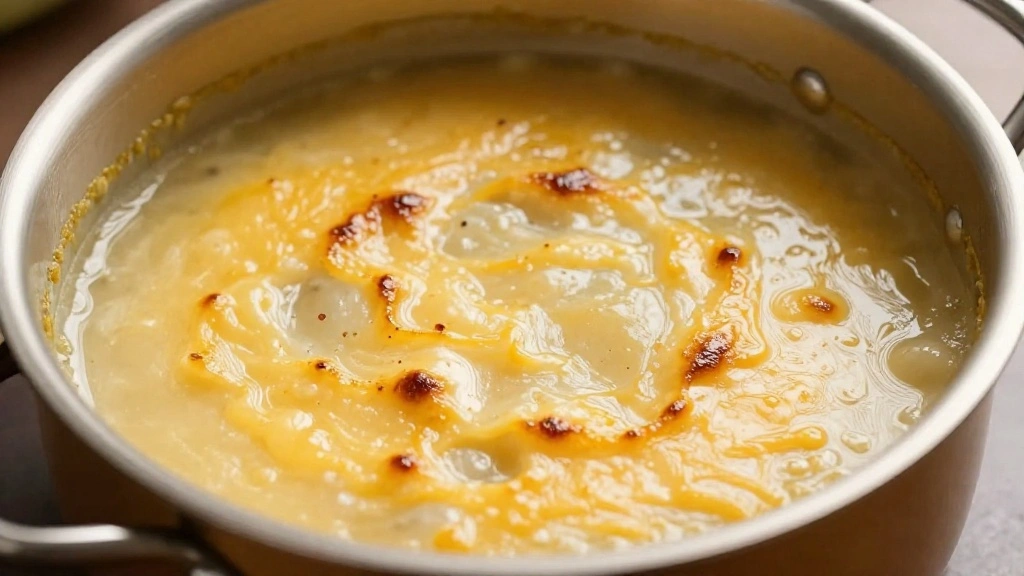
Place the assembled bowls on a baking sheet.
Transfer under the broiler, about 4 inches from the heat source.
Broil until the cheese is bubbly and golden brown, about 3-5 minutes.
Watch closely to prevent burning.
Step 8: Serve and Enjoy

Carefully remove the bowls from the oven using oven mitts.
Let the soup cool slightly before serving.
Garnish with fresh thyme or parsley if desired.
Serve hot and enjoy the comforting flavors.
Critical Timing and Temperature Guide
Caramelizing Onions: Cook onions on low heat for about 30 minutes until golden brown. Visual cues include a reduction in volume and a sweet aroma. Avoid high heat, which can cause burning.
Broiling Soup: Broil at a high temperature until cheese is bubbly and golden, approximately 3-5 minutes. Watch closely to prevent burning. The cheese should be lightly browned and melted.
Simmering Broth: Simmer broth gently for 20 minutes to meld flavors. Avoid boiling, which can make the soup cloudy and harsh. Look for small bubbles around the pot’s edge.
Pro Tips for Classic French Onion
• Ingredient Selection: Choose sweet yellow onions and high-quality Gruyere cheese for the best flavor and texture.
• Preparation Secret: Adding a pinch of sugar can enhance the caramelization process, bringing out the natural sweetness of the onions.
• Temperature Management: Ensure onions are cooked on low heat to develop their flavor without burning, which requires patience but is crucial.
• Texture Enhancement: Toasting the baguette slices thoroughly prevents them from becoming soggy once topped with soup.
• Flavor Layering: Deglazing with wine adds a layer of acidity and depth that complements the sweetness of the onions and richness of the broth.
• Make-Ahead Strategies: Prepare the soup base up to two days in advance and store in the refrigerator. Reheat gently before topping and broiling.
• Restaurant-Quality Finishing Touches: Garnish with fresh thyme or parsley for a fresh, aromatic note.
• Equipment Optimization: Use a heavy-bottomed pot for even heat distribution, which is crucial for proper caramelization of the onions.
Troubleshooting Common Issues
• Onions Burning: This occurs when the heat is too high. Caramelize slowly over low heat, stirring frequently to prevent sticking.
• Soggy Bread: Ensure the baguette slices are thoroughly toasted before topping with cheese to prevent them from becoming soggy in the soup.
• Cheese Not Melting Properly: Use good-quality Gruyere and ensure it's finely grated to melt evenly. Broil until bubbling.
• Soup Lacks Depth: Use a rich, high-quality beef broth and allow it to simmer with the onions for a full 20 minutes.
• Flavors Unbalanced: Adjust seasoning gradually. Add salt and pepper to taste, and balance sweetness with a pinch of sugar if needed.
Variations and Regional Differences
• Parisian Style: Often includes a splash of brandy or cognac for added richness and complexity.
• Provencal Variation: Features herbs such as rosemary and thyme, reflecting the flavors of southern France.
• Americanized Version: May incorporate cheddar cheese and beef broth cubes for a different flavor profile.
• Vegetarian Adaptation: Uses vegetable broth and omits the cheese or substitutes with a non-dairy alternative for a lighter version.
Food Science Behind the Recipe
• Maillard Reaction: The browning of onions through caramelization involves the Maillard reaction, which develops complex flavors and aromas.
• Emulsification: The addition of cheese creates a creamy texture through emulsification, where fats and proteins blend smoothly.
• Flavor Extraction: Simmering the broth with onions extracts flavors, allowing them to meld and intensify over time.
Frequently Asked Questions
What's the most common mistake people make when preparing French Onion Soup? The most common mistake is not caramelizing the onions slowly enough, resulting in a bitter taste rather than the desired sweetness.
Can I make French Onion Soup in advance? Yes, the soup base can be made ahead of time and refrigerated for up to two days.
What type of onions should I use? Sweet yellow onions are preferred for their balanced flavor and natural sweetness.
How can I make this dish vegetarian? Substitute beef broth with vegetable broth and use a non-dairy cheese alternative.
Why is my cheese not browning properly? Ensure the cheese is finely grated and the broiler is preheated to a high temperature.
Can I freeze French Onion Soup? Yes, you can freeze the soup base without the bread and cheese for up to three months.
What can I use instead of Gruyere cheese? A good substitute is Swiss cheese or Emmental, which have similar melting properties.
Serving and Presentation Guide
• Traditional Presentation: Serve in rustic, broiler-safe bowls with the cheese melted over the bread, bubbling and golden.
• Modern Plating: Use sleek, white bowls and add a sprig of thyme for a contemporary touch.
• Casual Style: Serve with additional toasted baguette slices on the side for dipping.
• Garnished Elegance: Add a light sprinkle of chopped parsley for a pop of color and freshness.
Conclusion
With its rich flavors and comforting warmth, French Onion Soup is a timeless classic that's perfect for any occasion.
The combination of caramelized onions, savory broth, and melted cheese makes it an irresistible treat.
I encourage you to try this recipe and experience the satisfaction of creating a dish steeped in tradition and flavor.