Picanha Steak Recipe: Brazilian Grilled Perfection
This picanha steak recipe is your ticket to recreating the legendary flavors of a Brazilian churrascaria without ever leaving home. Known as the crown jewel of Brazilian barbecue, picanha is a top sirloin cap cut celebrated for its generous fat cap that bastes the meat as it cooks, producing an incredibly juicy and flavorful steak that is unlike anything else you have ever tasted.
What makes picanha so special is its simplicity. Brazilian pitmasters have known for generations that this cut needs almost nothing beyond coarse sea salt to shine. The thick layer of fat on top renders beautifully over high heat, creating a caramelized crust while keeping the interior tender and rosy. There are no complicated marinades, no lengthy brines, just honest, high-quality beef treated with respect.
Whether you fire it up on a charcoal grill in the traditional churrasco style or sear it in a cast iron skillet on a cold winter evening, this recipe will walk you through every step to ensure steakhouse-worthy results every single time. Once you taste real picanha done right, it will become your go-to showstopper for dinner parties, weekend cookouts, and every special occasion in between.
This picanha steak recipe delivers the bold, buttery flavor of a Brazilian churrascaria right in your own backyard. With a thick fat cap, coarse salt crust, and smoky char, every bite is pure perfection. Make it tonight for a truly unforgettable meal.
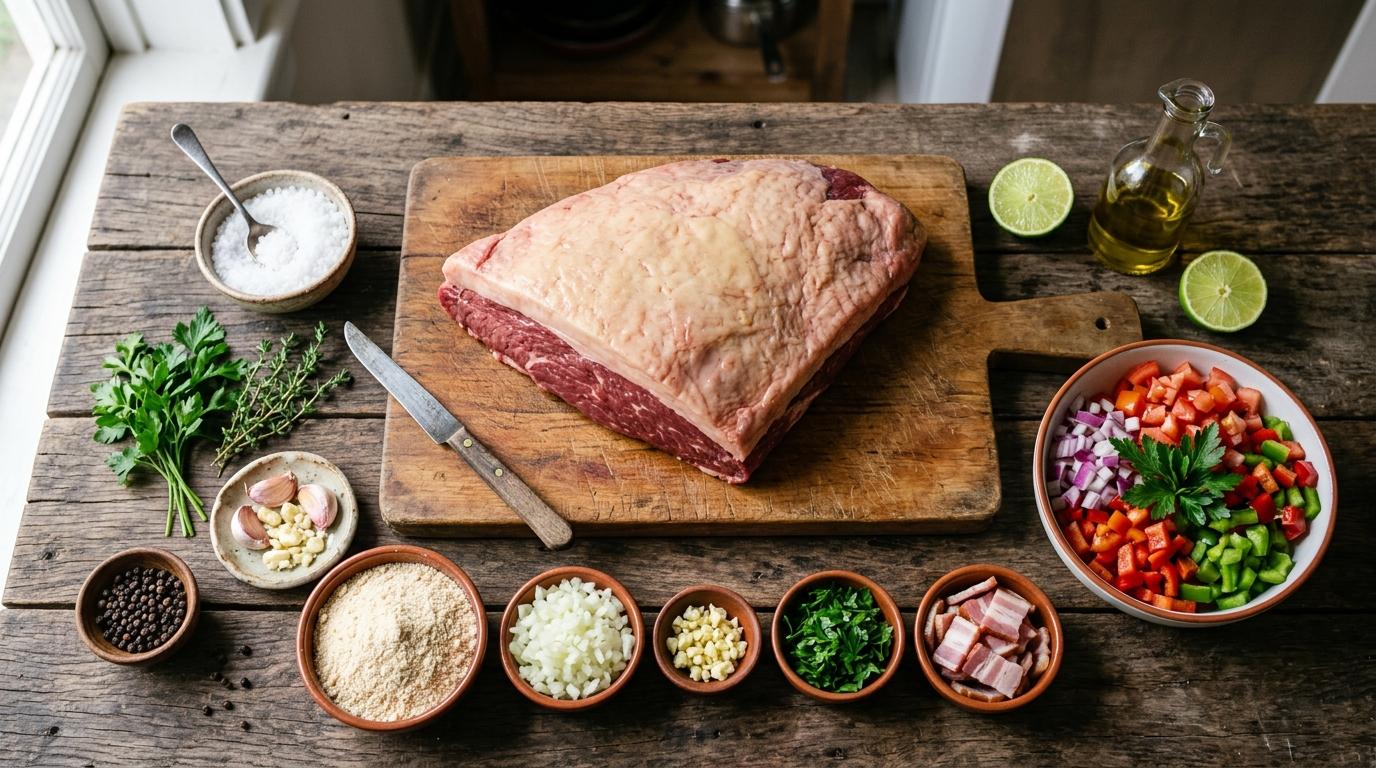
Ingredients
| AMOUNT | INGREDIENT | NOTES |
|---|---|---|
| 2.5 pounds | picanha steak (top sirloin cap) | fat cap intact, trimmed to about half-inch thickness |
| 2 tablespoons | coarse sea salt or kosher salt | do not substitute fine table salt |
| 1 teaspoon | freshly cracked black pepper | optional but recommended |
| 1 tablespoon | neutral oil | only needed if using cast iron; use avocado or grapeseed oil |
| 4 tablespoons | unsalted butter | for basting, cut into cubes |
| 4 cloves | garlic | smashed, for basting butter |
| 3 sprigs | fresh rosemary | for basting and garnish |
| 2 tablespoons | fresh parsley | finely chopped, for finishing |
| 1 whole | lemon | cut into wedges for serving |
Instructions
Nutrition (per serving)
About This Recipe
Picanha has been a centerpiece of Brazilian culinary culture since the mid-20th century, originating in the southern state of Rio Grande do Sul where gaucho cowboys would cook large cuts of beef over open fires after long cattle drives. The cut, known in English as the top sirloin cap or rump cap, was considered a humble working-class meal for much of its early history, valued for its rich fat content that made it filling and deeply satisfying after a hard day of work on the pampas grasslands.
Over the decades, picanha traveled from the countryside into the bustling cities of Sao Paulo and Rio de Janeiro, where it was adopted by the growing churrascaria restaurant scene in the 1950s and 1960s. These all-you-can-eat Brazilian steakhouses elevated picanha to iconic status, folding the skewered C-shaped cuts over glowing embers and carving thin slices tableside for eager diners. Today, picanha is considered a point of national pride in Brazil and has gained a passionate global following as food lovers around the world discover what Brazilians have always known: it is simply one of the best cuts of beef on the animal.
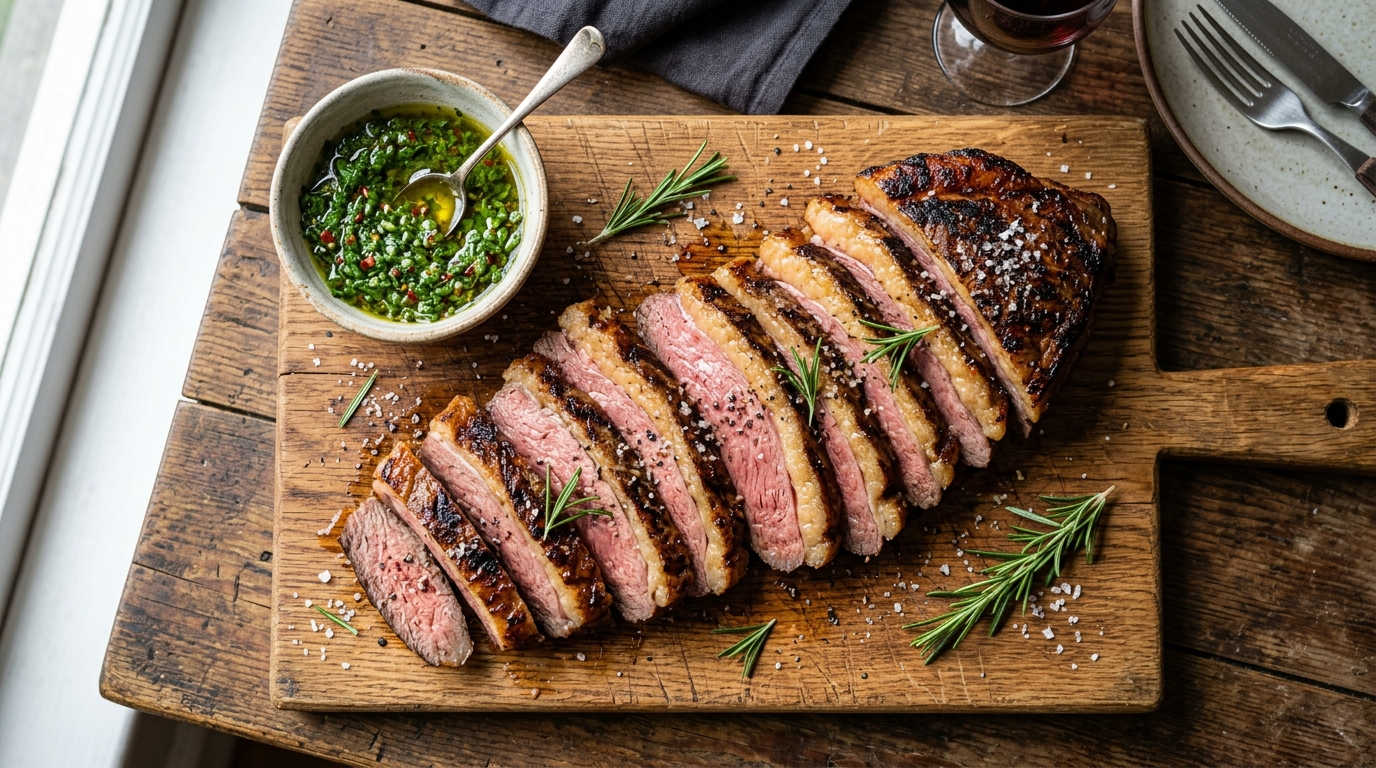
Ready to Serve
A Closer Look
Pro Tips for Best Results
- Always buy picanha with the fat cap fully intact. If your butcher has already trimmed the fat, ask them to find you a fresh uncut piece. The fat cap is what makes this cut extraordinary, and removing it before cooking defeats the entire purpose.
- Do not use fine table salt on picanha. Coarse sea salt or kosher salt creates a superior crust and seasons more evenly without making the exterior overly salty. The large crystals also add a satisfying textural contrast to the finished steak.
- Resting the meat is not optional. A full 10 minutes of resting after cooking will make the difference between a juicy, perfect steak and a dry, disappointing one. Use this time to prepare your sides and warm your serving platter.
- Slice against the grain every single time. The muscle fibers in picanha run in a specific direction, and cutting perpendicular to them shortens those fibers and dramatically improves tenderness. Take a moment to identify the grain direction before you slice.
- If you cannot find picanha at your local grocery store, visit a Brazilian butcher shop, a Latin American market, or ask your regular butcher to cut you a top sirloin cap. It is the same cut and they will know exactly what you need.
Essential Equipment
Charcoal Grill or Cast Iron Skillet: High, intense heat is essential for rendering the fat cap and developing a proper sear on picanha.
Long Metal Skewers: Traditional churrasco style requires folding the steak into a C-shape on skewers for even cooking over the fire.
Sharp Boning or Slicing Knife: A razor-sharp knife is critical for scoring the fat cap and slicing the finished steak thinly against the grain.
Instant Read Meat Thermometer: Ensures you hit the perfect internal temperature for your preferred doneness without guessing.
Cutting Board with Juice Groove: Picanha releases beautiful juices when rested and sliced, and a grooved board prevents mess and captures every drop.
Tongs: Allow you to safely flip and rotate the steak over high heat without piercing the meat and losing precious juices.
Variations
Classic Brazilian Churrasco Style: Thread the folded C-shaped picanha onto thick metal skewers and cook it directly over glowing hardwood charcoal, rotating every few minutes. Slice thin pieces off the outside while the interior continues cooking, serving guests tableside just as they do at a traditional churrascaria rodizio restaurant.
Garlic Herb Butter Crust: Blend softened unsalted butter with roasted garlic, fresh thyme, parsley, and a pinch of smoked paprika. After the steak rests for 5 minutes, spread this compound butter generously over the top and allow it to melt into a decadent, aromatic sauce before slicing and serving.
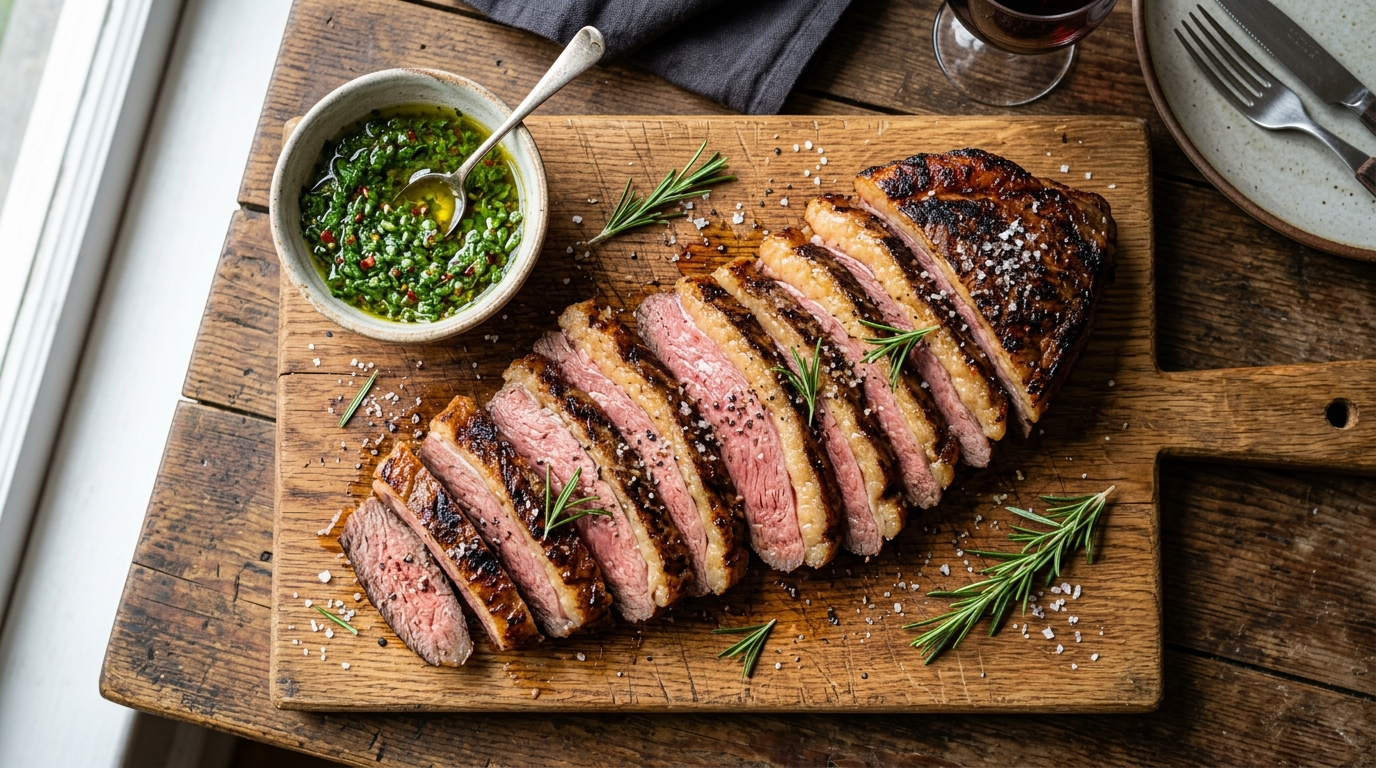
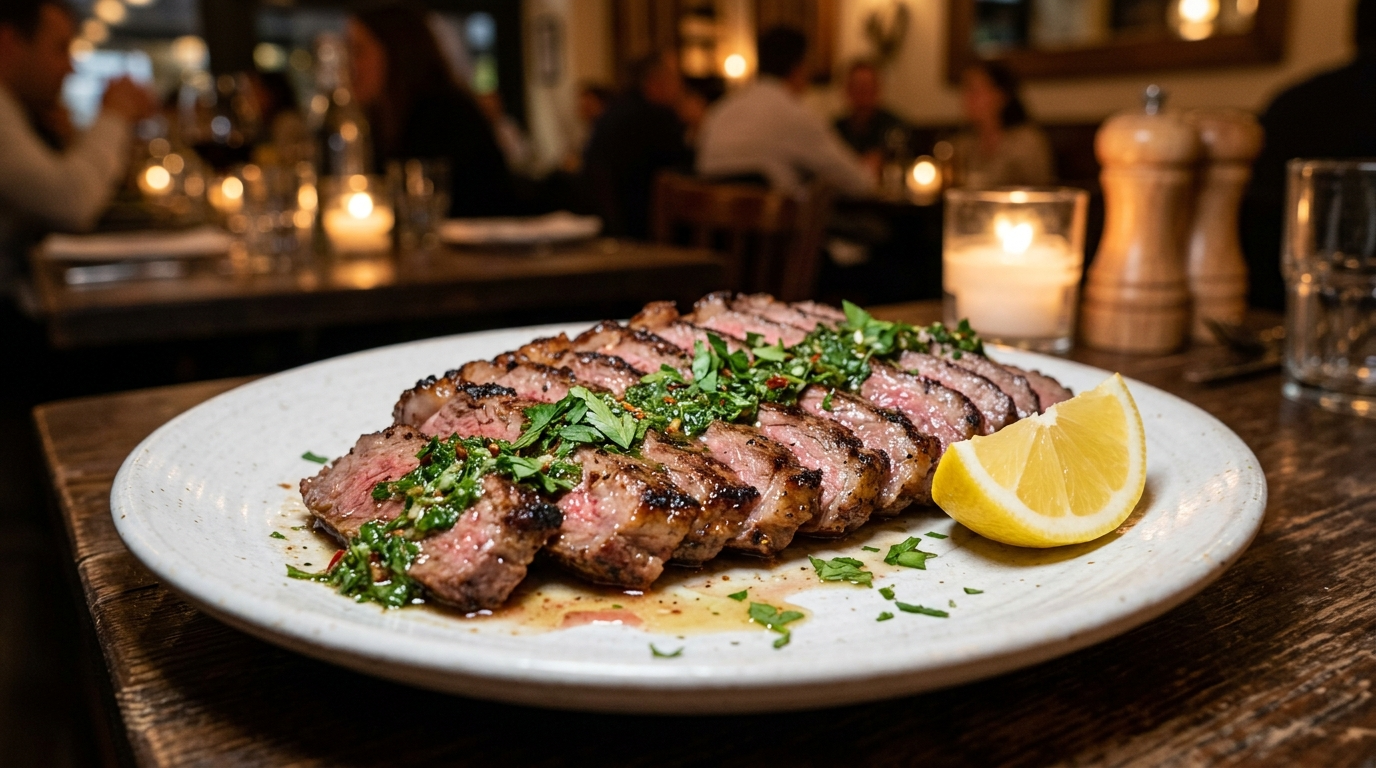
Chimichurri Picanha: Prepare a vibrant Argentine chimichurri sauce with fresh parsley, oregano, garlic, red wine vinegar, red pepper flakes, and olive oil. Serve it generously spooned over the sliced steak for a bold, herbaceous contrast to the rich fatty beef. This combination is a South American steakhouse classic.
Smoked Picanha: Season the picanha as directed and place it in a smoker preheated to 225 degrees Fahrenheit using hardwood chunks like hickory or oak. Smoke low and slow until the internal temperature reaches 115 degrees Fahrenheit, then transfer directly to a screaming hot grill or cast iron to reverse-sear the fat cap to perfection.
Indoor Oven Finish Method: Sear the fat cap down in a cast iron skillet on the stovetop until deeply golden, then flip and sear the bottom for 2 minutes. Transfer the entire skillet to a 400 degree Fahrenheit oven and roast for 10 to 12 minutes until the desired internal temperature is reached. This method is ideal for thick cuts during colder months.
Frequently Asked Questions
What cut of beef is picanha exactly?
Picanha is the top sirloin cap, also called the rump cap or coulotte in different parts of the world. It sits at the top of the rump and is identified by its signature triangular shape and thick layer of fat covering one side. In Brazil it is considered the most prized cut for grilling and is the centerpiece of the churrasco tradition.
Can I cook picanha in the oven if I do not have a grill?
Yes, you can absolutely cook picanha in the oven using the reverse sear method. Season the steak as directed, place it fat-cap-side up on a wire rack set inside a rimmed baking sheet, and roast at 250 degrees Fahrenheit until the internal temperature reads about 110 degrees Fahrenheit. Then sear it quickly in a screaming hot cast iron skillet to finish with a beautiful crust.
How do I know which direction the grain runs in picanha?
Look closely at the surface of the raw or cooked meat and you will see lines running in a particular direction. Those lines are the muscle fibers. To slice against the grain, position your knife perpendicular to those lines. On picanha, the grain typically runs from one corner of the triangle toward the opposite long edge, so you will usually be slicing from the fat-cap side down toward the meat side.
Can I marinate picanha overnight?
Traditional Brazilian preparation uses only coarse salt, which is a philosophy worth honoring for your first cook. However, if you enjoy bolder flavors, a simple marinade of garlic, olive oil, lime juice, and herbs works beautifully. Marinate for no more than 4 to 6 hours in the refrigerator as the acidity in lime juice can begin to break down the muscle structure and alter the texture of the meat if left too long.
What sides go best with a picanha steak recipe?
In Brazil, picanha is traditionally served with white rice, black beans, farofa (toasted cassava flour), vinaigrette salsa, and pao de queijo (cheese bread). For a simpler home preparation, grilled or roasted vegetables, crispy smashed potatoes, a fresh tomato salad, or creamy polenta all complement the rich, beefy flavor of picanha exceptionally well.
How do I store and reheat leftover picanha?
Store leftover sliced picanha in an airtight container in the refrigerator for up to 3 days. To reheat without drying it out, place the slices in a skillet over medium-low heat with a splash of beef broth or water, cover with a lid, and warm gently for 2 to 3 minutes just until heated through. Avoid microwaving as it tends to toughen the meat and make it chewy.