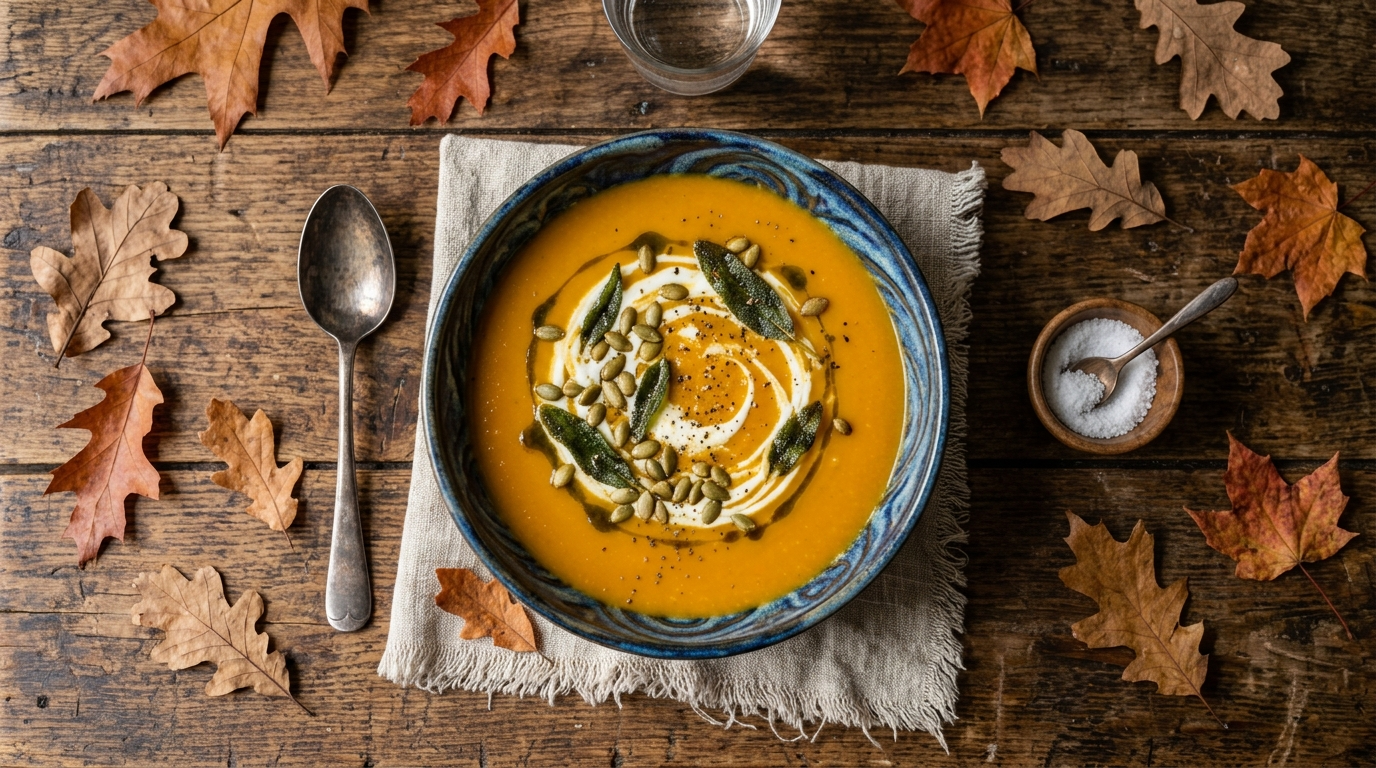
Roasted Butternut Squash Soup Recipe (So Creamy!)
Roasted butternut squash soup is the ultimate bowl of comfort, transforming a humble winter squash into a silky, golden masterpiece that tastes like it took all day to make. The secret is in the roasting process, which coaxes out a deep, nutty sweetness from the squash that you simply cannot achieve by boiling it. Every spoonful delivers layers of savory, sweet, and warmly spiced flavor that feel like a hug on a cold day.
What makes this soup so special is how effortlessly it comes together with pantry staples and a single sheet pan. You do not need to be an experienced cook to pull off a restaurant-quality bowl of soup. Once the squash hits the oven and begins to caramelize, your kitchen will fill with an irresistible aroma that draws everyone to the table before you even ring the dinner bell.
Whether you are meal prepping for the week, hosting a dinner party, or simply craving something warm and satisfying on a weeknight, this recipe delivers every single time. It is naturally gluten-free, easily made vegan, and endlessly customizable. Keep reading and you will have a steaming pot of the best roasted butternut squash soup you have ever tasted in under an hour.
This roasted butternut squash soup is velvety, nourishing, and packed with deep caramelized flavor. Made with simple wholesome ingredients, it comes together effortlessly for a cozy meal that warms you from the inside out. Fall is calling your name.

Ingredients
| AMOUNT | INGREDIENT | NOTES |
|---|---|---|
| 1 large | butternut squash | approximately 3 pounds, halved lengthwise and seeds removed |
| 3 tablespoons | olive oil | extra virgin, divided |
| 1 large | yellow onion | roughly chopped |
| 4 cloves | garlic | peeled and smashed |
| 2 medium | carrots | peeled and roughly chopped |
| 1 tablespoon | fresh ginger | peeled and grated, or 1 teaspoon ground ginger |
| 1 teaspoon | ground cinnamon | adds warm autumnal depth |
| 0.5 teaspoon | ground nutmeg | freshly grated preferred |
| 0.25 teaspoon | cayenne pepper | optional, for a subtle kick |
| 4 cups | vegetable broth | low sodium, plus more as needed to adjust consistency |
| 1 cup | full-fat coconut milk | or heavy cream for a richer non-vegan version |
| 2 tablespoons | pure maple syrup | enhances the natural sweetness of the squash |
| 1.5 teaspoons | kosher salt | plus more to taste |
| 0.5 teaspoon | black pepper | freshly ground |
| 2 tablespoons | fresh sage leaves | optional, for garnish, fried in butter until crispy |
| 3 tablespoons | pepitas | toasted pumpkin seeds, for garnish |
| 2 tablespoons | sour cream or coconut cream | swirled on top for serving |
Instructions

Nutrition (per serving)
About This Recipe
Butternut squash belongs to the Cucurbita moschata family and has roots stretching back thousands of years to the indigenous peoples of North and South America. Squash was one of the celebrated Three Sisters crops, grown alongside corn and beans, and formed a vital cornerstone of Native American diets long before European contact. Early colonists quickly adopted squash into their cooking traditions, and over generations it wove itself deeply into the fabric of North American autumn cuisine, becoming a symbol of the harvest season.
The concept of pureeing squash into a silky soup is a more modern culinary evolution, gaining widespread popularity in the latter half of the twentieth century as blenders and food processors became household staples. Roasting the squash before blending is a technique that food writers and restaurant chefs began championing in the 1990s and early 2000s, celebrating it as a way to develop maximum flavor with minimal effort. Today, roasted butternut squash soup appears on menus from cozy diners to Michelin-starred restaurants, beloved across cultures for its versatility, nutritional richness, and soul-warming depth.
Ready to Serve

A Closer Look

Pro Tips for Best Results
- Do not skip the roasting step — it is what transforms the squash from bland and starchy into something deeply sweet, nutty, and complex. Roasting at high heat creates caramelization that no amount of simmering on the stovetop can replicate.
- For the smoothest possible soup, use a high-powered countertop blender like a Vitamix or Blendtec rather than an immersion blender. Immersion blenders work well but often leave tiny flecks behind, while a countertop blender delivers that perfectly silky restaurant-quality texture.
- You can roast the butternut squash up to three days in advance and store the scooped flesh in an airtight container in the refrigerator. This makes weeknight assembly incredibly fast — simply saute the aromatics, add the broth and pre-roasted squash, and blend.
- If your soup turns out thicker than you prefer after blending, simply whisk in additional warm vegetable broth a quarter cup at a time until it reaches the consistency you love. If it is too thin, simmer it uncovered for 10 to 15 minutes to reduce and thicken naturally.
- Toasted pepitas add an essential textural contrast to this creamy soup. To toast them yourself, simply spread raw pepitas in a dry skillet over medium heat and stir frequently for 3 to 4 minutes until they begin to pop and turn golden. Watch them carefully as they can burn quickly.
Essential Equipment
Large Rimmed Baking Sheet: Provides ample space for squash to roast in a single layer, ensuring proper caramelization rather than steaming.
High-Powered Blender or Immersion Blender: Blends the roasted squash into a completely smooth, velvety texture that defines this soup.
Large Dutch Oven or Heavy Pot: Distributes heat evenly when sauteing aromatics and simmering the final soup to meld all the flavors together.
Chef Knife: A sharp, sturdy chef knife makes safely halving and cubing the dense butternut squash much easier and safer.
Vegetable Peeler: Quickly removes the tough outer skin of the butternut squash before cubing if you prefer to peel before roasting.
Wooden Spoon or Silicone Spatula: For stirring aromatics and scraping up any flavorful browned bits from the bottom of the pot.
Ladle: Makes transferring hot soup into bowls or a blender safe, clean, and efficient.
Measuring Cups and Spoons: Ensures accurate proportions of spices and liquids for a perfectly balanced soup every time.
Variations
Thai-Inspired Version: Replace the coconut milk with full-fat Thai coconut milk and add 2 tablespoons of red curry paste and 1 tablespoon of fresh lime juice when blending. Garnish with fresh cilantro and a drizzle of chili oil for a bold, Southeast Asian twist.
Apple Butternut Squash Soup: Add one large peeled and chopped Granny Smith apple to the pot when sauteing the onions and carrots. The tartness of the apple beautifully balances the sweetness of the squash and adds another layer of autumn flavor.
Smoky Chipotle Version: Stir in 1 to 2 tablespoons of chipotle peppers in adobo sauce before blending for a smoky, spicy, and utterly addictive variation. Top with crumbled cotija cheese and fresh cilantro for a Southwestern-inspired bowl.
Vegan and Dairy-Free: This recipe is already easily made vegan by using vegetable broth and coconut milk. Simply swap the optional sour cream garnish for a swirl of rich coconut cream and skip the butter for frying the sage, using olive oil instead.
Chunky Harvest Soup: Reserve about one cup of the roasted squash cubes before blending and stir them back into the finished pureed soup along with cooked wild rice and crispy bacon crumbles for a hearty, textural version that eats more like a stew.
Frequently Asked Questions
Can I make roasted butternut squash soup ahead of time?
Absolutely. This soup actually tastes even better the next day after the flavors have had time to meld and deepen. You can make it up to 4 days in advance and store it in an airtight container in the refrigerator. Reheat gently on the stovetop over medium-low heat, stirring occasionally and adding a splash of broth if needed to loosen the consistency.
Can I freeze roasted butternut squash soup?
Yes, this soup freezes beautifully and is perfect for meal prep. Allow it to cool completely, then transfer to freezer-safe airtight containers or heavy-duty zip-top bags, leaving about an inch of headspace for expansion. It will keep in the freezer for up to 3 months. Thaw overnight in the refrigerator and reheat on the stovetop, whisking to restore its smooth texture.
Do I need to peel the butternut squash before roasting?
No, and that is one of the best things about this method. When you roast the squash cut-side down, the skin acts as a natural vessel that holds everything in place. Once it is done roasting and slightly cooled, the tender flesh scoops away from the skin effortlessly with a large spoon. This saves you the difficult and sometimes dangerous task of peeling a raw, hard squash.
My soup is too thick — how do I fix it?
Simply add warm vegetable broth or water, a quarter cup at a time, while stirring over low heat until you reach your preferred consistency. Different squashes have different water content, so slight adjustments are completely normal. Taste and re-season with salt after thinning.
What can I serve with roasted butternut squash soup?
This soup pairs wonderfully with a wide variety of sides. Crusty sourdough or a warm baguette for dipping is a classic choice. For a heartier meal, serve it alongside a simple arugula salad with apple and goat cheese, a grilled cheese sandwich, or roasted chicken thighs. It also makes an elegant first course for a holiday dinner party.
Can I use pre-cut butternut squash from the store?
Yes, using pre-cut butternut squash cubes from the grocery store is a great time-saving shortcut. Spread the cubes in a single layer on a parchment-lined baking sheet, toss with olive oil, salt, and pepper, and roast at 400 degrees Fahrenheit for 25 to 30 minutes until tender and caramelized, flipping once halfway through.