Corn Crab Chowder Recipe – Rich and Creamy Bowl
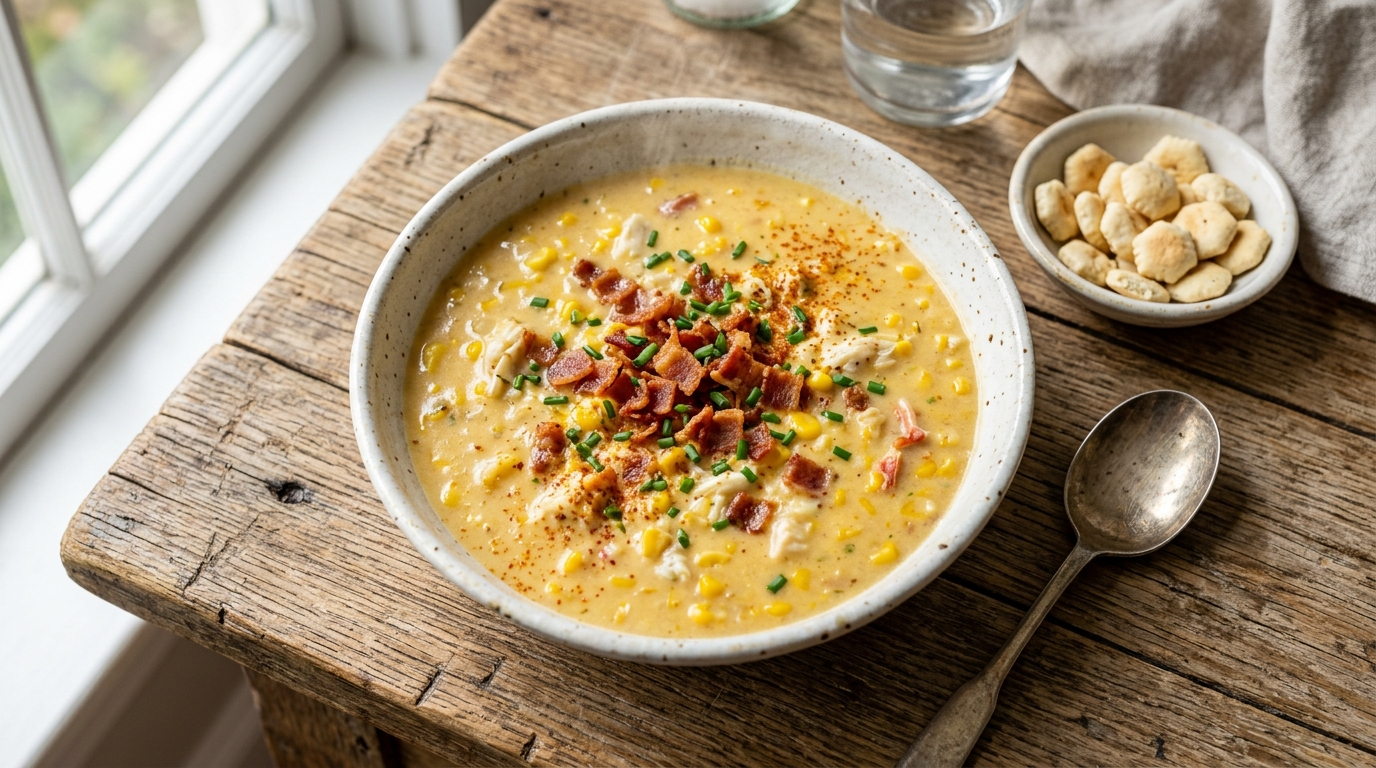
This corn crab chowder recipe is the ultimate bowl of coastal comfort, bringing together sweet summer corn and luxurious lump crab meat in a silky, smoky cream broth that will have everyone reaching for seconds.
There is something truly magical about the combination of corn and crab. The natural sweetness of fresh or frozen corn kernels perfectly complements the delicate brininess of real crab meat, while a base of smoky bacon, aromatics, and heavy cream ties everything together into a chowder that feels indulgent without being heavy. Every spoonful is layered with flavor and texture that feels like it came straight from a seaside restaurant kitchen.
Whether you are cooking for a cozy family dinner, impressing weekend guests, or simply craving a bowl of something warm and satisfying, this chowder delivers every single time. It comes together in just 30 minutes using simple pantry staples and easy-to-find ingredients, making it one of those rare recipes that is as practical as it is impressive. Get ready to make this your new favorite soup.
This corn crab chowder recipe delivers a velvety, restaurant-quality bowl packed with sweet corn, tender crab meat, and smoky bacon in a rich cream base. It is comforting, elegant, and simple enough for any weeknight dinner – make it today.

Ingredients
| AMOUNT | INGREDIENT | NOTES |
|---|---|---|
| 4 slices | thick-cut bacon | chopped into small pieces |
| 2 tablespoons | unsalted butter | divided |
| 1 medium | yellow onion | finely diced |
| 3 stalks | celery | thinly sliced |
| 1 medium | red bell pepper | diced |
| 4 cloves | garlic | minced |
| 3 tablespoons | all-purpose flour | for thickening |
| 3 cups | chicken or seafood broth | low sodium preferred |
| 1.5 cups | whole milk | room temperature |
| 1 cup | heavy cream | room temperature |
| 2 medium | Yukon Gold potatoes | peeled and cut into half-inch cubes |
| 3 cups | fresh or frozen corn kernels | about 4 ears if using fresh |
| 16 ounces | lump crab meat | drained and picked over for shells |
| 1 teaspoon | Old Bay seasoning | plus more for garnish |
| 0.5 teaspoon | smoked paprika | adds depth of flavor |
| 0.25 teaspoon | cayenne pepper | optional, for a gentle kick |
| 1 teaspoon | kosher salt | adjust to taste |
| 0.5 teaspoon | black pepper | freshly ground |
| 2 tablespoons | fresh chives | chopped, for garnish |
| 1 tablespoon | fresh parsley | chopped, for garnish |
Instructions

Nutrition (per serving)
About This Recipe
Chowder has deep roots in the coastal communities of New England and the Maritime provinces of Canada, where fishing families relied on the sea for sustenance. The word itself is believed to derive from the French word chaudiere, a type of large cauldron used by fishermen to cook communal stews from their daily catch. Early American chowders were simple affairs made with salt pork, onions, hardtack biscuits, and whatever seafood was most abundant, slowly evolving over generations into the creamy, potato-laden soups we recognize today. Corn chowder emerged as a beloved variation as agriculture flourished across the American Midwest and South, becoming a staple dish that celebrated the harvest season.
The marriage of corn and crab in a single chowder reflects the rich culinary heritage of the American South and the Chesapeake Bay region, where blue crab has been a prized ingredient for centuries. Coastal communities in Maryland, Virginia, and the Carolinas developed a tradition of folding crab into creamy soups and stews, blending land and sea into deeply satisfying one-pot meals. As American cuisine evolved and regional specialties spread across the country, corn and crab chowder became a celebrated dish enjoyed from New England seafood shacks to upscale southern bistros, earning its rightful place as one of the most beloved seafood soups in American cooking.
Ready to Serve

A Closer Look

Pro Tips for Best Results
- Always pick over your crab meat carefully before adding it to the chowder – even packaged lump crab can contain small fragments of shell that are unpleasant to bite into and easy to miss.
- Do not allow the chowder to reach a full rolling boil after adding the dairy and crab, as high heat can cause the cream to separate and the crab meat to become rubbery and tough.
- For the richest, most flavorful corn flavor, use fresh corn cut right from the cob during summer months and scrape the milky liquid from the cob into the pot – it adds a natural sweetness and helps thicken the base.
- Yukon Gold potatoes are the best choice for chowder because their naturally buttery texture holds up during simmering without falling apart or becoming gluey like russet potatoes can.
- This chowder tastes even better the next day after the flavors have had time to meld together overnight in the refrigerator – simply reheat it gently over low heat, adding a splash of broth or milk if it has thickened too much.
Essential Equipment
Large Dutch Oven or Heavy-Bottomed Pot: Ensures even heat distribution and prevents scorching the creamy base as it simmers.
Chef Knife: For precise and efficient chopping of onions, celery, garlic, and potatoes.
Cutting Board: A large, stable surface keeps prep work safe and organized.
Wooden Spoon or Silicone Spatula: Ideal for stirring the chowder without scratching your pot and for scraping up flavorful browned bits.
Ladle: Makes serving the thick, chunky chowder clean, easy, and mess-free.
Measuring Cups and Spoons: Ensures accurate proportions of broth, cream, and seasonings for a perfectly balanced chowder.
Variations
Spicy Cajun Style: Increase the cayenne pepper to half a teaspoon and add one teaspoon of Cajun seasoning along with diced jalapeno to the aromatics. Finish with a few dashes of hot sauce for a bold, Cajun-inspired version that pairs perfectly with cornbread.
Lighter Dairy-Free Version: Replace the heavy cream and whole milk with full-fat canned coconut milk for a dairy-free alternative that is still wonderfully creamy. Use olive oil in place of butter and the flavor profile takes on a subtle tropical sweetness that pairs beautifully with the crab.
New England Style with Clams: Substitute half of the crab meat with chopped fresh or canned clams to create a classic New England-style surf chowder. Add a splash of clam juice in place of some of the broth for an even deeper ocean flavor.
Loaded Baked Potato Chowder Style: Double the potato quantity and top each bowl with shredded sharp cheddar cheese, a dollop of sour cream, and extra bacon for a loaded, over-the-top version that is pure cold-weather comfort food.
Smoky Roasted Corn Version: Before adding the corn to the chowder, toss the kernels in olive oil and roast them at 425 degrees Fahrenheit for 15 minutes until caramelized and slightly charred. The smoky, sweet roasted corn adds an incredible depth of flavor to the finished chowder.
Frequently Asked Questions
Can I make this corn crab chowder ahead of time?
Yes, you can prepare this chowder up to 2 days in advance and store it in an airtight container in the refrigerator. Reheat it gently over low to medium-low heat, stirring frequently, and add a splash of broth or milk to restore the creamy consistency. Avoid bringing it to a boil during reheating to protect the texture of the crab and dairy.
Can I freeze corn crab chowder?
Freezing is possible but not ideal for cream-based chowders, as dairy tends to separate and become grainy when thawed. If you must freeze it, do so before adding the cream and crab meat. Freeze the potato and corn base for up to 2 months, then stir in the cream and fresh crab when reheating and serving.
What type of crab meat is best for this recipe?
Lump crab meat or jumbo lump crab meat gives you the best flavor and texture because the large, sweet pieces hold up well in the chowder. Canned crab meat works as a budget-friendly alternative. Avoid imitation crab, as it lacks the natural sweetness and brininess that makes this chowder so special.
Can I use frozen corn instead of fresh?
Absolutely. Frozen corn is an excellent substitute for fresh corn and is available year-round, making this chowder a four-season recipe. Simply add the frozen kernels directly to the pot without thawing – they will heat through quickly. Canned corn, drained well, also works in a pinch.
How do I thicken my chowder if it seems too thin?
There are several easy ways to thicken the chowder. You can mash some of the cooked potato pieces against the side of the pot and stir them in. Alternatively, mix one tablespoon of cornstarch with two tablespoons of cold water to form a slurry and stir it into the simmering chowder. Allowing the chowder to simmer uncovered for a few extra minutes also helps reduce and thicken the broth naturally.
What should I serve with corn crab chowder?
This chowder pairs beautifully with crusty sourdough bread or a warm baguette for dipping. Classic oyster crackers are a traditional New England accompaniment. A simple green salad with a light vinaigrette balances the richness of the chowder perfectly, and a glass of chilled Chardonnay or Sauvignon Blanc makes this meal feel truly special.