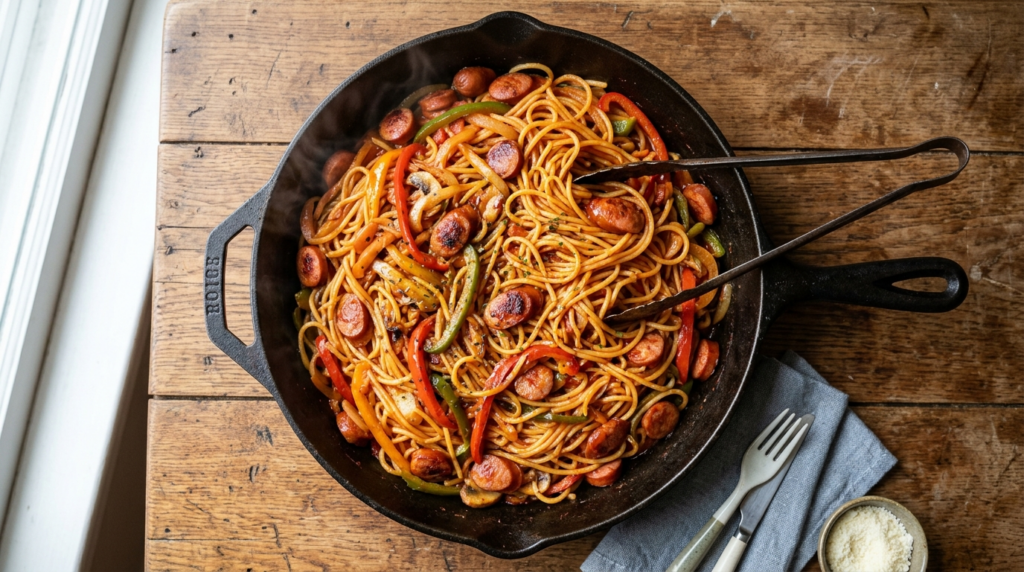
Spaghetti Napolitan is one of Japan's most iconic yoshoku dishes — Western-influenced Japanese comfort food that has been adapted over generations into something distinctly Japanese. Despite its name suggesting an Italian connection, this dish bears little resemblance to Italian cuisine. Instead, it is defined by a glossy, sweet-savory tomato ketchup sauce that coats every strand of spaghetti, balanced with Worcestershire sauce, sautéed onions, colorful bell peppers, and slices of wiener sausage.
This recipe delivers the classic Napolitan experience found in Japanese family kitchens and old-school kissaten coffee shops. The key is getting a slight char on the sausage and vegetables before bringing the pasta and sauce together in the pan, which develops a deeper, more complex flavor than simply mixing everything in the pot. Serve it with a side of grated Parmesan cheese and a splash of Tabasco for the full traditional experience.
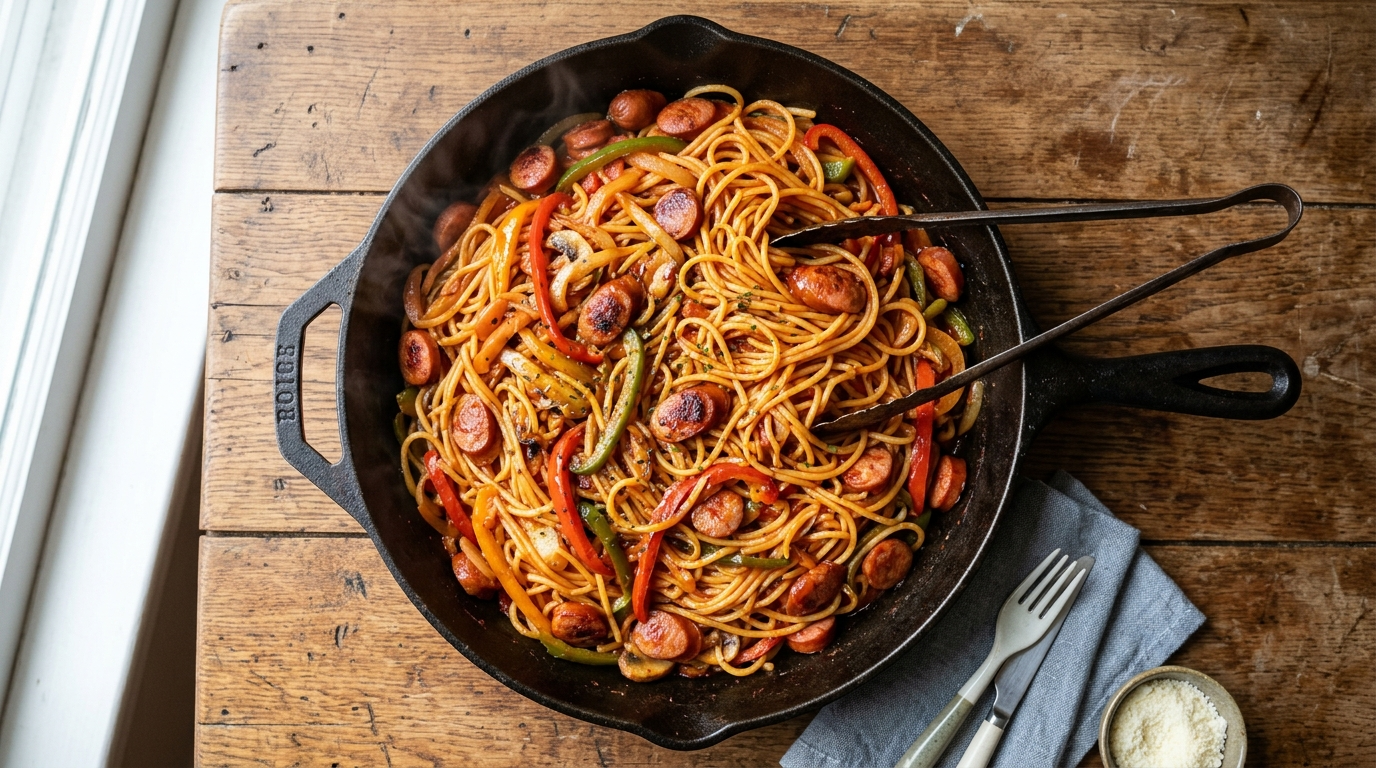
Japanese Spaghetti Napolitan Recipe – Classic Ketchup Pasta from Japan
Japanese Spaghetti Napolitan is a beloved yoshoku dish featuring spaghetti stir-fried in a tangy ketchup-based sauce with sautéed onions, bell peppers, and sliced sausage. It is a comforting weeknight staple that comes together in about 30 minutes.
Prep: 15 minutes | Cook: 20 minutes | Servings: 4
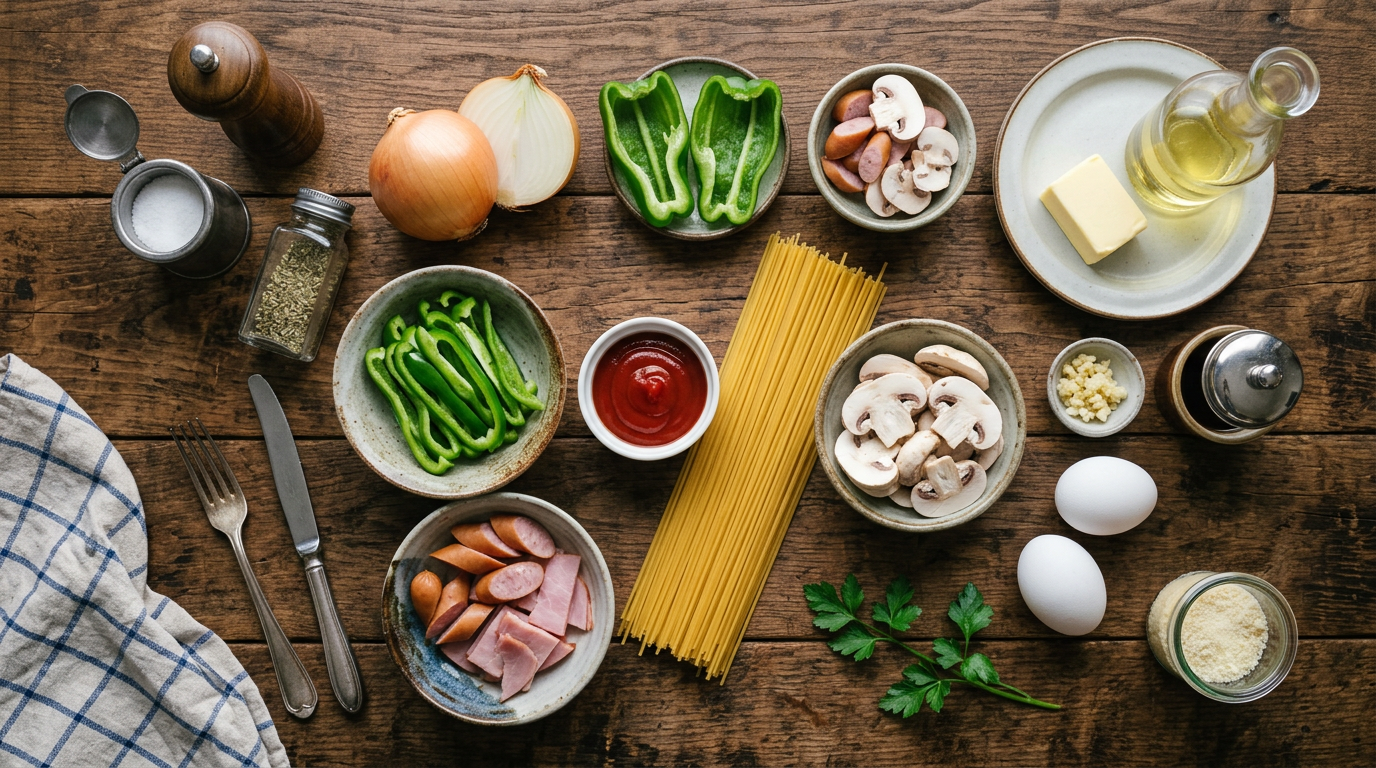
Ingredients
- 10 oz dried spaghetti About 280 g; standard thickness works best, not thin or thick
- 1 tablespoon kosher salt For the pasta cooking water
- 4 links wiener sausages or frankfurters About 200 g total; sliced on a diagonal into 1/2-inch pieces; pork or chicken varieties both work
- 1 medium yellow onion Halved and sliced into 1/4-inch half-moons
- 1 medium green bell pepper Stemmed, seeded, and sliced into thin strips
- 1 medium red bell pepper Stemmed, seeded, and sliced into thin strips
- 4 oz white button mushrooms About 115 g; sliced; optional but traditional in many versions
- 2 tablespoons unsalted butter Divided; adds richness and helps prevent sticking
- 1 tablespoon neutral oil Such as vegetable or canola oil
- 5 tablespoons tomato ketchup This is the core sauce ingredient; use a standard Japanese or American ketchup
- 1 tablespoon Worcestershire sauce Japanese Worcestershire (Bull-Dog brand) is traditional and slightly sweeter; regular works as a substitute
- 1 tablespoon tomato paste Deepens tomato flavor; optional but recommended
- 1 teaspoon soy sauce Adds umami depth
- 1 teaspoon granulated sugar Balances acidity; adjust to taste
- 1/4 cup reserved pasta cooking water Set aside before draining; used to loosen the sauce
- 2 tablespoons grated Parmesan cheese For serving; traditional garnish
- to taste black pepper Freshly ground
- to taste Tabasco or hot sauce Optional; served at the table in traditional kissaten style
Instructions
- Bring a large pot of water to a rolling boil over high heat. Add 1 tablespoon of kosher salt. Cook the spaghetti according to the package directions until just al dente, typically 8 to 10 minutes. Before draining, use a ladle to scoop out at least 1/4 cup of the starchy pasta cooking water and set it aside. Drain the spaghetti in a colander and set aside.
- While the pasta water is coming to a boil, combine the ketchup, Worcestershire sauce, tomato paste, soy sauce, and sugar in a small bowl. Stir until smooth and set the sauce mixture aside.
- Heat 1 tablespoon of neutral oil and 1 tablespoon of butter in a large 12-inch skillet over medium-high heat. Once the butter is melted and the foam has subsided, add the sliced sausage in a single layer.
- Cook the sausage slices without moving them for about 2 minutes until lightly browned on the first side. Flip and cook for another 1 to 2 minutes until browned on the second side. Remove the sausage from the pan and set aside on a plate.
- Reduce the heat to medium. Add the remaining 1 tablespoon of butter to the same skillet. Add the sliced onions and cook, stirring occasionally, for 3 to 4 minutes until softened and beginning to turn translucent at the edges.
- Add the sliced green and red bell peppers and mushrooms (if using) to the skillet. Stir to combine with the onions. Cook for 3 to 4 minutes, stirring occasionally, until the peppers are tender-crisp and the mushrooms have released their moisture and are lightly cooked.
- Return the browned sausage to the skillet. Pour the sauce mixture over the vegetables and sausage. Stir everything together and cook for 1 minute over medium heat so the sauce heats through and the flavors begin to meld.
- Add the drained spaghetti to the skillet. Using tongs, toss the pasta with the sauce and vegetables until every strand is evenly coated. If the sauce seems too thick or the pasta clumps, add the reserved pasta cooking water 1 to 2 tablespoons at a time, tossing as you go, until the sauce is glossy and clings to the noodles. This should take about 2 minutes over medium heat.
- Taste the pasta and adjust seasoning with additional soy sauce for saltiness, a small amount of sugar to balance acidity, or freshly ground black pepper.
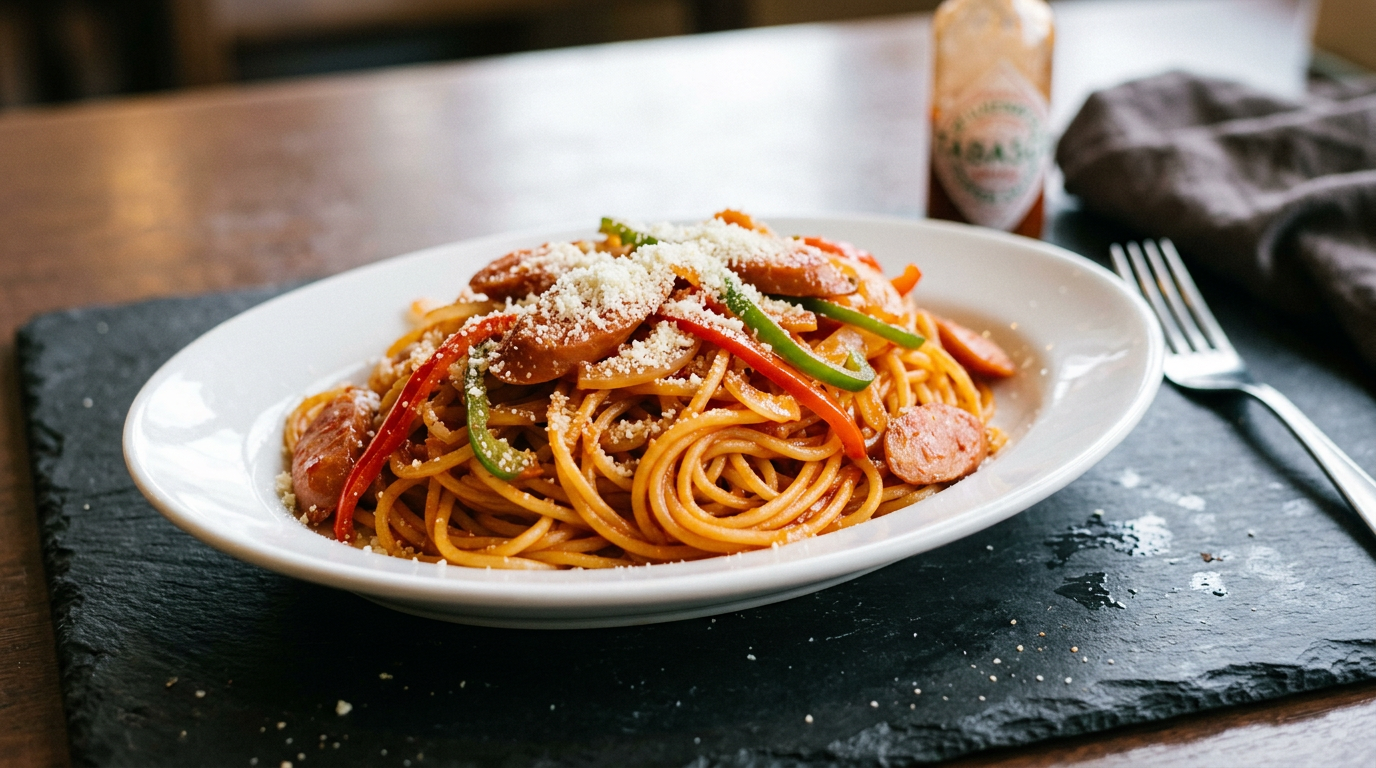
- Divide the Napolitan among four plates or shallow bowls. Sprinkle each serving with grated Parmesan cheese and serve immediately with Tabasco at the table.
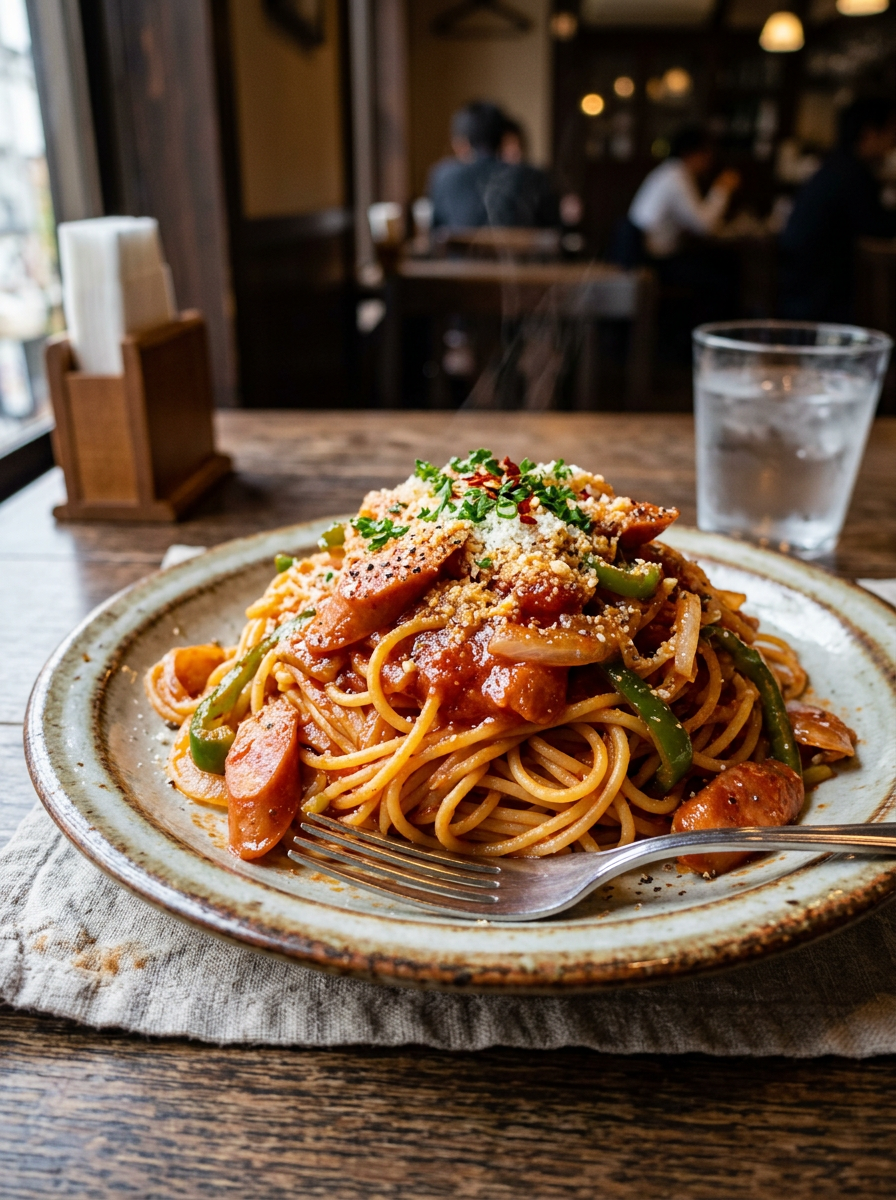
Spaghetti Napolitan is believed to have originated in Japan in the period following World War II, around the late 1940s and early 1950s. One widely cited account credits Shigetada Ito, a chef at the New Grand Hotel in Yokohama, with creating an early version of the dish using the tomato ketchup and rations available to American occupation forces at the time. The dish spread quickly through kissaten — the sit-down coffee shops that were cultural institutions in postwar Japan — and became a staple of Japanese home cooking throughout the Showa era. The name 'Napolitan' is borrowed from Napoli (Naples), Italy, reflecting the postwar Japanese romanticization of Western European food, though the dish itself was developed entirely in Japan. Today it remains a nostalgic comfort food across generations.
Practical Tips
- Using day-old spaghetti that has been cooked, drained, and refrigerated overnight is a traditional restaurant technique for Napolitan. The dried-out pasta surface absorbs the sauce more effectively and can develop a slightly firmer texture when stir-fried. If you plan ahead, cook the pasta the night before.
- Do not overcook the pasta during boiling. Stop just at al dente because it will continue to cook briefly when tossed in the hot skillet with the sauce.
- Browning the sausage separately before adding it back to the pan adds flavor that plain simmered sausage does not have. Do not skip this step.
- Japanese Worcestershire sauce, such as Bull-Dog brand, is thicker and slightly sweeter than British or American Worcestershire. If you use Japanese style, you may want to reduce the sugar slightly.
- Store leftovers promptly. Transfer any remaining Napolitan into a shallow airtight container within 2 hours of cooking and refrigerate at 40°F or below. Use within 3 to 4 days. To reheat, warm in a skillet over medium heat with a splash of water, stirring until heated through and the internal temperature reaches 165°F on an instant-read thermometer. Freeze extra portions if you will not use them within that window.
- Parmesan and Tabasco at the table are not optional garnishes in Japan — they are the traditional finishing condiments that complete the dish. Have both ready before you plate.
Large pot: For boiling the spaghetti in plenty of salted water
Large skillet or frying pan (12-inch): For stir-frying the sauce, vegetables, and sausage together with the pasta; a wide surface promotes even coating
Colander: For draining the cooked spaghetti
Tongs or pasta fork: For tossing and transferring the spaghetti
Cutting board and knife: For slicing sausage, onion, and bell peppers
Measuring spoons and cups: For accurate sauce proportions
Chicken Napolitan: Substitute the wiener sausages with 8 oz of boneless, skinless chicken thighs cut into bite-sized pieces. Season lightly with salt and pepper and cook through in the skillet until the internal temperature reaches 165°F on an instant-read thermometer, about 6 to 8 minutes, before removing and proceeding with the vegetables.
Shrimp Napolitan: Replace the sausage with 12 oz of peeled and deveined medium shrimp. Sauté in butter over medium-high heat for 2 to 3 minutes per side until pink and the internal temperature reaches 145°F. Remove and add back in at the final tossing step to avoid overcooking.
Vegetarian Napolitan: Omit the sausage and increase the mushrooms to 8 oz. Add a small zucchini, diced, along with the bell peppers. Use a dash of smoked paprika in the sauce to add depth. Verify that your Worcestershire sauce is a vegetarian variety, as traditional Worcestershire contains anchovies.
Creamy Napolitan: Reduce the ketchup to 3 tablespoons and stir 2 tablespoons of heavy cream into the sauce mixture before adding it to the pan. This creates a richer, slightly pink sauce sometimes seen in updated kissaten menus.
Spicy Napolitan: Add 1/2 to 1 teaspoon of togarashi (Japanese seven-spice blend) or a pinch of red pepper flakes directly to the sauce mixture for heat built into the dish rather than just at the table.
Is Japanese Spaghetti Napolitan the same as Italian Spaghetti Napoletana?
No. They are entirely different dishes. Italian Spaghetti Napoletana uses a fresh or canned tomato sauce made with olive oil, garlic, and herbs. Japanese Spaghetti Napolitan uses tomato ketchup and Worcestershire sauce as its primary sauce components and was developed in Japan in the postwar era. The name 'Napolitan' was borrowed from Naples but the dish itself is a Japanese creation.
Why do some recipes call for using leftover or day-old spaghetti?
Freshly cooked, still-moist spaghetti can become a little soft when stir-fried with the sauce. Spaghetti that has been cooked, drained, and refrigerated overnight dries out on the surface, which helps it hold up better in the skillet and absorb the ketchup sauce more evenly. It is a technique used in many kissaten kitchens. If you only have freshly cooked pasta, spread it on a sheet pan and let it air out for a few minutes before adding it to the skillet.
Can I use a different type of pasta?
Standard spaghetti is traditional and gives the dish its characteristic texture. Spaghettini or bucatini can work in a pinch, but avoid very thin angel hair pasta, which becomes mushy quickly, or very thick pasta shapes that do not coat the same way.
What sausage is most authentic for Napolitan?
In Japan, the standard sausage used is a thin wiener or frankfurter, often a mild pork or chicken variety sold in links. They are sliced on the diagonal before cooking. If you cannot find Japanese-style wieners, standard American frankfurters or cocktail sausages are the closest substitutes.
How do I store and reheat leftovers safely?
Transfer leftovers into a shallow airtight container within 2 hours of cooking and refrigerate at 40°F or below. Use within 3 to 4 days. To reheat, warm in a skillet over medium heat with 1 to 2 tablespoons of water, tossing until the pasta is heated through and an instant-read thermometer reads 165°F. You can also microwave in a covered container, stirring halfway through, and verify with a thermometer. Freeze portions you will not use within 3 to 4 days.
Is the Parmesan cheese served on top traditional?
Yes. Grated Parmesan cheese and Tabasco sauce served at the table alongside Napolitan is a longstanding tradition in Japanese kissaten. The combination may seem unusual but it reflects the yoshoku style of freely adapting Western ingredients into a uniquely Japanese context.