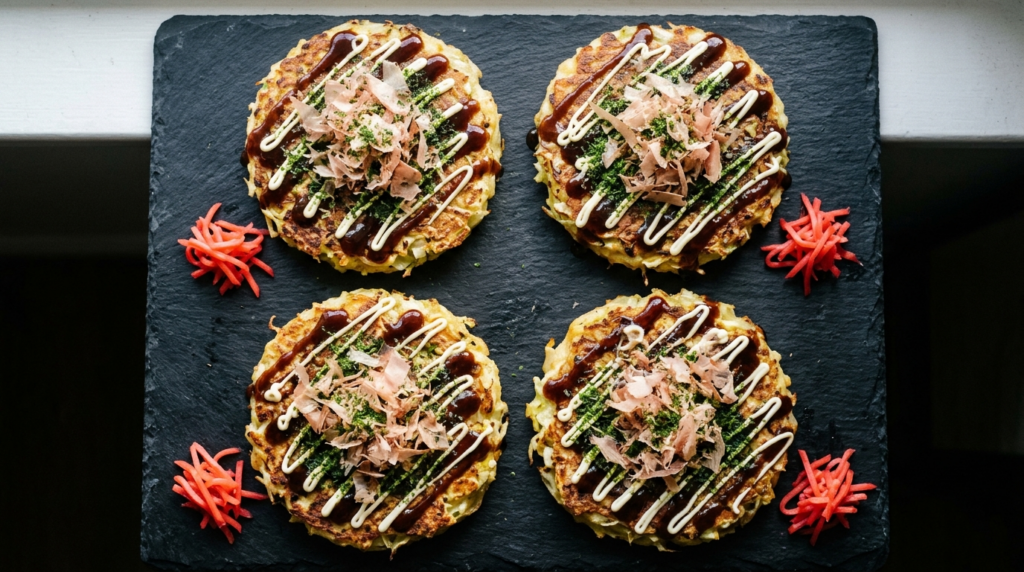
Okonomiyaki is one of Japan's most satisfying savory dishes — a thick, golden pancake built on a base of shredded cabbage and a simple egg-and-flour batter. The name comes from two Japanese words: 'okonomi,' meaning 'what you like,' and 'yaki,' meaning 'grilled.' True to its name, the dish is endlessly adaptable, but the cabbage-forward base is the constant that ties every regional version together.
This FlavorGrub okonomiyaki cabbage pancake recipe follows the Osaka (Kansai) style, which mixes all the ingredients together before cooking, as opposed to the Hiroshima style, which layers them. It is an approachable weeknight meal that uses pantry staples and comes together quickly. The result is a pancake with a crispy, burnished exterior and a tender, slightly custardy interior that is finished with okonomiyaki sauce, Japanese mayonnaise, bonito flakes, and dried seaweed — the toppings that give the dish its signature appearance and layered umami flavor.
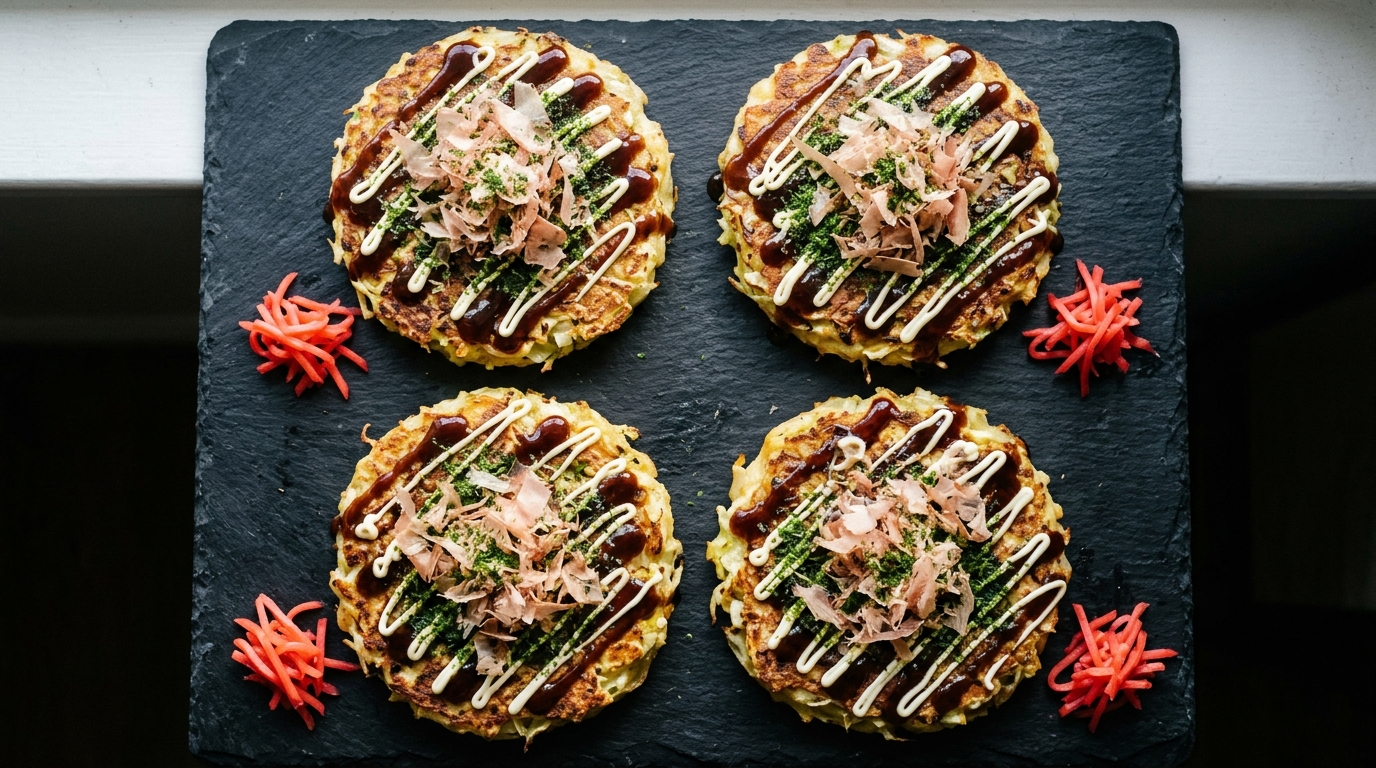
Okonomiyaki Cabbage Pancake Recipe – Savory Japanese Street Food at Home
This okonomiyaki cabbage pancake recipe brings the beloved Japanese street food into your home kitchen. Packed with shredded cabbage, a savory batter, and finished with classic toppings, it comes together in about 30 minutes.
Prep: 15 minutes | Cook: 25 minutes | Servings: 4
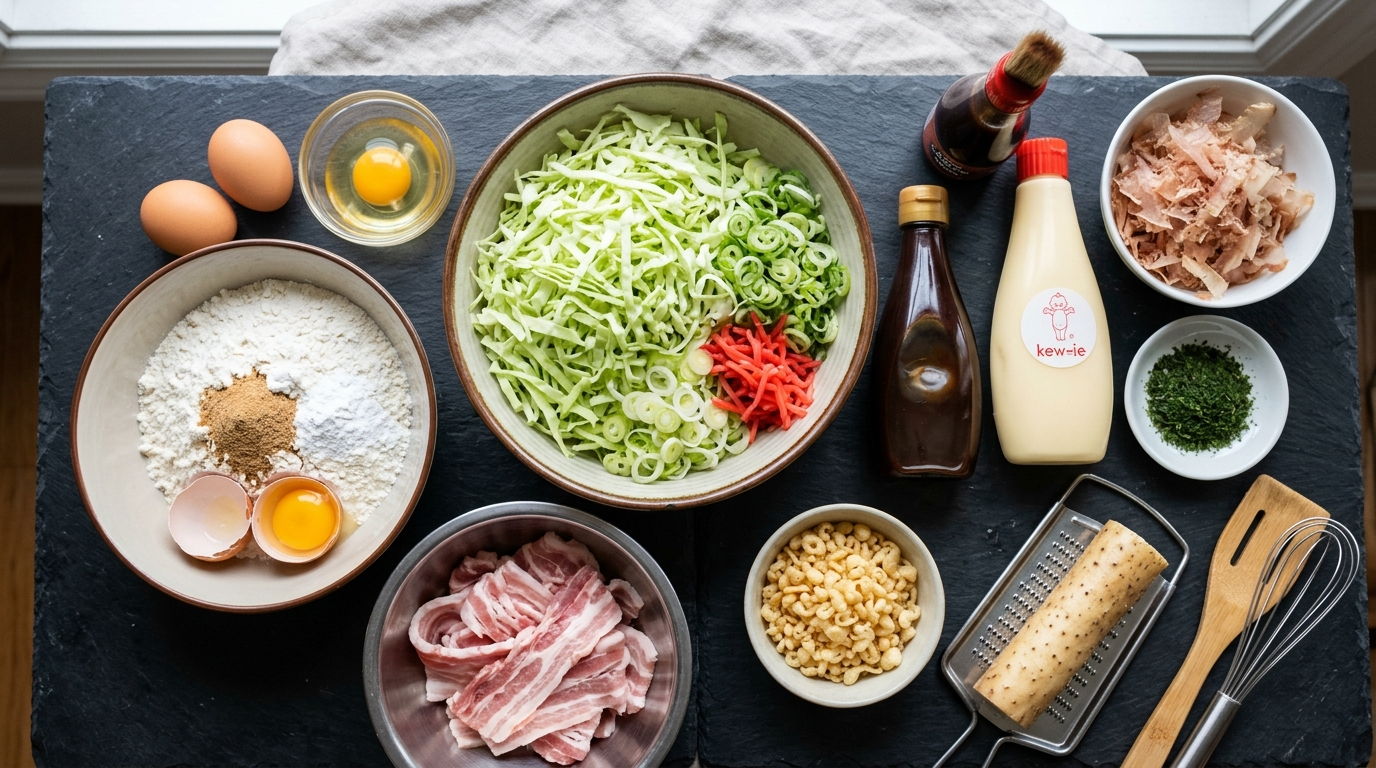
Ingredients
- 1 cup all-purpose flour Spooned and leveled, not packed
- 2 teaspoons baking powder Gives a slightly lighter texture
- 1 teaspoon fine salt
- 3/4 cup dashi stock Made from dashi powder and water per package instructions; substitute cold water if unavailable, flavor will be milder
- 3 large eggs Cold from the refrigerator
- 4 cups green cabbage, finely shredded About half a small head; pieces should be roughly 1/4-inch wide
- 4 stalks green onions (scallions), thinly sliced Both white and green parts
- 1/2 cup tempura batter bits (tenkasu) Also called agedama; adds crunch; omit if unavailable
- 6 strips thin-cut pork belly or bacon About 4 to 5 inches long; use 2 strips per pancake; substitute shrimp, squid, or omit for vegetarian
- 1 tablespoon neutral oil Such as vegetable or canola oil; for the skillet
- 3 tablespoons okonomiyaki sauce Available at Asian grocery stores or online; Bulldog brand is widely available
- 3 tablespoons Japanese mayonnaise Kewpie brand preferred; richer and slightly tangier than standard mayonnaise
- 1/4 cup katsuobushi (bonito flakes) Fine-shaved; wave on top of hot pancake before serving
- 2 teaspoons aonori (dried green seaweed flakes) Sprinkle over finished pancake; substitute furikake if unavailable
- 1 teaspoon pickled red ginger (beni shoga), for garnish Optional but traditional; adds brightness and color
Instructions
- Make the batter base: In a large mixing bowl, whisk together the flour, baking powder, and salt until evenly combined.
- Add the wet ingredients: Pour in the cold dashi stock and crack in the eggs. Whisk until a smooth, lump-free batter forms. Do not overmix once flour is incorporated. The batter will be fairly thick.
- Fold in the filling: Add the shredded cabbage, sliced green onions, and tenkasu (if using) to the batter. Use a spatula to fold everything together until the cabbage is evenly coated. The mixture will look very cabbage-heavy — this is correct.
- Rest the batter: Let the cabbage batter mixture sit at room temperature for 5 minutes. This allows the batter to hydrate slightly and the cabbage to begin releasing just enough moisture to bind.
- Preheat the pan: Heat a 12-inch non-stick or well-seasoned cast iron skillet over medium heat for 2 to 3 minutes. Add 1 teaspoon of neutral oil and swirl to coat the surface evenly.
- Cook the first pancake: Spoon approximately one-quarter of the cabbage batter mixture into the center of the skillet. Use the back of the spoon or a spatula to press and shape it into a round pancake about 7 to 8 inches in diameter and 3/4-inch thick. Work quickly but gently to keep the shape.
- Add pork belly: Lay 2 strips of thin-cut pork belly side by side across the top surface of the pancake. Press them lightly into the batter so they adhere.
- Cook the first side: Cook over medium heat, undisturbed, for 5 to 6 minutes. The edges of the pancake should look set and the bottom should be deep golden brown when you check by lifting a corner with a spatula. If the bottom is browning too quickly before the edges set, reduce heat to medium-low.
- Flip the pancake: Slide a wide spatula fully under the pancake. Use a second spatula on top for support if needed, and flip the pancake in one confident motion so the pork belly is now on the bottom. The pork belly will cook directly against the skillet.
- Cook the second side: Cook for 5 to 6 more minutes over medium heat. The pork belly should be fully cooked and caramelized. If using pork belly, verify doneness with an instant-read thermometer — pork should reach an internal temperature of 145°F at its thickest part, followed by a 3-minute rest, or 160°F with no rest required. For bacon, cook until visibly done throughout.
- Check for doneness: Gently press the center of the pancake with a spatula — it should feel firm and spring back slightly, not liquid or wobbly. If the center seems underdone, reduce heat to low, cover the pan loosely with a lid or foil, and cook for an additional 2 to 3 minutes.
- Transfer and top: Slide the finished pancake onto a serving plate, pork-belly side up. Immediately brush or drizzle okonomiyaki sauce generously over the entire surface.
- Add mayonnaise: Drizzle or pipe Japanese mayonnaise over the okonomiyaki sauce in a zigzag or concentric circle pattern.
- Finish with garnishes: Scatter bonito flakes evenly over the top — they will wave from the heat of the pancake. Sprinkle aonori over the entire surface. Add a small mound of pickled red ginger to the side if using.
- Cook remaining pancakes: Wipe out the skillet with a folded paper towel (carefully — it is hot), add another teaspoon of oil, and repeat steps 6 through 14 for the remaining three portions of batter. Keep finished pancakes warm in a 200°F oven on a wire rack set over a baking sheet while you cook the rest.
- Serve immediately: Okonomiyaki is best eaten right away while the exterior is crispy and the toppings are fresh.
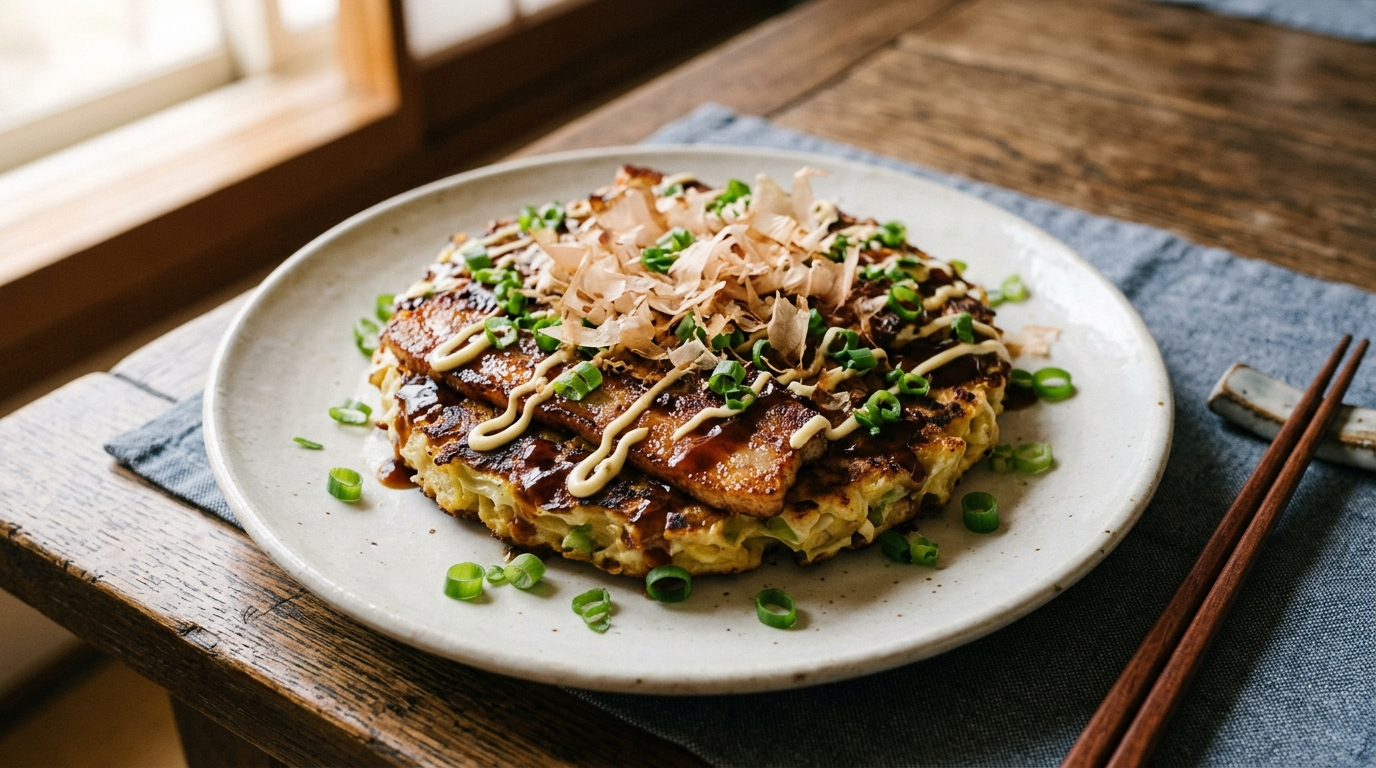
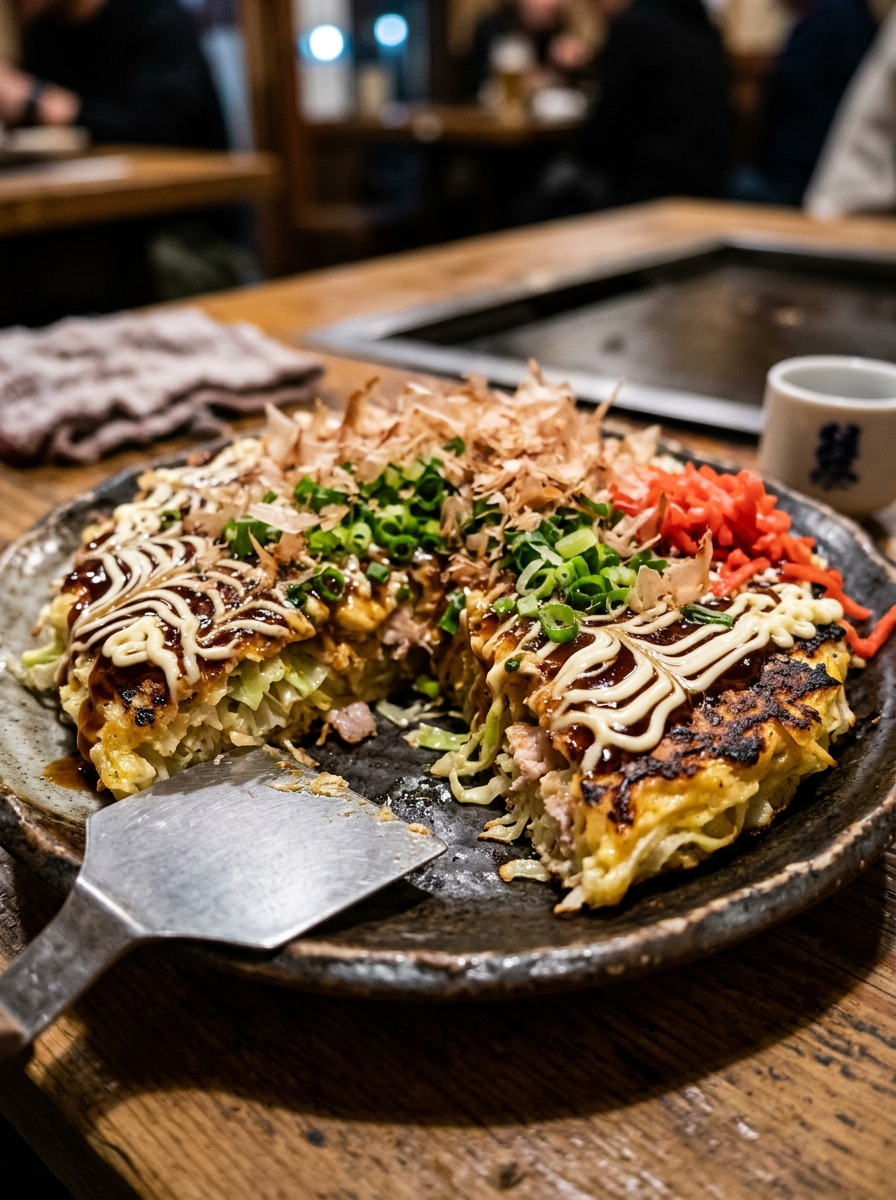
Okonomiyaki's roots trace back to the Osaka and Hiroshima regions of Japan during the early to mid-20th century. A predecessor dish called 'funoyaki,' a simple wheat-flour pancake eaten during Buddhist ceremonies, is documented from the Edo period (1603–1868). By the early Showa era (1920s–1940s), street vendors in Osaka were selling a more developed version incorporating cabbage and other fillings. During and after World War II, when rice was scarce, cabbage-and-flour pancakes became a practical and filling street food. Through the postwar economic recovery, okonomiyaki shops (okonomiyaki-ya) became neighborhood institutions across western Japan, and the dish spread nationwide. Today it is considered quintessential Japanese comfort food and is closely associated with both Osaka and Hiroshima cuisine, each city maintaining distinct regional preparation methods.
Practical Tips
- Shred the cabbage finely — roughly 1/4-inch-wide strips — so it distributes evenly through the batter and cooks through without leaving raw, crunchy pieces in the center.
- Cold dashi keeps gluten development low and results in a more tender pancake. Using room-temperature or warm liquid can make the batter tougher.
- Resist the urge to press down on the pancake while it cooks. Pressing forces out moisture and leads to a denser, less tender result.
- The flip is the most intimidating step. Use the largest spatula you own and slide it fully under the pancake before you turn it. A second spatula placed on top provides control.
- Thin-cut pork belly (about 1/8-inch thick) is the traditional topping. It should be thin enough to cook through completely in 5 to 6 minutes flat against the skillet.
- If tenkasu is unavailable, you can skip it or substitute a small handful of crushed plain panko-fried bits for a similar crunch effect.
- Okonomiyaki sauce has a sweet, tangy, Worcestershire-adjacent flavor. Do not substitute plain Worcestershire sauce directly — the flavor profile is quite different. Look for it at Asian grocery stores or online.
- For food safety: refrigerate leftover cooked pancakes promptly within 2 hours in shallow, sealed containers at 40°F or below. Use within 3 to 4 days. Reheat in a skillet over medium heat or in an oven at 375°F until the center reaches 165°F on an instant-read thermometer. Freeze extra portions for longer storage.
- To reheat from frozen: thaw overnight in the refrigerator, then reheat in a skillet or oven to 165°F internal temperature before serving.
Large mixing bowl: Combines batter and mix-ins thoroughly
12-inch non-stick or cast iron skillet: Provides even heat for cooking pancakes with a crisp crust
Wide spatula: Needed to flip the thick pancake cleanly without breaking it
Box grater or sharp chef's knife: Finely shreds cabbage to the right texture for the batter
Liquid measuring cup: Ensures accurate dashi or water measurement for batter consistency
Whisk: Blends the wet batter ingredients smoothly before cabbage is folded in
Instant-read thermometer: Confirms cooked pork or other protein reaches a safe internal temperature
Pastry brush or squeeze bottle: Applies sauce and toppings evenly over the finished pancake
Hiroshima-Style (Layered): Instead of mixing all ingredients into the batter, pour a thin crepe-like layer of plain batter onto the skillet first, then layer cabbage, bean sprouts, noodles (yakisoba or udon), and protein separately on top, and crown with a fried egg. The layers are cooked without mixing and then flipped as a unit.
Seafood Okonomiyaki: Replace or supplement the pork belly with peeled and deveined medium shrimp, cleaned squid rings, or bay scallops. Fold the seafood directly into the batter mixture. Cook shrimp to an internal temperature of 145°F or until opaque and pink throughout.
Vegetarian Okonomiyaki: Omit the pork belly entirely. Use kombu dashi (made from dried kelp only, no bonito) for a fully plant-based stock. Omit bonito flake topping and substitute extra aonori or furikake. Add sliced shiitake mushrooms or corn kernels to the batter for added substance.
Cheese Okonomiyaki: Scatter 2 to 3 tablespoons of shredded mozzarella or mild cheddar over the top of the pancake after the first flip while the pork belly side is cooking. The cheese melts into the batter and adds a creamy, slightly tangy layer under the toppings.
Chicken Okonomiyaki: Use thinly sliced boneless chicken thigh (about 1/8-inch thick) in place of pork belly, pressing it onto the top of the pancake before the flip. Chicken must reach an internal temperature of 165°F on an instant-read thermometer before serving.
What does okonomiyaki taste like?
Okonomiyaki has a savory, umami-rich flavor with a slightly sweet finish from the sauce. The interior is soft and custardy from the egg and cabbage, while the exterior has a satisfying crisp. The combination of tangy mayonnaise, smoky bonito flakes, and salty seaweed creates a layered flavor profile that is distinctly Japanese.
Can I make okonomiyaki without dashi stock?
Yes. Plain cold water works as a substitute, though the batter will have a milder flavor. You can also boost umami by dissolving a small amount of soy sauce (about 1 teaspoon) into the water. Dashi powder is widely available at Asian grocery stores and dissolves quickly in water.
Why is my okonomiyaki falling apart when I flip it?
The most common causes are batter that is too loose, cabbage that is not shredded finely enough, or trying to flip too early before the bottom is fully set and structurally firm. Make sure the edges look dry and cooked through before you attempt the flip, and use a spatula large enough to support most of the pancake's surface area.
Where can I buy okonomiyaki sauce and Japanese mayonnaise?
Both are available at most Asian grocery stores and many international food sections of large supermarkets. Bulldog brand okonomiyaki sauce and Kewpie Japanese mayonnaise are the most widely distributed brands internationally and are also available through major online retailers.
Can I make the batter ahead of time?
You can mix the dry ingredients and wet batter base (without the cabbage or green onions) up to 24 hours ahead and refrigerate it, covered. Fold in the cabbage, onions, and tenkasu just before cooking. Do not let the cabbage sit in the batter for extended periods before cooking, as it will release too much water and thin the batter.
Is okonomiyaki gluten-free?
Traditional okonomiyaki is not gluten-free because it uses wheat flour. For a gluten-free version, substitute a 1-to-1 gluten-free all-purpose flour blend. Also check that your dashi stock, okonomiyaki sauce, and soy sauce (if used) are certified gluten-free, as these often contain wheat.
How do I store and reheat leftover okonomiyaki safely?
Refrigerate cooked pancakes within 2 hours of cooking in shallow, sealed containers at 40°F or below and use within 3 to 4 days. To reheat, cook in a dry or lightly oiled skillet over medium heat or in a 375°F oven until the center reaches 165°F on an instant-read thermometer. For longer storage, freeze individual portions and thaw overnight in the refrigerator before reheating.