Easy Udon Stir Fry Recipe Ready in 30 Minutes
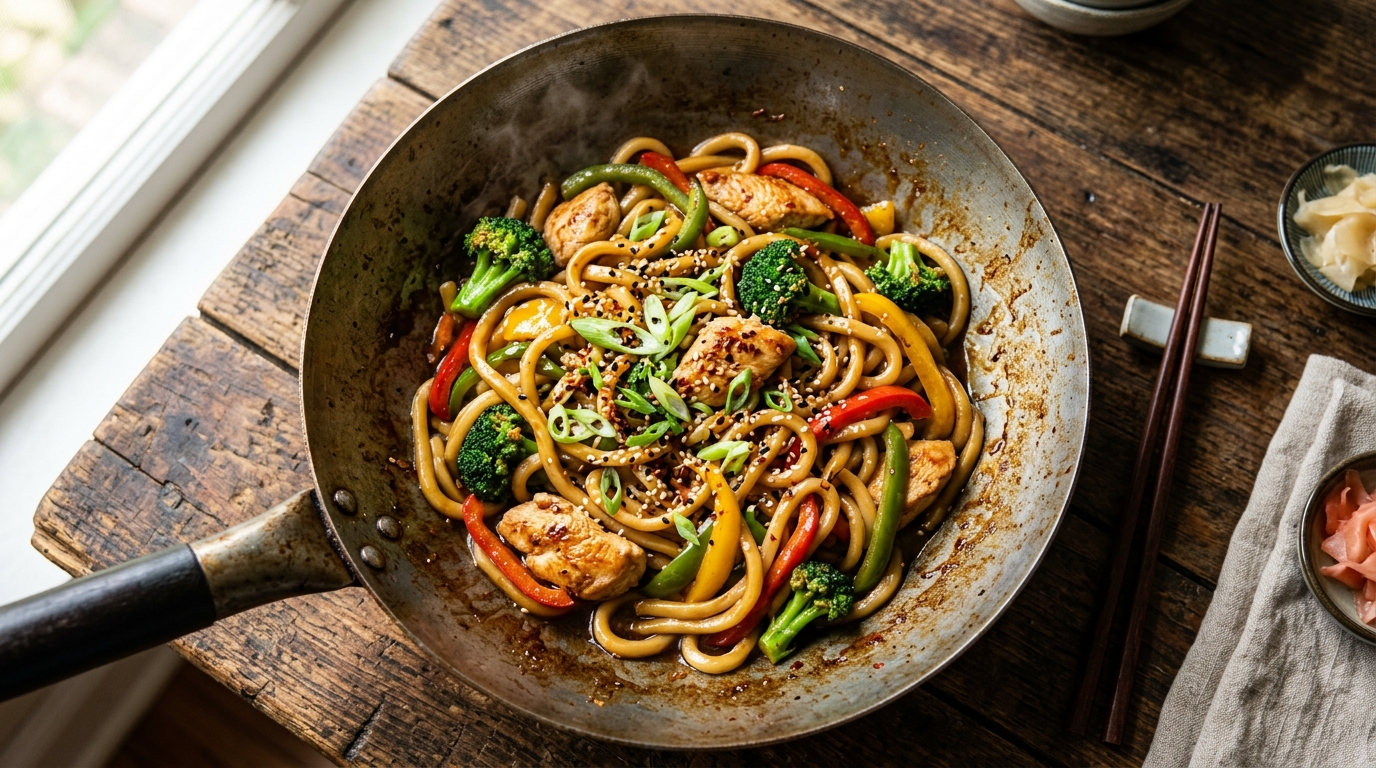
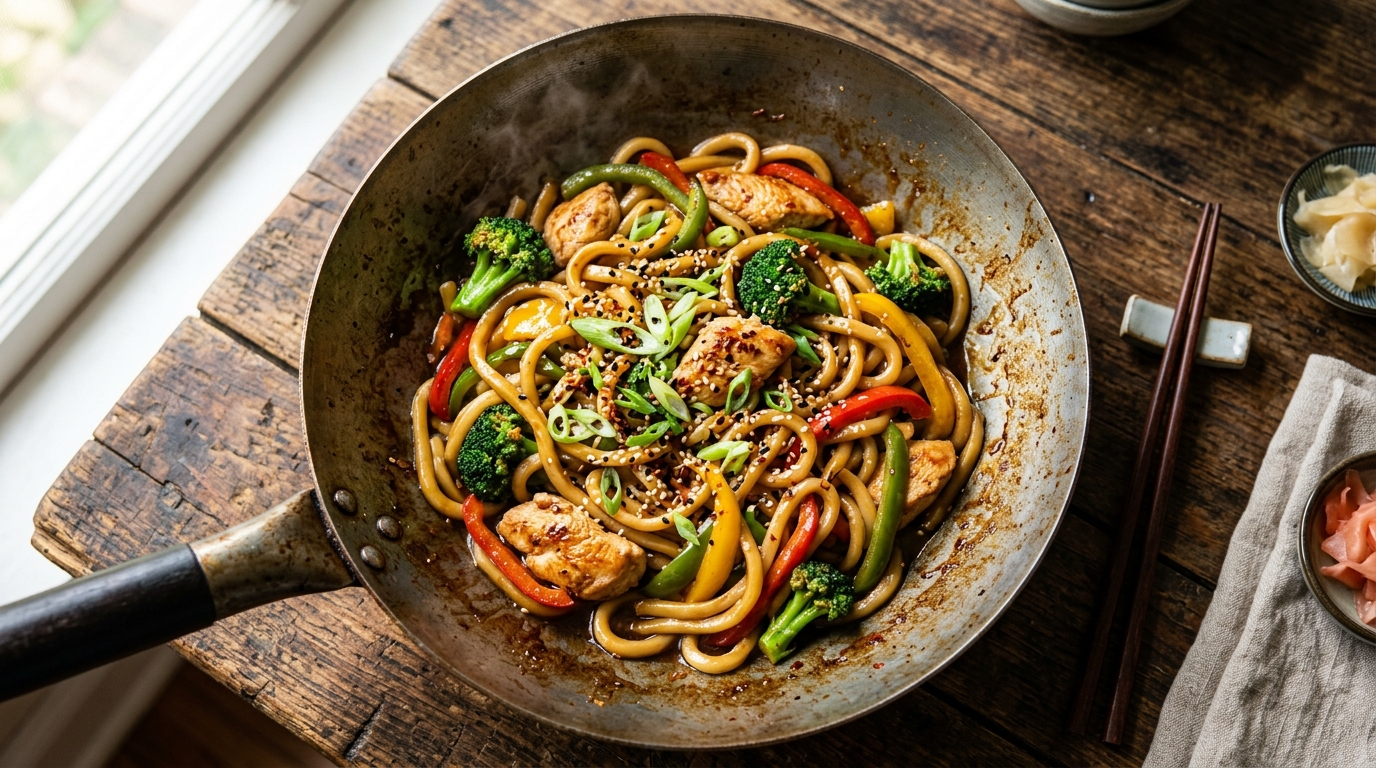
This udon stir fry recipe is the ultimate weeknight hero – thick, pillowy noodles coated in a glossy savory sauce with crisp vegetables and your choice of protein, all ready in just 30 minutes. Whether you are craving something hearty and warming or need a meal that impresses without the effort, this dish checks every single box. It is the kind of recipe that earns a permanent spot in your regular dinner rotation.
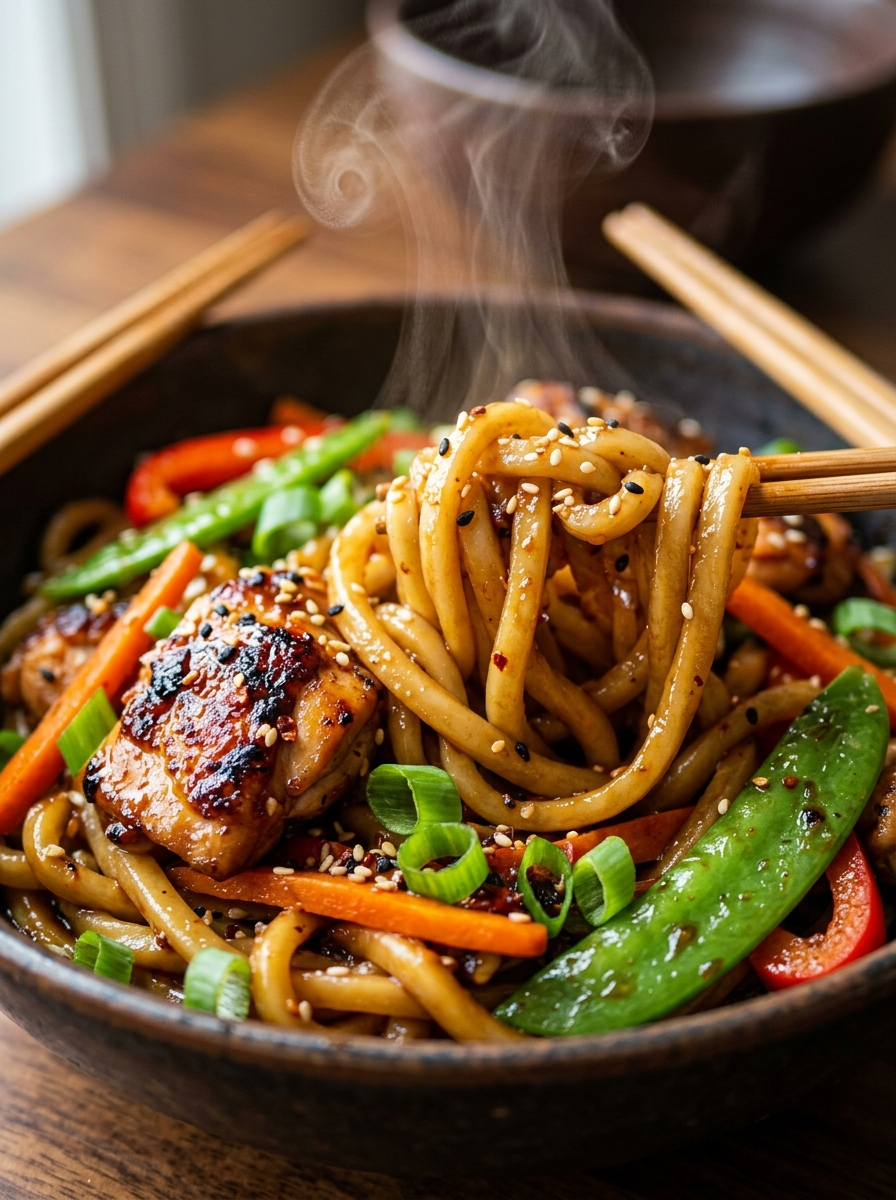
What makes udon noodles so magical in a stir fry is their unique texture. Unlike thin rice noodles or spaghetti, udon noodles are thick and wonderfully chewy, giving them incredible body and the ability to soak up every drop of the umami-rich sauce. That satisfying chew combined with the crunch of fresh vegetables and the caramelized edges from a screaming hot pan creates a contrast of textures that is simply irresistible.
This recipe is also incredibly forgiving and flexible. You can swap the vegetables based on what is lingering in your crisper drawer, use chicken, shrimp, tofu, or beef as your protein, and dial the sauce up or down to suit your taste. Once you have made this once, you will find yourself riffing on it endlessly. Let us get cooking – your new favorite noodle dish is just minutes away.
This udon stir fry recipe delivers thick, chewy noodles tossed with vibrant vegetables and a bold umami-packed sauce in just 30 minutes. Faster than takeout, endlessly customizable, and packed with satisfying flavor – this is the weeknight dinner you have been waiting for.
Ingredients
| AMOUNT | INGREDIENT | NOTES |
|---|---|---|
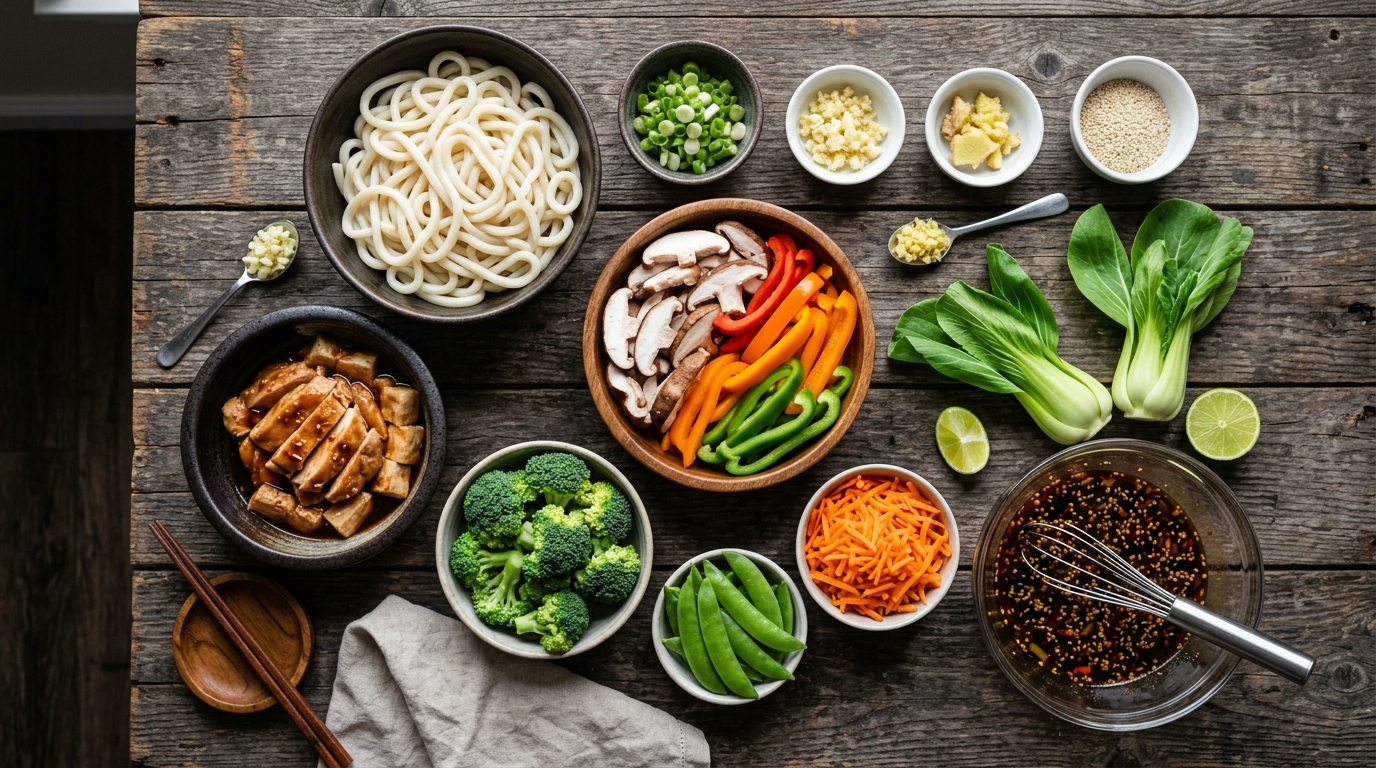
| 14 ounces | fresh or frozen udon noodles | thawed if frozen, loosened gently before cooking |
| 2 tablespoons | neutral oil | vegetable, canola, or avocado oil work best |
| 1 pound | boneless chicken thighs | thinly sliced into bite-sized strips |
| 4 cloves | garlic | minced |
| 1 tablespoon | fresh ginger | peeled and finely grated |
| 1 medium | yellow onion | thinly sliced into half-moons |
| 1 cup | broccoli florets | cut into small even pieces |
| 1 medium | red bell pepper | thinly sliced |
| 1 cup | shredded red cabbage | adds color and crunch |
| 2 stalks | green onions | sliced, white and green parts separated |
| 3 tablespoons | soy sauce | low sodium preferred |
| 2 tablespoons | oyster sauce | adds deep umami richness |
| 1 tablespoon | mirin | Japanese sweet rice wine for subtle sweetness |
| 1 tablespoon | sesame oil | toasted, added at the end for aroma |
| 1 teaspoon | brown sugar | balances the saltiness of the sauce |
| 1 teaspoon | cornstarch | helps thicken the sauce slightly |
| 1 tablespoon | toasted sesame seeds | for garnish |
| 1 teaspoon | red pepper flakes | optional, for heat |
Instructions
Nutrition (per serving)
About This Recipe
Udon noodles have a history stretching back over a thousand years in Japan, with many food historians tracing their origins to the Nara period around 700 AD. Some accounts suggest that the noodles were introduced to Japan from China via Buddhist monks, who brought wheat-based noodle traditions along with religious teachings. Over the centuries, udon evolved into a deeply regional dish, with areas like Kagawa Prefecture on Shikoku Island becoming famous for their distinctively thick, springy Sanuki udon. Traditionally served in delicate dashi broths or with simple dipping sauces, udon became a staple comfort food across all social classes in Japan.
The stir-fried preparation of udon, often called yaki udon, emerged as a popular street food and izakaya dish in the mid-20th century. The story most commonly told credits Tsurumatsu Ikeda of a restaurant in Kokura, Fukuoka, with inventing yaki udon in 1945 during post-war food shortages when ramen noodles were unavailable. He used udon noodles instead, tossing them in a hot pan with whatever ingredients were on hand. The dish became an instant hit and spread rapidly across Japan. Today, stir-fried udon has traveled far beyond Japan, inspiring countless global variations that incorporate local flavors, proteins, and sauces while honoring that original spirit of bold, satisfying simplicity.
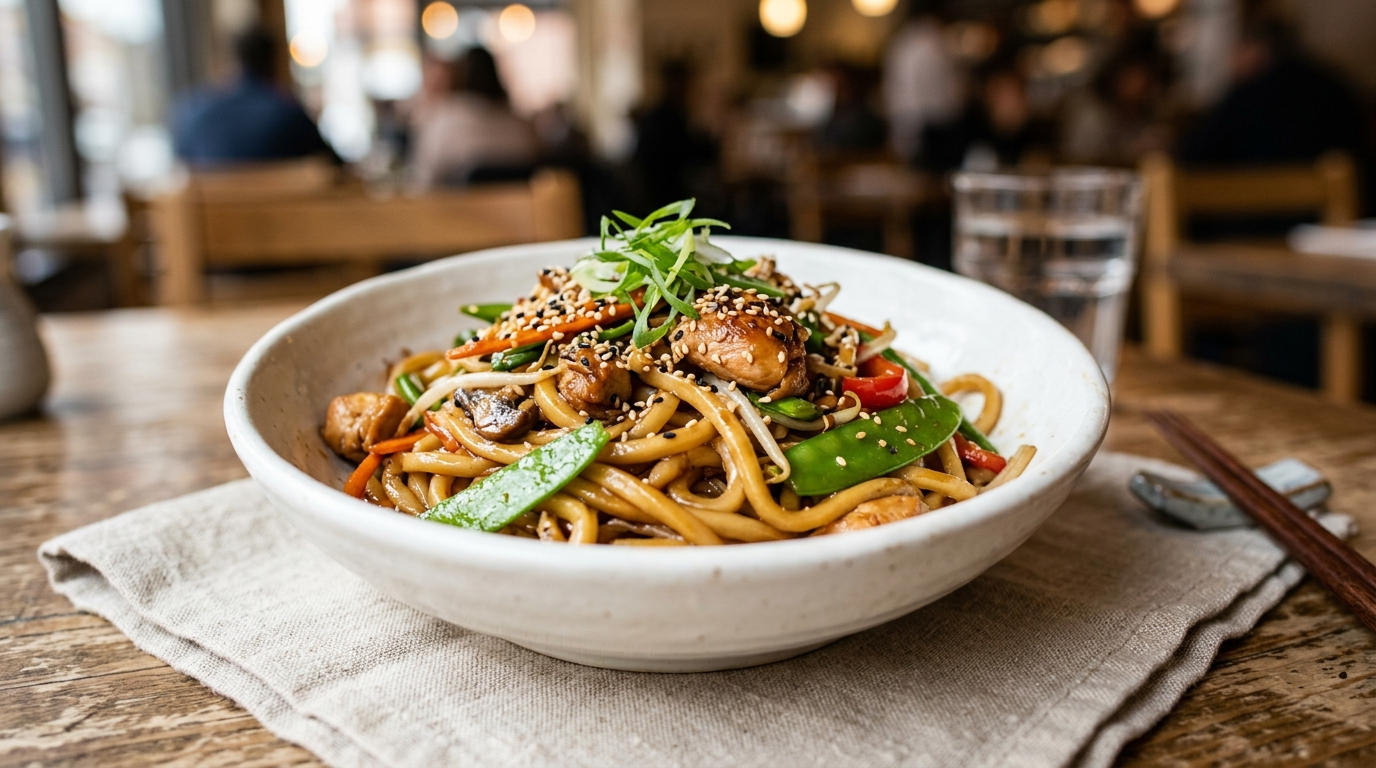
Ready to Serve
A Closer Look
Pro Tips for Best Results
- Always prep and measure every ingredient before you turn on the heat. Stir frying moves extremely fast and there is no time to stop and chop once the pan is hot. Having everything ready in small bowls next to the stove is the single most important key to success.
- Do not overcrowd the pan. If your skillet is not large enough to hold everything in a relatively thin layer, cook the protein and vegetables in batches. Overcrowding causes steaming rather than searing, and you will lose those delicious caramelized edges.
- Fresh udon noodles from the refrigerated section of an Asian grocery store will give you the best chewy texture. If you can only find dried udon, cook them until just barely al dente since they will continue cooking in the hot pan.
- High heat is non-negotiable in a great stir fry. The intense heat creates the wok hei effect, a slight smoky char that adds incredible depth of flavor. Use the highest burner setting on your stove and resist the urge to lower it.
- Make the sauce in advance and keep it in the refrigerator for up to one week. On busy nights, you can have this dish on the table in under 20 minutes with the sauce already prepped and ready to go.
Essential Equipment
Large Wok or Cast Iron Skillet: A wok or large heavy skillet provides the intense, even heat needed for proper stir frying and helps achieve those coveted caramelized edges on the noodles.
Chef Knife: A sharp chef knife makes quick, precise work of slicing vegetables and protein into uniform pieces that cook evenly.
Cutting Board: A large, stable cutting board gives you ample space to prep all your vegetables and protein efficiently before cooking begins.
Small Mixing Bowl: Essential for whisking together the stir fry sauce ahead of time so it is ready to add quickly during the fast-paced cooking process.
Tongs or Wok Spatula: Long-handled tongs or a flat wok spatula allow you to toss the noodles and ingredients vigorously without breaking the noodles apart.
Colander: Used to rinse and drain the udon noodles before adding them to the pan, preventing excess water from steaming the ingredients.
Variations
Shrimp Udon Stir Fry: Swap the chicken for 1 pound of large peeled and deveined shrimp. Shrimp cook in just 2 to 3 minutes total, so add them after the vegetables and watch closely to avoid overcooking. They should be pink and just curled into a C shape when done.
Vegetarian and Vegan Version: Replace the chicken with extra-firm tofu pressed and cubed, or use a generous portion of mixed mushrooms like shiitake, oyster, and cremini. Substitute the oyster sauce with a vegan mushroom-based oyster sauce, which is widely available and equally flavorful.
Spicy Udon Stir Fry: Add 1 to 2 tablespoons of gochujang, a Korean fermented chili paste, to the sauce for a deeply spicy and complex heat. You can also finish the dish with a drizzle of chili crisp oil for a punchy, textured kick that is absolutely addictive.
Teriyaki Beef Udon: Use thinly sliced ribeye or sirloin steak in place of the chicken and swap the oyster sauce for an extra tablespoon of mirin and a teaspoon of honey to create a teriyaki-adjacent sauce that pairs beautifully with the rich beef.
Peanut Butter Udon Stir Fry: Whisk 2 tablespoons of creamy peanut butter and 1 tablespoon of rice vinegar into the sauce to create a rich, nutty, slightly tangy variation. Finish with a handful of crushed roasted peanuts and fresh cilantro for a Southeast Asian-inspired take on this dish.
Frequently Asked Questions
Can I use dried udon noodles instead of fresh or frozen?
Yes, dried udon noodles work fine in this recipe. Cook them according to the package directions until just al dente, then drain and rinse well before adding to the stir fry. Keep in mind that dried udon will have a slightly firmer, less pillowy texture compared to fresh or frozen, but the flavor will still be excellent.
Can I make this udon stir fry ahead of time?
You can prep all the components ahead of time – cook the protein, chop the vegetables, and mix the sauce – and store them separately in the refrigerator for up to 2 days. However, for the best texture, it is recommended to stir fry and combine everything fresh just before serving, as the noodles can become sticky and clump together when stored already combined.
Can I freeze udon stir fry?
Stir fry dishes with noodles do not freeze particularly well because the noodles become mushy upon thawing. If you need to meal prep, it is better to freeze the cooked protein separately and make fresh noodles when ready to serve. The sauce can also be frozen in a small airtight container for up to 2 months.
Where can I find fresh udon noodles?
Fresh and frozen udon noodles are most commonly found at Asian grocery stores, Japanese markets, or well-stocked international sections of larger supermarkets. Many online retailers also ship vacuum-sealed fresh udon noodles. Look for them near refrigerated tofu and fresh ramen noodles.
How do I prevent my udon noodles from sticking together?
After draining and rinsing the cooked udon noodles, toss them immediately with a very small amount of neutral oil – about half a teaspoon – to coat them lightly. This prevents clumping while you finish preparing the other components. If the noodles do stick, run them briefly under warm water and gently separate them with your hands before adding to the pan.
What can I substitute for oyster sauce if I do not have any?
Hoisin sauce is the closest and most readily available substitute for oyster sauce and can be used in a 1-to-1 ratio. It is slightly sweeter, so you may want to reduce the brown sugar by half. Alternatively, you can use an additional tablespoon of soy sauce mixed with a small pinch of sugar, though the depth will be slightly less complex.