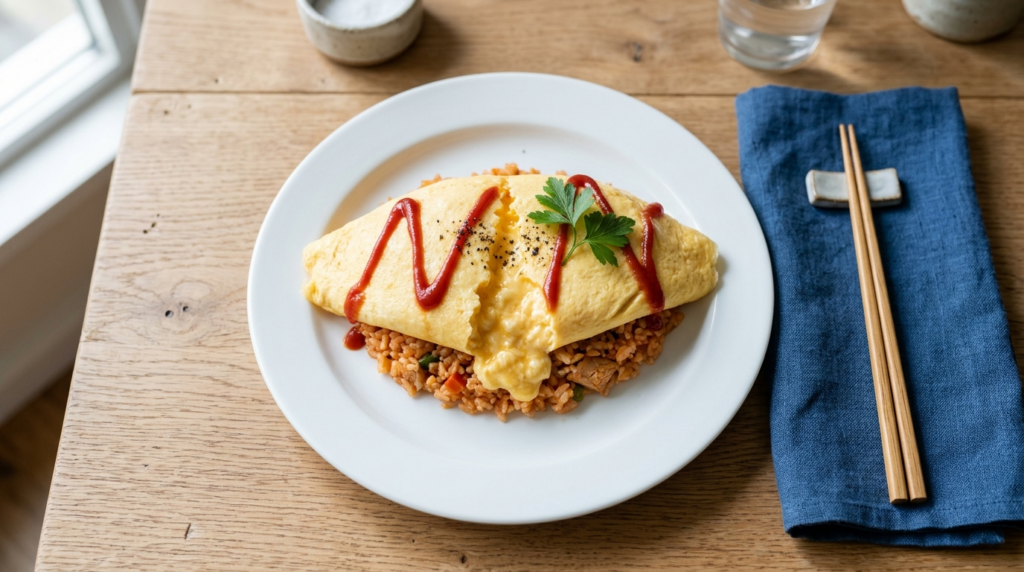
Omurice — a portmanteau of 'omelette' and 'rice' — is one of the most iconic dishes in Japanese home cooking and yoshoku (Western-influenced Japanese cuisine). At its heart it is beautifully simple: seasoned fried rice, typically flavored with ketchup and loaded with tender chicken and vegetables, gets wrapped or draped in a golden, barely-set egg omelette. A neat drizzle of extra ketchup or demi-glace sauce on top finishes the dish.
Despite how impressive it looks on the plate, omurice is genuinely weeknight-friendly. The entire dish comes together in under 30 minutes once your ingredients are prepped, and most of what you need is already in a well-stocked pantry. The keys to success are cooking the fried rice over high heat so it stays distinct and slightly caramelized, then treating the egg with patience and low-to-medium heat so it stays pale yellow and silky rather than rubbery and brown. Follow the steps below and you will have a satisfying, crowd-pleasing omurice tomato rice recipe ready for your table.
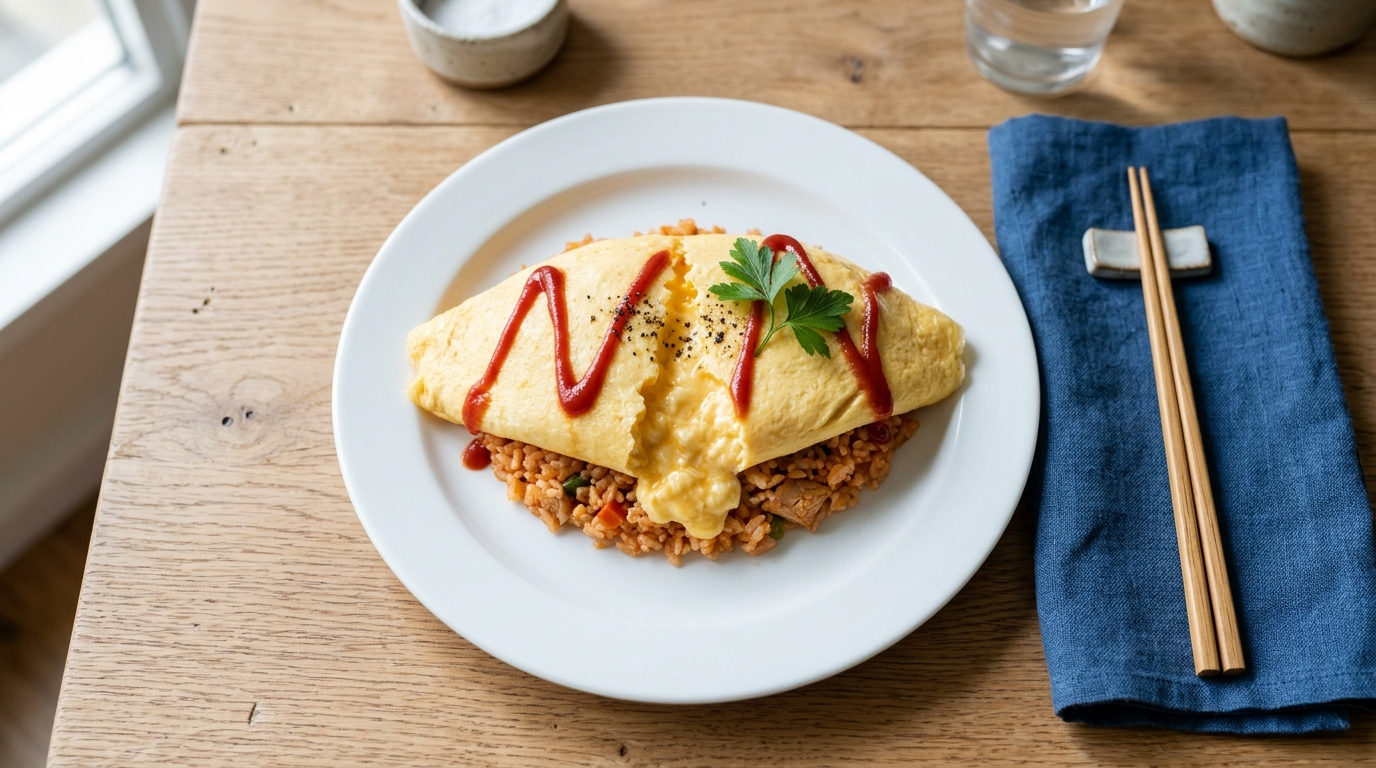
Omurice Tomato Rice Recipe – Fluffy Egg Omelette Over Ketchup Fried Rice
Omurice combines fluffy, softly folded egg with savory tomato-ketchup fried rice for one of Japan's most beloved comfort dishes. This FlavorGrub recipe walks you through every step for a restaurant-quality result at home.
Prep: 15 minutes | Cook: 25 minutes | Servings: 4
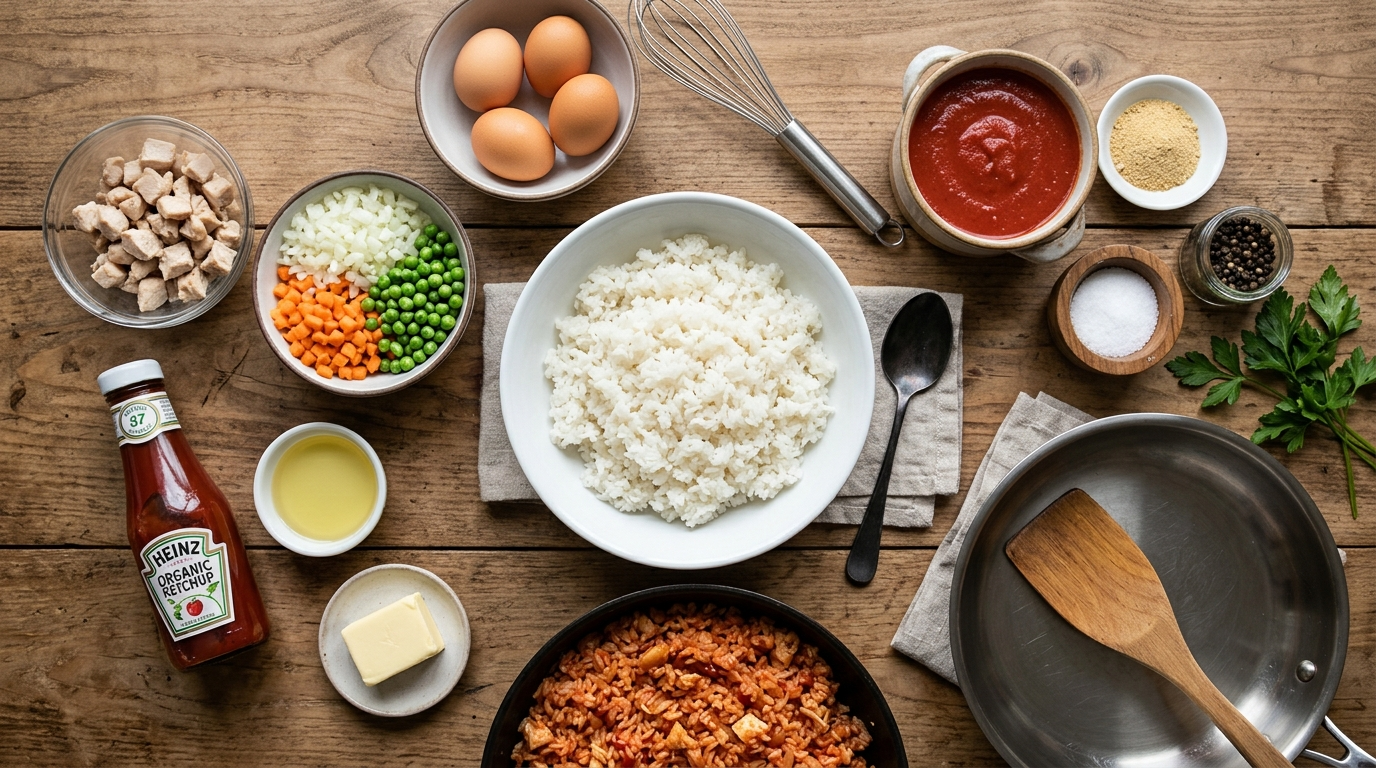
Ingredients
- 3 cups cooked short-grain or medium-grain white rice Day-old refrigerated rice works best; fresh rice should be spread on a sheet pan and cooled 15 to 20 minutes before using to reduce excess moisture.
- 200 grams boneless, skinless chicken thighs Cut into ½-inch (1.25 cm) pieces; thighs stay juicier than breast meat but breast can be substituted.
- ½ medium yellow onion Finely diced, about ½ cup.
- ½ cup frozen or fresh peas No need to thaw if frozen.
- 1 medium carrot Peeled and finely diced to match pea size for even cooking.
- 4 tablespoons ketchup Standard tomato ketchup; add up to 1 extra tablespoon for a more pronounced tomato flavor.
- 1 tablespoon soy sauce Low-sodium soy sauce works fine; adjust salt at the end if using.
- 1 teaspoon Worcestershire sauce Adds depth and slight umami to the tomato rice.
- ½ teaspoon fine sea salt For seasoning the chicken and rice; adjust to taste.
- ¼ teaspoon freshly ground black pepper For the rice filling.
- 1½ tablespoons neutral cooking oil (vegetable or avocado oil) Divided — 1 tablespoon for the rice and ½ tablespoon per omelette.
- 8 large eggs 2 eggs per serving; use the freshest eggs available for the best texture.
- 2 tablespoons whole milk or heavy cream ½ tablespoon per 2-egg portion; adds richness and helps keep the omelette tender.
- 1 tablespoon unsalted butter For cooking the omelette; divided into ¼ tablespoon per serving.
- 4 tablespoons ketchup For serving on top of the finished omurice; can be replaced with demi-glace or tonkatsu sauce.
Instructions
- PREPARE THE RICE: If using freshly cooked rice, spread it in an even layer on a rimmed sheet pan and allow it to cool at room temperature for 15 to 20 minutes. This dries the surface slightly so it fries rather than steams. If using day-old refrigerated rice, break up any large clumps with your hands before cooking.
- SEASON THE CHICKEN: Pat the diced chicken thighs dry with paper towels. Season lightly with ¼ teaspoon of the salt and the black pepper. Set aside while you prep the vegetables.
- DICE VEGETABLES: Finely dice the onion and carrot into pieces no larger than ½ inch (1.25 cm). Measure out the peas. Having everything ready before you start cooking is important because the stir-fry moves quickly.
- MIX THE SAUCE: In a small bowl, stir together 4 tablespoons ketchup, 1 tablespoon soy sauce, and 1 teaspoon Worcestershire sauce until combined. Set aside.
- COOK THE CHICKEN: Heat 1 tablespoon of neutral oil in a wok or large skillet over medium-high heat until shimmering. Add the chicken pieces in a single layer. Cook undisturbed for 2 minutes to develop color, then stir and continue cooking for another 2 to 3 minutes, until the chicken is cooked through and an instant-read thermometer inserted into a piece reads 165 °F (74 °C). Transfer the chicken to a clean bowl.
- COOK THE VEGETABLES: In the same pan over medium-high heat, add the diced onion and carrot. Stir-fry for 3 to 4 minutes, stirring frequently, until the onion is translucent and the carrot is just tender. Add the peas and cook for 1 minute more.
- FRY THE RICE: Add the cooked rice to the pan with the vegetables. Press it down gently and allow it to sit undisturbed for 30 to 45 seconds to develop light toasting on the bottom, then stir and repeat once or twice. This step adds flavor and helps separate the grains.
- ADD CHICKEN AND SAUCE: Return the cooked chicken to the pan. Pour the ketchup-soy-Worcestershire sauce over everything. Stir and toss vigorously until every grain of rice is evenly coated and the mixture is heated through, about 2 minutes. Taste and adjust salt if needed. Reduce heat to very low to keep warm while you make the omelettes.
- PORTION THE RICE: Divide the tomato fried rice into 4 equal portions (about ¾ cup each). If you have an oval or round bowl, you can mold a portion by pressing the warm rice firmly into a lightly oiled bowl, then inverting it onto the center of a serving plate to create a dome shape. Alternatively, simply mound the rice in the center of each plate.
- BEAT THE EGGS (per serving): For each omelette, crack 2 large eggs into a bowl. Add ½ tablespoon milk or cream and a small pinch of salt. Beat with a fork or chopsticks until the yolks and whites are fully combined and the mixture is a uniform pale yellow — about 30 seconds of vigorous beating. Avoid creating excessive foam.
- COOK THE OMELETTE — CLASSIC FOLDED STYLE: Place a 10-inch non-stick skillet over medium-low heat. Add ¼ tablespoon butter and swirl to coat the pan. Once the butter is melted and just beginning to foam (do not let it brown), pour in one beaten egg portion. Using a silicone spatula, gently push the set edges toward the center while tilting the pan so uncooked egg flows to the edges. Continue for about 60 to 90 seconds, until the omelette is mostly set on the bottom but still slightly glossy and soft on top — it should not be fully dry.
- WRAP THE RICE (classic style): Spoon one portion of the tomato fried rice onto the center third of the omelette. Using the spatula and a tilt of the pan, fold one side of the egg over the rice, then fold the other side over to enclose it. Slide the omurice seam-side down onto the serving plate, using the pan edge to guide it. Use a clean kitchen towel or folded paper towel to press and shape it gently into a neat oval if desired.
- ALTERNATIVE — SOFT DRAPE STYLE: Cook the egg as above but stop while it is still very loose and creamy on top — about 45 to 60 seconds total. Slide this soft egg layer directly over the mounded rice on the plate. Use a small paring knife to make a 2-inch slit along the top center of the egg, then let it open and drape naturally over the rice mound.
- REPEAT: Repeat the egg-cooking process for each of the remaining 3 servings, wiping the pan clean with a paper towel between servings and adding fresh butter each time.
- SERVE: Drizzle 1 tablespoon of ketchup (or your preferred sauce) over each finished omurice. Serve immediately.
- STORE LEFTOVERS SAFELY: If you have leftover tomato fried rice, transfer it to shallow airtight containers and refrigerate within 2 hours of cooking at 40 °F (4 °C) or below. Use within 3 to 4 days. Omelettes do not store well and are best made fresh per serving. Freeze extra tomato rice portions in freezer-safe bags for longer storage. When reheating rice, bring it to an internal temperature of 165 °F (74 °C) using a microwave or skillet before serving.
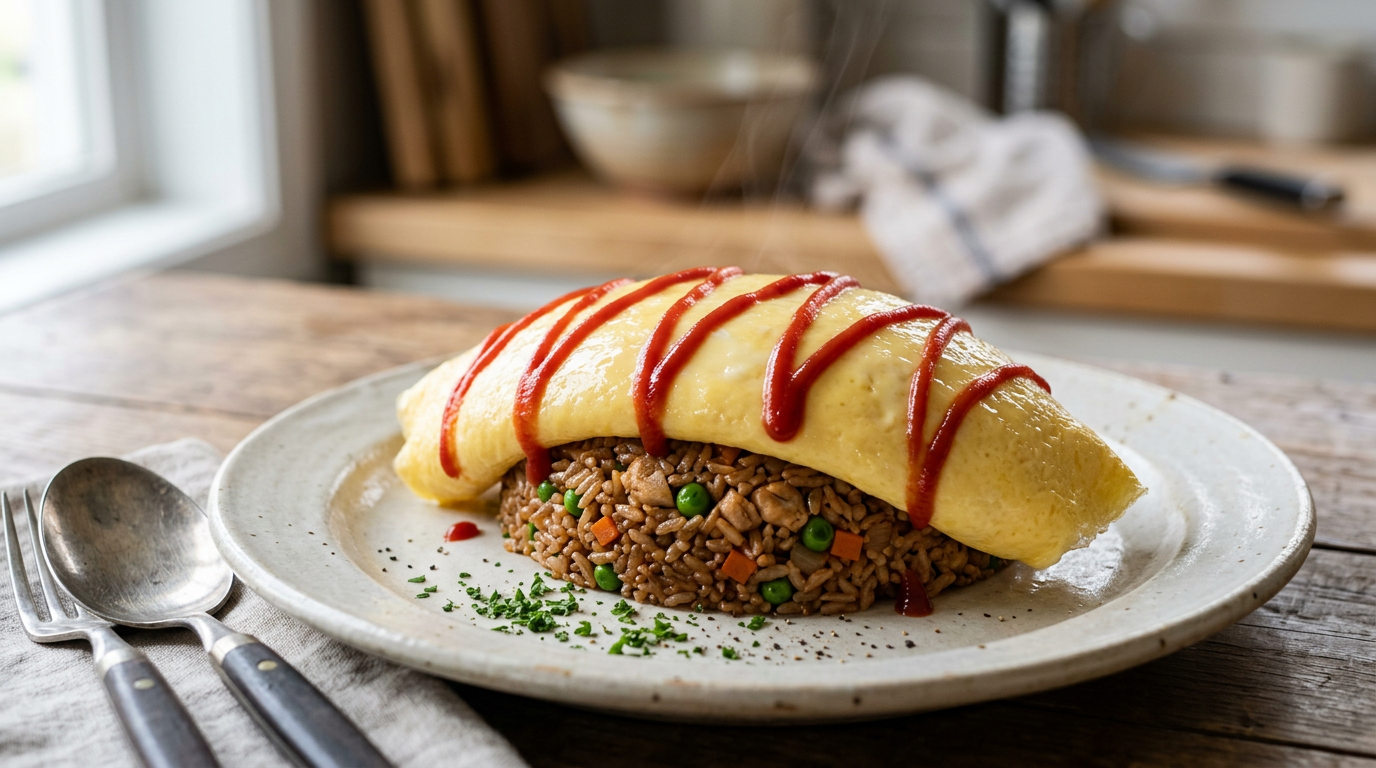
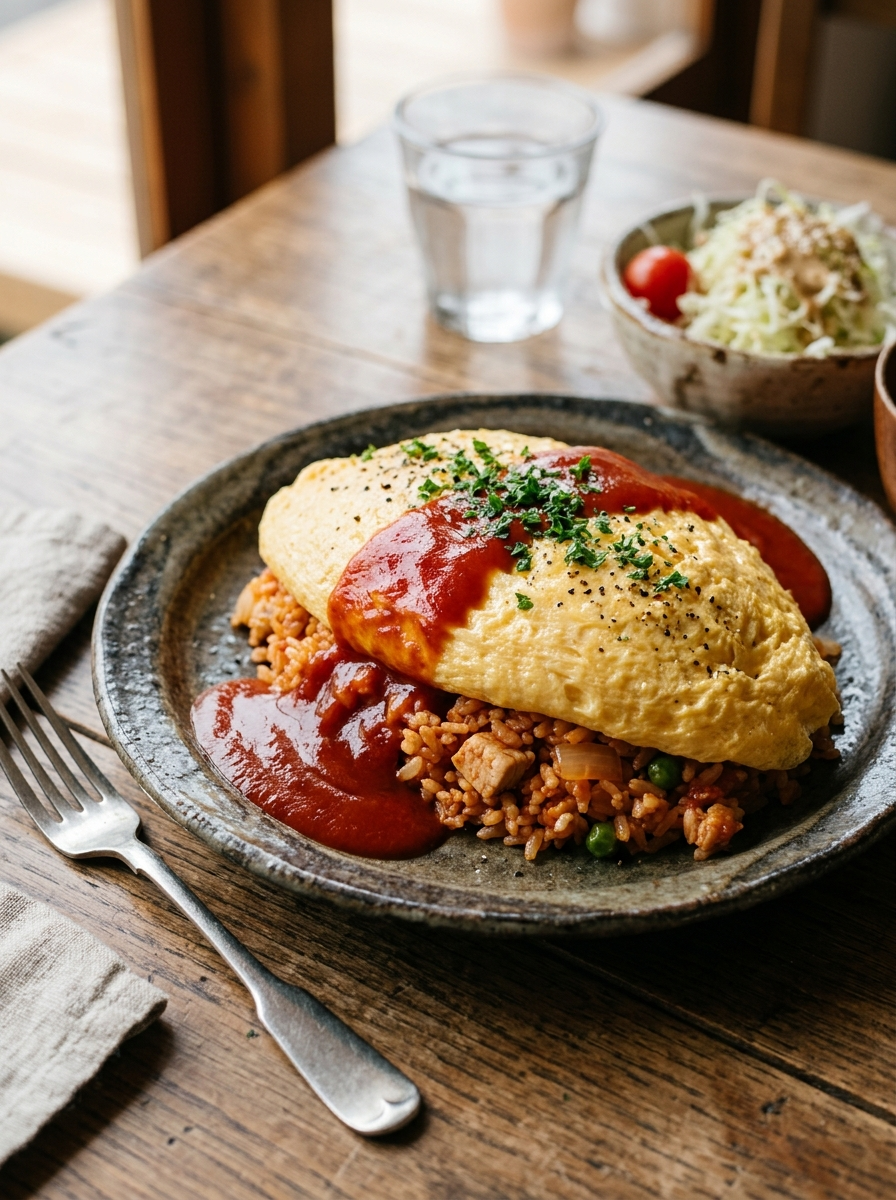
Omurice traces its origins to Japan in the early twentieth century, during the Meiji and Taisho eras when Western culinary influences were actively being adopted and adapted by Japanese cooks. The dish belongs to yoshoku, a category of Japanese cuisine that reimagines Western dishes using Japanese techniques, local tastes, and pantry staples. Ketchup — itself a relatively new import at the time — became the signature seasoning for the rice filling, giving it a sweet-tangy tomato flavor that appealed to Japanese palates. Several Tokyo restaurants, including Rengatei in Ginza (founded 1895) and Hokkyokusei in Osaka, have both been cited historically as early popularizers of omurice. By mid-century the dish had moved firmly into the Japanese home kitchen and school lunch culture, where it remains a nostalgic comfort food staple. Two main egg styles have since emerged: the classic tightly rolled omelette that fully encases the rice, and the modern 'tornado' or soft-fold style made famous by chefs like Motokichi Yukimura, where a very loose egg is draped over the rice and then slit open to cascade across it.
Practical Tips
- Day-old rice is the single biggest factor in getting good fried rice texture. Freshly cooked rice has too much surface moisture and will clump and steam instead of fry. If you must use fresh rice, spread it out and cool it for at least 15 to 20 minutes.
- Cook the omelette over medium-low heat and pull it off while the top still looks slightly underdone. Residual heat will finish it. An overcooked, browned omelette is the most common mistake beginners make.
- Make one omurice at a time. The egg omelette step takes only 60 to 90 seconds per serving, so complete each one to order and serve it immediately rather than trying to hold them all.
- A well-seasoned non-stick pan is non-negotiable for the omelette. If your pan sticks, the egg will tear when you try to fold it.
- For a richer color and deeper tomato flavor in the rice, you can add 1 tablespoon of tomato paste along with the ketchup and increase the soy sauce slightly to balance the extra sweetness.
- Wiping the pan with a dry paper towel between omelettes and adding fresh butter each time prevents residue buildup and keeps the pan surface clean for each serving.
- If shaping the rice into a dome before topping it with the egg, use a lightly oiled 1-cup measuring cup or small bowl as a mold. Press firmly, then invert directly onto the plate.
- Ketchup is traditional, but demi-glace sauce, homemade tomato cream sauce, or tonkatsu sauce are popular upgrades for the topping.
10-inch or 12-inch non-stick skillet: Essential for making the egg omelette without sticking and for folding or wrapping it cleanly around the rice.
Wok or large stainless-steel skillet: Used to cook the tomato fried rice over high heat, which promotes light caramelization and keeps rice grains separate.
Wooden spatula or silicone spatula: For tossing and stirring fried rice and for gently folding the egg without tearing it.
Mixing bowls: For beating eggs and holding prepped ingredients before cooking.
Instant-read thermometer: To confirm chicken reaches a safe internal temperature of 165 °F (74 °C).
Chef's knife and cutting board: For dicing chicken and vegetables to uniform sizes so they cook evenly.
Rice cooker or medium saucepan with lid: For cooking the white rice. Day-old rice is ideal, but freshly cooked rice spread on a sheet pan and cooled for 15 to 20 minutes also works well.
Shallow airtight containers: For safely storing leftover tomato rice and cooked omurice in the refrigerator within 2 hours of cooking.
Beef and Mushroom Omurice: Replace the chicken thighs with the same weight of ground beef or finely diced sirloin. Add ½ cup of sliced cremini or button mushrooms to the vegetable step. Season the rice with 1 tablespoon oyster sauce in addition to the ketchup and soy sauce for a deeper savory flavor. Cook ground beef to 160 °F (71 °C) or diced beef to 145 °F (63 °C) with a 3-minute rest.
Shrimp Omurice: Substitute 200 grams of peeled and deveined medium shrimp (31/40 count), halved if large, for the chicken. Shrimp cook quickly — sauté over medium-high heat for 1 to 2 minutes per side until pink and opaque (internal temperature 145 °F / 63 °C) before setting aside. Proceed with the rest of the recipe as written.
Vegetarian Omurice: Omit the chicken entirely. Replace it with 1 cup of diced firm tofu (pressed and pan-fried until golden) or 1 cup of extra vegetables such as diced zucchini, corn kernels, and bell pepper. Use tamari in place of soy sauce for a fully gluten-free version as well.
Demi-Glace Omurice (Restaurant Style): Prepare the tomato rice as written. Instead of ketchup as a topping, warm ½ cup of store-bought or homemade demi-glace sauce with 1 tablespoon of unsalted butter in a small saucepan over low heat, stirring until smooth. Spoon this over the finished omurice in place of ketchup for a richer, more restaurant-style presentation.
Spicy Gochujang Omurice: Add 1 tablespoon of Korean gochujang (fermented chili paste) to the ketchup sauce mixture for the rice. Reduce the ketchup to 3 tablespoons to keep the sauce from becoming too sweet. The result is a mildly spicy, slightly funky tomato rice that pairs especially well with the soft egg.
Can I use freshly cooked rice for omurice?
Yes, but freshly cooked rice has a high moisture content that causes clumping and steaming in the wok rather than frying. To improve the texture, spread freshly cooked rice in a thin, even layer on a rimmed sheet pan and allow it to cool uncovered at room temperature for 15 to 20 minutes before using. Day-old refrigerated rice remains the preferred option.
What is the difference between the classic folded omurice and the soft-drape style?
The classic folded style wraps a fully set (but still moist) egg omelette around the rice to fully encase it, resulting in a neat oval shape. The soft-drape (sometimes called 'fluffy' or 'tornado') style uses a very loosely cooked, almost custardy egg that is slid over the top of the rice mound and slit open to open like petals. Both are traditional; the soft-drape style became widely popularized in the 2000s through social media videos of Kichi Kichi Omurice in Kyoto.
How do I keep the omelette from browning?
Use medium-low heat and watch the pan closely. Butter should melt and foam but not turn brown before you add the egg. Once the egg goes in, move it constantly at first, then let it set gently. The entire omelette should be pale golden to ivory — any brown color on the outside means the heat was too high.
Can I make the tomato rice in advance?
Yes. The tomato fried rice can be made up to 2 days ahead and stored in a shallow airtight container in the refrigerator at 40 °F (4 °C) or below. Reheat it in a skillet over medium heat or in a microwave until it reaches 165 °F (74 °C) throughout before portioning and topping with a freshly made egg omelette. Do not make the omelette in advance.
What type of rice is best for omurice?
Japanese short-grain or medium-grain white rice is traditional because its slightly sticky texture holds the rice mound together on the plate. Long-grain varieties like jasmine or basmati can be used and will produce a looser, more separate-grain result that some people prefer. Avoid instant rice, which tends to turn mushy.
Is omurice gluten-free?
Standard omurice as written is not gluten-free because soy sauce and Worcestershire sauce both typically contain wheat. To make a gluten-free version, substitute tamari for soy sauce and use a certified gluten-free Worcestershire sauce. Always check ketchup labels as well, since some brands contain trace gluten ingredients.
How long do leftovers keep?
Leftover tomato fried rice should be transferred to shallow airtight containers and refrigerated within 2 hours of cooking at 40 °F (4 °C) or below. It keeps safely for 3 to 4 days. For longer storage, freeze in freezer-safe bags or containers. Reheat to an internal temperature of 165 °F (74 °C) before eating. Finished omurice with the egg omelette does not store or reheat well and is best made fresh.