Vegan Walnut Tacos Recipe: Best Plant-Based Tacos
This vegan walnut tacos recipe is the plant-based dinner upgrade you have been waiting for, delivering a rich, meaty texture and bold taco flavor without a single animal product. Walnuts are a surprisingly brilliant base for taco meat – their natural fat content and crumbly texture mimic seasoned ground meat so closely that even skeptical dinner guests will be reaching for seconds. The moment you toast them in a skillet with smoky cumin, chili powder, and garlic, your kitchen fills with an irresistible aroma that signals something seriously delicious is on the way.
What makes this recipe truly special is how incredibly fast and accessible it is. You do not need any fancy equipment, exotic ingredients, or advanced cooking skills. With a food processor, a skillet, and about 30 minutes, you can build a taco spread that looks and tastes like it took hours. The walnut meat comes together in under 10 minutes, which leaves you plenty of time to prep vibrant toppings like mango salsa, pickled red onion, and creamy avocado crema.
Whether you are a longtime vegan, simply trying to reduce your meat consumption, or just someone who loves a great taco, this recipe delivers on every level. It is weeknight friendly, meal-prep approved, and endlessly customizable. Load your tacos with crunchy cabbage, fresh cilantro, and a squeeze of lime and you have got a meal that is as nourishing as it is absolutely delicious.
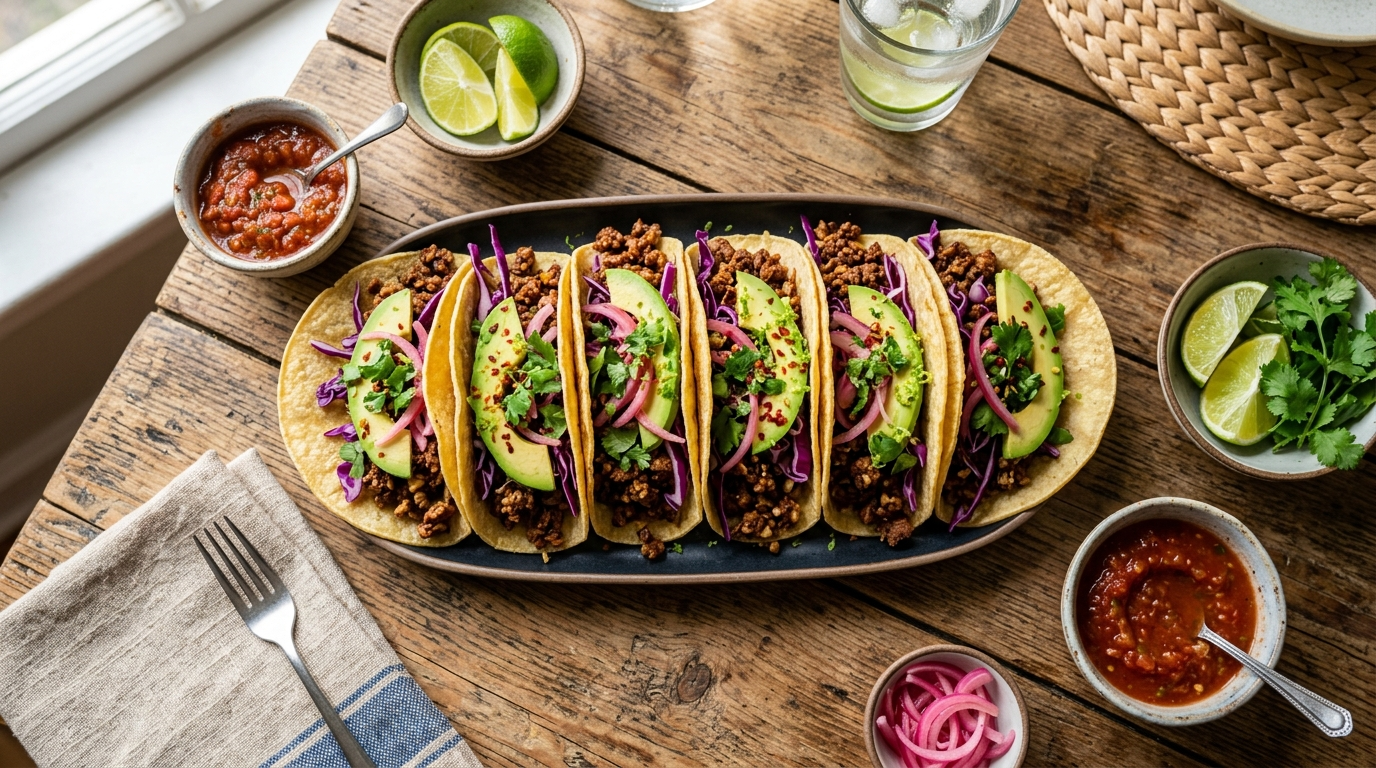
This vegan walnut tacos recipe transforms simple walnuts into a savory, smoky taco filling that satisfies even dedicated meat lovers. Packed with healthy fats, bold spices, and fresh toppings, it is the ultimate plant-based weeknight dinner you need to make tonight.

Ingredients
| AMOUNT | INGREDIENT | NOTES |
|---|---|---|
| 2 cups | raw walnuts | halves or pieces work equally well |
| 2 tablespoons | olive oil | extra virgin, divided |
| 3 cloves | garlic | minced finely |
| 1 small | yellow onion | finely diced |
| 2 tablespoons | low-sodium soy sauce | or tamari for gluten-free |
| 1 tablespoon | tomato paste | adds depth and richness |
| 1.5 teaspoons | chili powder | adjust to taste |
| 1 teaspoon | ground cumin | toasted cumin adds extra depth |
| 0.5 teaspoon | smoked paprika | essential for smoky flavor |
| 0.5 teaspoon | garlic powder | reinforces the savory base |
| 0.25 teaspoon | chipotle powder | optional for smoky heat |
| 0.5 teaspoon | fine sea salt | plus more to taste |
| 0.25 teaspoon | black pepper | freshly ground preferred |
| 1 tablespoon | fresh lime juice | from about 1 medium lime |
| 8 small | corn tortillas | 6-inch size, warmed |
| 1 cup | shredded purple cabbage | for crunch and color |
| 1 large | ripe avocado | sliced or smashed |
| 0.5 cup | fresh cilantro leaves | rough chopped |
| 0.5 cup | pico de gallo or fresh salsa | store bought or homemade |
| 2 medium | limes | cut into wedges for serving |
| 0.25 cup | pickled red onions | optional but highly recommended |
Instructions

Nutrition (per serving)
About This Recipe
Tacos are one of the most beloved and historically rich dishes in Mexican cuisine, with roots stretching back centuries to indigenous communities in central Mexico. Long before Spanish colonization, corn tortillas were already a dietary staple, used to wrap everything from insects and beans to wild game. As Mexican cuisine evolved over generations, the taco became a symbol of resourcefulness and creativity, with regional variations emerging across every state in the country. From the fish tacos of Baja California to the barbacoa tacos of Hidalgo, each version tells a story of local culture and available ingredients.
The concept of using plant-based proteins in tacos is not as modern as it might seem. Long before the global vegan movement gained momentum, Mexican and Mesoamerican cooking already celebrated legumes, grains, squash, and nuts as central ingredients rather than side players. Walnut meat specifically gained popularity in contemporary plant-based cooking circles in the early 2010s as food bloggers and chefs discovered how well walnuts mimic the texture of seasoned ground beef. Today, vegan walnut tacos have earned a permanent spot in the mainstream food conversation, celebrated by home cooks and professional chefs alike for their incredible flavor, nutrition profile, and environmental benefits.
Ready to Serve

A Closer Look

Pro Tips for Best Results
- Do not over-pulse the walnuts in the food processor. You want a coarse, crumbly texture that mimics ground meat – pulse in quick 1-second bursts and check frequently. Over-processing creates a dense paste that will not toast well in the pan.
- Toast the walnut meat in a hot dry pan for 1 to 2 minutes before adding oil and aromatics to bring out their natural nuttiness. This extra step takes only 2 minutes but adds a noticeably deeper, more complex flavor to the finished filling.
- Warm your tortillas properly – it makes a world of difference. A quick char over an open gas flame or a few seconds in a hot dry skillet transforms a bland tortilla into something with real flavor and a satisfying chew. Never skip this step.
- Make the walnut meat up to 4 days in advance and store it in an airtight container in the refrigerator. Reheat in a skillet over medium heat with a tiny splash of water or vegetable broth to restore moisture. This makes weeknight dinners incredibly fast and stress free.
- Balance your toppings for the best taco experience. The walnut meat is rich and savory, so pair it with something acidic like pickled onions or fresh lime, something cool and creamy like avocado, and something crunchy like shredded cabbage. This contrast of textures and flavors is what makes a truly great taco.
Essential Equipment
Food Processor: Pulses walnuts to the perfect crumbly taco meat texture without over-processing them into paste.
Large Skillet: Provides even heat distribution for toasting and seasoning the walnut meat to golden perfection.
Chef Knife: Essential for precise, uniform chopping of vegetables, herbs, and toppings.
Cutting Board: A sturdy surface keeps prep work safe and efficient for all your fresh toppings.
Citrus Juicer: Extracts maximum juice from limes and lemons for bright, fresh flavor throughout the dish.
Mixing Bowls: Needed for tossing toppings, mixing sauces, and keeping prepped ingredients organized before assembly.
Tongs: Makes warming tortillas over an open flame or in a skillet safe and easy.
Variations
Spicy Chipotle Walnut Tacos: Double the chipotle powder and add 1 tablespoon of adobo sauce from a can of chipotle peppers in adobo for a deeply smoky, fiery version of the walnut meat that is absolutely addictive.
Mushroom and Walnut Taco Blend: Add 1 cup of finely chopped cremini mushrooms to the skillet along with the onions. The mushrooms add extra umami depth and a slightly softer texture that complements the walnuts beautifully.
Korean-Inspired Walnut Tacos: Replace the soy sauce with gochujang and add a teaspoon of sesame oil and a tablespoon of rice vinegar. Top with kimchi, sliced scallions, and sesame seeds for a bold Korean-Mexican fusion taco.
Breakfast Walnut Tacos: Season the walnut meat with breakfast spices like fennel seed, sage, and a pinch of maple syrup instead of chili powder. Serve in small flour tortillas with scrambled tofu, salsa, and avocado for a stunning plant-based brunch.
Low-Carb Lettuce Wrap Version: Skip the corn tortillas entirely and serve the walnut meat in large butter lettuce or romaine leaves for a light, gluten-free, low-carb alternative that is equally satisfying and perfect for lighter eating days.
Frequently Asked Questions
Can I make the walnut meat ahead of time?
Absolutely. The walnut taco meat stores beautifully in an airtight container in the refrigerator for up to 4 days. Reheat it in a skillet over medium heat with a small splash of water or vegetable broth to revive the moisture and texture before serving.
Can I freeze the walnut taco meat?
Yes, the walnut meat freezes very well. Allow it to cool completely, then transfer to a freezer-safe airtight container or zip-lock bag and freeze for up to 3 months. Thaw overnight in the refrigerator and reheat in a skillet before serving.
Are these tacos gluten-free?
They can be easily made gluten-free. Simply swap the soy sauce for certified gluten-free tamari, use certified gluten-free corn tortillas, and verify that all your spices are processed in gluten-free facilities. The rest of the ingredients are naturally gluten-free.
What can I use instead of walnuts if I have a tree nut allergy?
Sunflower seeds make an excellent nut-free substitute and pulse to a very similar crumbly texture. You can also use a combination of cooked lentils and finely chopped mushrooms for a hearty nut-free taco filling with comparable flavor and texture.
How do I keep my tacos from getting soggy?
The key is assembly timing. Keep all your components separate until you are ready to eat. Warm the tortillas just before serving, add the walnut meat fresh from the skillet, and add wet toppings like salsa last. Serving immediately after assembly guarantees the best texture.
How many tacos does this recipe make?
This recipe makes 8 small tacos using 6-inch corn tortillas, which comfortably serves 4 people as a main course with 2 tacos each. If you are serving alongside rice, beans, or other sides, the filling can stretch to serve 6 people.