Minestrone Soup Recipe Italian Style (Classic & Hearty)
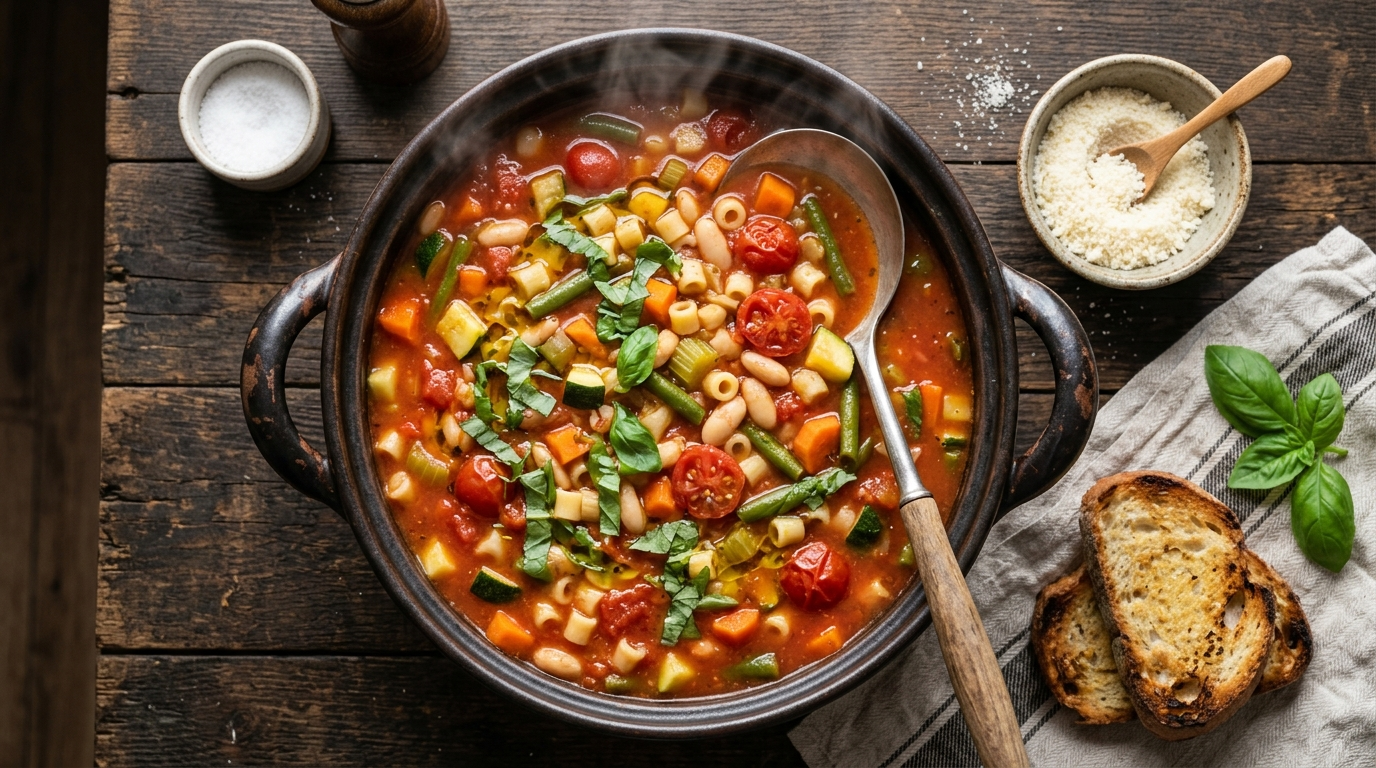
This minestrone soup recipe Italian style is the ultimate one-pot comfort food, bringing together a rainbow of vegetables, creamy cannellini beans, and al dente pasta in a deeply savory tomato broth that tastes like it has been simmering all day.
What makes this soup so special is its incredible versatility. Whether you are cleaning out the vegetable drawer or following the recipe to the letter, minestrone rewards you every single time. It is the kind of dish that actually tastes better the next day, making it perfect for meal prep and busy weeknights alike.
We have tested this recipe dozens of times to land on the perfect balance of herbs, vegetables, and broth. You will find that every spoonful is packed with texture and flavor, from the silky zucchini to the perfectly tender kidney beans. Grab a crusty loaf of bread and get ready to fall in love with Italian cooking all over again.
This classic minestrone soup recipe Italian style is loaded with fresh vegetables, hearty beans, and tender pasta in a rich tomato broth. It is nourishing, budget-friendly, and incredibly satisfying. Make it today for a cozy meal the whole family will love.

Ingredients
| AMOUNT | INGREDIENT | NOTES |
|---|---|---|
| 3 tablespoons | extra virgin olive oil | plus more for drizzling at serving |
| 1 large | yellow onion | finely diced |
| 3 stalks | celery | sliced into half-inch pieces |
| 3 medium | carrots | peeled and diced |
| 5 cloves | garlic | minced |
| 2 tablespoons | tomato paste | for depth of flavor |
| 1 can (28 ounce) | crushed San Marzano tomatoes | do not drain |
| 6 cups | low-sodium vegetable broth | or chicken broth for a richer flavor |
| 1 can (15 ounce) | cannellini beans | drained and rinsed |
| 1 can (15 ounce) | kidney beans | drained and rinsed |
| 2 medium | zucchini | diced into half-inch cubes |
| 2 cups | green beans | fresh or frozen, trimmed and cut into 1-inch pieces |
| 2 cups | baby spinach or kale | roughly chopped if using kale |
| 1 cup | small pasta | ditalini or elbow macaroni work best |
| 1 teaspoon | dried oregano | rubbed between fingers to release oils |
| 1 teaspoon | dried thyme | |
| 1 teaspoon | dried basil | or a handful of fresh basil added at the end |
| 1 piece | parmesan rind | optional but highly recommended for umami depth |
| 1 teaspoon | kosher salt | plus more to taste |
| 1 teaspoon | black pepper | freshly ground |
| 1 teaspoon | red pepper flakes | optional, for a gentle kick |
| 1 tablespoon | balsamic vinegar | added at the end to brighten flavors |
| 1 cup | freshly grated parmesan cheese | for serving |
Instructions

Nutrition (per serving)
About This Recipe
Minestrone is one of Italy’s oldest and most beloved dishes, with roots stretching back to the pre-Roman era when peasants would create thick vegetable soups from whatever seasonal produce was available. The word minestrone comes from the Italian word minestra, meaning soup or dish, with the suffix -one added to indicate something large or substantial. For centuries, this humble dish represented the resourcefulness and ingenuity of Italian cooks who wasted nothing and made everything delicious.
Over time, each region of Italy developed its own version of minestrone, reflecting local ingredients and culinary traditions. In Liguria, cooks stir in a spoonful of pesto at the end. In Milan, arborio rice replaces pasta. In Tuscany, stale bread is added to create ribollita, a close cousin of the classic. Today, minestrone has crossed every border and become a globally recognized symbol of Italian cucina povera, or peasant cooking, proving that the most satisfying food is often the simplest.
Ready to Serve

A Closer Look

Pro Tips for Best Results
- Cook the pasta separately and add it to the soup just before serving. If you cook pasta directly in the soup, it absorbs too much broth and becomes mushy, especially in leftovers.
- Do not skip the parmesan rind. It melts slowly into the broth while the soup simmers, releasing a deep, savory umami flavor that takes this soup from good to absolutely extraordinary.
- Use the freshest seasonal vegetables you can find. Minestrone is endlessly adaptable, so swap in asparagus and peas in spring, corn and peppers in summer, or butternut squash and kale in fall for a seasonal twist.
- Let the soup rest for 10 to 15 minutes off the heat before serving. Like most soups and stews, minestrone improves as the flavors continue to meld, and it will taste even better the next day.
- Store leftover pasta separately from the soup in an airtight container in the refrigerator. This prevents the noodles from soaking up all the broth overnight, keeping your leftovers as delicious as the original batch.
Essential Equipment
Large Dutch Oven or Stockpot: A heavy-bottomed pot ensures even heat distribution and enough room for all the vegetables and broth without boiling over.
Chef Knife: A sharp chef knife makes quick, precise work of dicing onions, celery, carrots, and zucchini into uniform pieces that cook evenly.
Cutting Board: A large, sturdy cutting board gives you plenty of surface area to prep all the vegetables safely and efficiently.
Wooden Spoon: Ideal for stirring the soup without scratching your pot and for deglazing the bottom to incorporate all the savory browned bits.
Ladle: Makes serving the thick, chunky soup clean and easy without splashing hot broth.
Can Opener: You will need it for the canned tomatoes and beans that form the backbone of this hearty soup.
Variations
Tuscan Ribollita Style: Stir in 2 cups of torn stale crusty bread during the last 10 minutes of cooking for a thick, porridge-like texture that is deeply satisfying and very traditional in Tuscany.
Ligurian Pesto Minestrone: Stir 2 tablespoons of fresh basil pesto into each bowl just before serving for a bright, herbaceous finish that is iconic in the Liguria region of Italy.
Spicy Calabrian Version: Add 1 tablespoon of Calabrian chili paste or double the red pepper flakes along with a pinch of smoked paprika for a bold, fiery southern Italian twist.
Gluten-Free Minestrone: Simply substitute the regular pasta with your favorite gluten-free small pasta or add an extra can of beans for protein and texture without any wheat.
Summer Garden Minestrone: Replace the green beans and zucchini with fresh corn kernels, diced bell peppers, and halved cherry tomatoes for a vibrant warm-weather version that celebrates peak summer produce.
Frequently Asked Questions
Can I make minestrone soup ahead of time?
Yes, you can make the soup base up to 3 days in advance and store it in an airtight container in the refrigerator. Keep the cooked pasta stored separately and stir it in when you reheat the soup to prevent it from becoming soggy and absorbing all the broth.
Can I freeze minestrone soup?
Yes, minestrone freezes beautifully for up to 3 months in airtight freezer-safe containers. Freeze the soup without the pasta for best results. When ready to serve, thaw overnight in the refrigerator, reheat on the stovetop, and add freshly cooked pasta just before serving.
What pasta is best for minestrone soup?
Small pasta shapes work best because they fit on a spoon and cook evenly in the broth. Ditalini is the most traditional choice, but elbow macaroni, small shells, orzo, or even broken spaghetti pieces all work wonderfully in this recipe.
Is minestrone soup vegan?
This recipe is vegetarian and can be made fully vegan by omitting the parmesan rind during cooking and skipping the parmesan cheese garnish at serving. You can top it with nutritional yeast or a drizzle of good olive oil instead for a flavorful dairy-free finish.
Why does my minestrone taste bland?
The most common culprit is under-seasoning. Make sure you are salting the soup generously at each stage of cooking. Adding a parmesan rind, a splash of balsamic vinegar, and a finishing drizzle of high-quality olive oil at serving dramatically boost the depth and brightness of the final dish.
Can I use dried beans instead of canned beans?
Yes, dried beans will give you an even creamier, more flavorful result. Soak 1 cup of dried cannellini or borlotti beans overnight, then simmer them separately until tender before adding to the soup. This adds about 90 minutes to your prep time but the texture is absolutely worth it.